Back

Ions (Simplified) definitions

Control buttons has been changed to "navigation" mode.
1/15
  • Ion

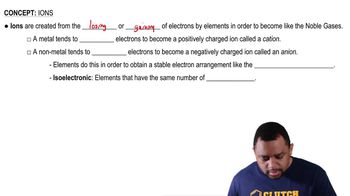
    An atom or molecule with a net electric charge due to the loss or gain of electrons.
  • Electron

    A negatively charged subatomic particle found orbiting the nucleus, crucial for chemical bonding and charge.
  • Noble Gas

    A group of elements with a stable electron arrangement, serving as the model for ion formation.
  • Cation

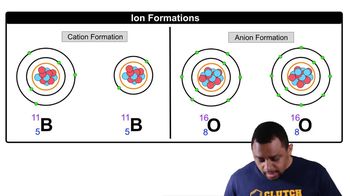
    A positively charged species formed when an atom loses one or more electrons.
  • Anion

    A negatively charged species formed when an atom gains one or more electrons.
  • Isoelectronic

    A condition where different atoms or ions possess the same number of electrons.
  • Atomic Number

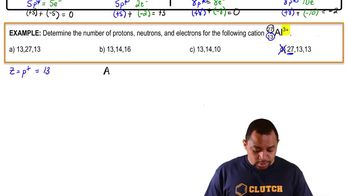
    A value representing the number of protons in an atom's nucleus, determining its identity.
  • Mass Number

    A value equal to the sum of protons and neutrons in an atom's nucleus.
  • Charge

    An electrical property resulting from the imbalance between protons and electrons in an atom or ion.
  • Metal

    An element type that tends to lose electrons, forming positively charged ions.
  • Nonmetal

    An element type that tends to gain electrons, forming negatively charged ions.
  • Nucleus

    The dense central region of an atom containing protons and neutrons.
  • Proton

    A positively charged subatomic particle located within the atomic nucleus.
  • Neutron

    An electrically neutral subatomic particle found in the atomic nucleus.
  • Electron Arrangement

    The specific distribution of electrons around an atom's nucleus, influencing chemical behavior.