Back

Isotopes definitions

Control buttons has been changed to "navigation" mode.
1/13
  • Isotope

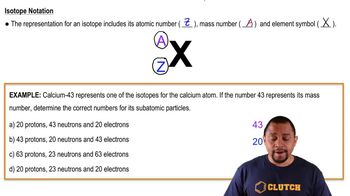
    Element variant sharing proton count but differing in neutron count, resulting in distinct mass numbers while retaining chemical identity.
  • Atomic Number

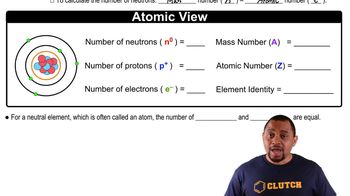
    Value represented by Z, indicating the proton count in an element, which determines its identity on the periodic table.
  • Mass Number

    Value represented by A, equal to the sum of protons and neutrons in an atom, used to distinguish isotopes.
  • Proton

    Positively charged particle found in the nucleus, its quantity defines the element and atomic number.
  • Neutron

    Uncharged particle located in the nucleus, its number varies among isotopes of the same element.
  • Electron

    Negatively charged particle orbiting the nucleus, balancing protons in a neutral atom.
  • Nucleus

    Central region of an atom containing protons and neutrons, accounting for most atomic mass.
  • Periodic Table

    Tabular arrangement of elements, organized by atomic number, used to identify elements and their properties.
  • Neutral Element

    Species with equal numbers of protons and electrons, resulting in no net electric charge.
  • Atom

    Smallest unit of an element, composed of a nucleus and electrons, retaining chemical properties.
  • Chemical Properties

    Characteristics of an element determined by its atomic structure, especially proton count.
  • Identity

    Unique classification of an element, established by its atomic number and proton count.
  • Species

    General term for any distinct atomic or ionic form, defined by its proton, neutron, and electron numbers.