Back

Temperature (Simplified) definitions

Control buttons has been changed to "navigation" mode.
1/12
  • Energy

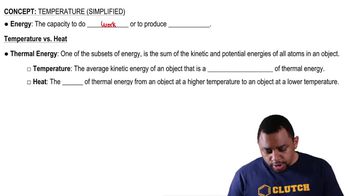
    Capacity to do work or produce heat, encompassing all forms including thermal, kinetic, and potential.
  • Thermal Energy

    Sum of kinetic and potential energies of all atoms in an object, underlying both temperature and heat.
  • Kinetic Energy

    Energy associated with motion of particles within a substance, contributing to thermal energy.
  • Potential Energy

    Energy related to the position or arrangement of particles within a substance.
  • Temperature

    Measurement reflecting the average kinetic energy of particles in a substance, not the total energy.
  • Heat

    Flow of thermal energy from a hotter object to a colder one, always moving from high to low temperature.
  • Celsius

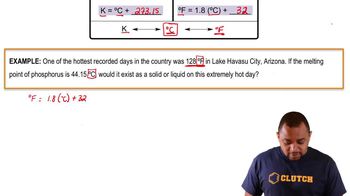
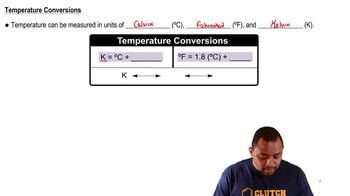
    Temperature scale commonly used as a bridge for conversions, with water freezing at 0 and boiling at 100.
  • Fahrenheit

    Temperature scale where water freezes at 32 and boils at 212, often used in the United States.
  • Kelvin

    Absolute temperature scale starting at absolute zero, directly linked to Celsius by a fixed offset.
  • Conversion Formula

    Mathematical equation used to change temperature values between different units such as Celsius, Kelvin, and Fahrenheit.
  • Average Kinetic Energy

    Mean energy of motion for all particles in a substance, directly measured by temperature.
  • Measurement Unit

    Standard quantity used to express temperature, including Celsius, Fahrenheit, and Kelvin.