Pearson+ LogoPearson+ Logo
Ch.11 Nucleic Acids Big Molecules with a Big Role
Frost - General, Organic and Biological Chemistry 4th Edition
Frost4th EditionGeneral, Organic and Biological ChemistryISBN: 9780134988696Not the one you use?Change textbook
Chapter 7, Problem 52

CRISPR was first discovered as a defense mechanism in what organism?

Verified step by step guidance
1
This question is conceptual and relates to biology rather than GOB Chemistry. However, I can provide guidance on understanding the context of CRISPR in science.
CRISPR (Clustered Regularly Interspaced Short Palindromic Repeats) was first discovered as a defense mechanism in prokaryotic organisms, specifically bacteria.
Bacteria use CRISPR as part of their immune system to protect against viruses, such as bacteriophages. It allows them to recognize and cut foreign DNA.
The CRISPR system includes two main components: the CRISPR array (a sequence of DNA containing repeats and spacers) and associated proteins like Cas9, which perform the cutting of DNA.
If you are studying CRISPR in the context of its chemical or molecular mechanisms, focus on understanding how nucleic acids (DNA and RNA) interact with proteins like Cas9 to achieve targeted genetic editing.

Verified video answer for a similar problem:

This video solution was recommended by our tutors as helpful for the problem above.
Video duration:
2m
Was this helpful?

Key Concepts

Here are the essential concepts you must grasp in order to answer the question correctly.

CRISPR

CRISPR, or Clustered Regularly Interspaced Short Palindromic Repeats, is a revolutionary technology used for gene editing. It was originally identified as a part of the immune system in bacteria, allowing them to recognize and defend against viral infections. This system has been adapted for use in various organisms, making it a powerful tool in genetic engineering.

Bacteria

Bacteria are single-celled microorganisms that can be found in various environments. They play a crucial role in ecosystems and have diverse functions, including decomposition and nitrogen fixation. The discovery of CRISPR as a defense mechanism was primarily in the bacterium *Streptococcus pyogenes*, highlighting the importance of bacteria in biotechnology and genetic research.
Recommended video:
Guided course
1:41
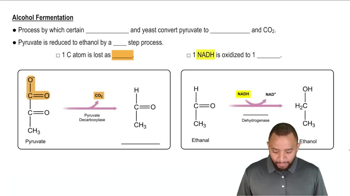
Anaerobic Respiration Concept 4

Gene Editing

Gene editing refers to the process of making precise alterations to the DNA of an organism. Techniques like CRISPR allow scientists to add, remove, or modify genetic material at specific locations in the genome. This capability has vast implications for medicine, agriculture, and biological research, enabling advancements such as disease resistance and improved crop yields.
Recommended video:
Guided course
1:30
Introduction to Translation Example 1