
Ch.18 Metabolic Pathways and ATP Production
Timberlake - Chemistry: An Introduction to General, Organic, and Biological Chemistry 13th Edition
Timberlake13th EditionChemistry: An Introduction to General, Organic, and Biological ChemistryISBN: 9780134421353Non è quello che usi tu?Cambia libro di testo
Capitolo 18, Problema 92d

What metabolic substrate(s) can be produced from the carbon atoms of each of the following amino acids?
d. phenylalanine

Guida verificata passo dopo passo
1
Understand the problem: The question asks which metabolic substrate(s) can be produced from the carbon atoms of the amino acid phenylalanine. This involves identifying the metabolic pathway phenylalanine undergoes and the intermediates it produces.
Recall the metabolic pathway: Phenylalanine is an aromatic amino acid that is primarily metabolized through the phenylalanine hydroxylase pathway. It is converted into tyrosine, which is then further metabolized.
Identify the metabolic intermediates: Tyrosine, derived from phenylalanine, enters the catabolic pathway where it is broken down into fumarate and acetoacetate. These are key intermediates in the citric acid cycle and ketogenesis, respectively.
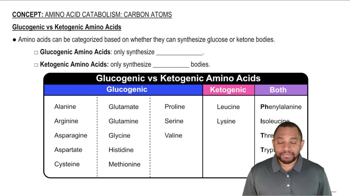
Classify the metabolic substrates: Fumarate is a glucogenic substrate because it can be converted into glucose via gluconeogenesis. Acetoacetate is a ketogenic substrate because it can be used to produce ketone bodies.
Conclude the answer: The carbon atoms of phenylalanine can produce both glucogenic (fumarate) and ketogenic (acetoacetate) substrates, making phenylalanine both glucogenic and ketogenic.

Risposta video verificata per un problema simile:

Questa soluzione video è stata consigliata dai nostri tutor come utile per risolvere questo problema.
Durata del video:
3m

Concetti chiave

Ecco i concetti essenziali che devi comprendere per rispondere correttamente alla domanda.

Amino Acid Metabolism

Amino acid metabolism involves the biochemical processes that break down amino acids for energy or convert them into other compounds. Each amino acid can be transformed into various metabolic substrates, such as glucose or fatty acids, depending on its structure and the body's needs. Understanding these pathways is crucial for determining the metabolic fate of specific amino acids.
Video consigliato:
Percorso guidato
3:03
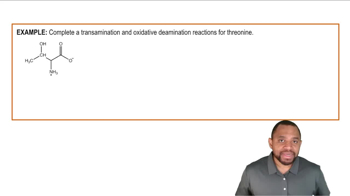
Amino Acid Catabolism: Amino Group Example 2

Phenylalanine Catabolism

Phenylalanine is an essential amino acid that undergoes catabolism primarily through the phenylalanine hydroxylase enzyme, converting it into tyrosine. Tyrosine can then be further metabolized into important neurotransmitters and hormones, such as dopamine and norepinephrine. This pathway highlights the significance of phenylalanine in producing vital biological molecules.
Video consigliato:
Percorso guidato
2:41
Amino Acid Catabolism: Carbon Atoms Concept 1

Metabolic Substrates

Metabolic substrates are the molecules that serve as the starting materials for metabolic reactions, providing the necessary carbon skeletons for energy production or biosynthesis. In the context of amino acids, these substrates can include intermediates that enter the citric acid cycle or precursors for glucose synthesis. Identifying the substrates derived from phenylalanine is essential for understanding its role in metabolism.
Video consigliato:
Percorso guidato
2:32
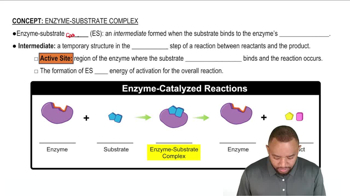
Enzyme-Substrate Complex Concept 1