
Ch. 1 An Introduction to Anatomy and Physiology
Martini - Fundamentals of Anatomy & Physiology 11th Edition
Martini, Nath, Bartholomew11th EditionFundamentals of Anatomy & PhysiologyISBN: 9780136874089당신이 사용하는 게 아니라요?교과서 변경
1장, 문제 10

Match each numbered item with the most closely related lettered item. Use letters for answers in the spaces provided.
_____Temperature regulation
a. Study of tissues 
b. Constant internal environment 
c. Face-up position 
d. Study of functions 
e. Positive feedback 
f. Organ system 
g. Study of cells 
h. Negative feedback 
i. Serous membrane 
j. Study of internal and external body structures 
k. Diaphragm 
l. Tissue 
m. Peritoneal cavity 
n. Organ 
o. Face-down position

검증된 단계별 안내
1
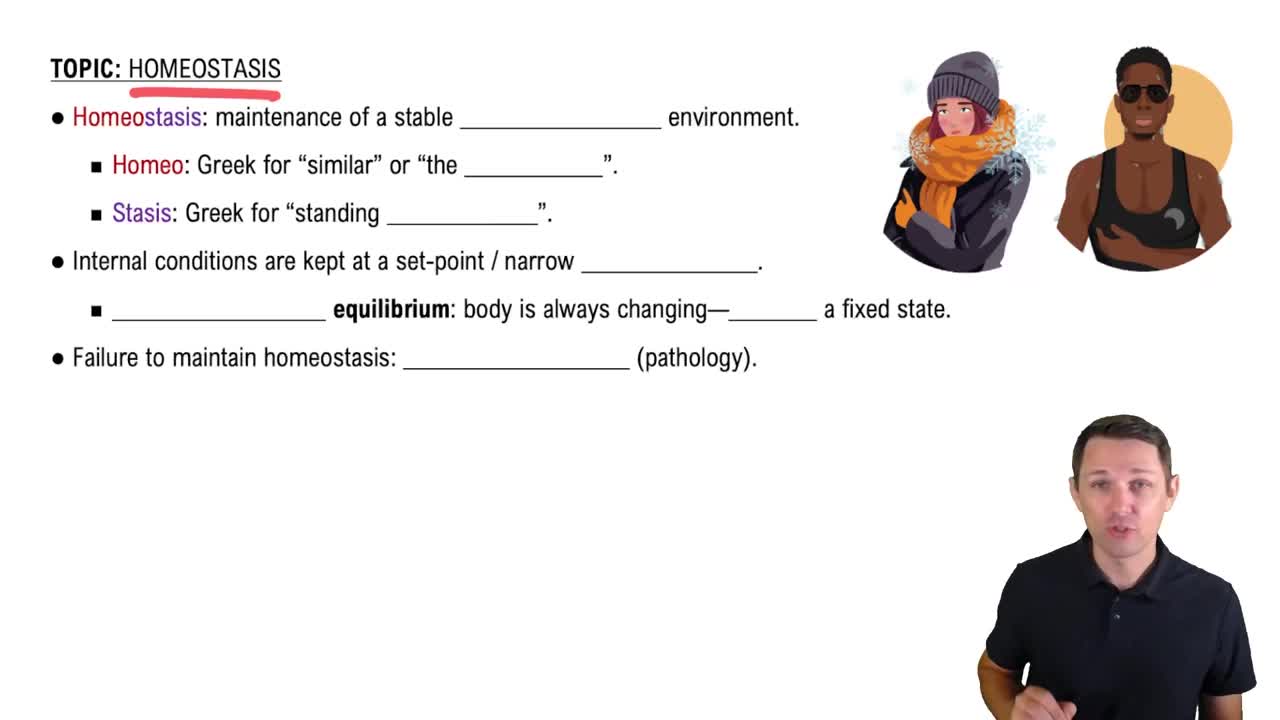
Identify the concept of 'Temperature regulation' as a process that maintains a stable internal environment in the body despite external changes.
Recall that maintaining a constant internal environment is known as 'homeostasis,' which is primarily achieved through feedback mechanisms.
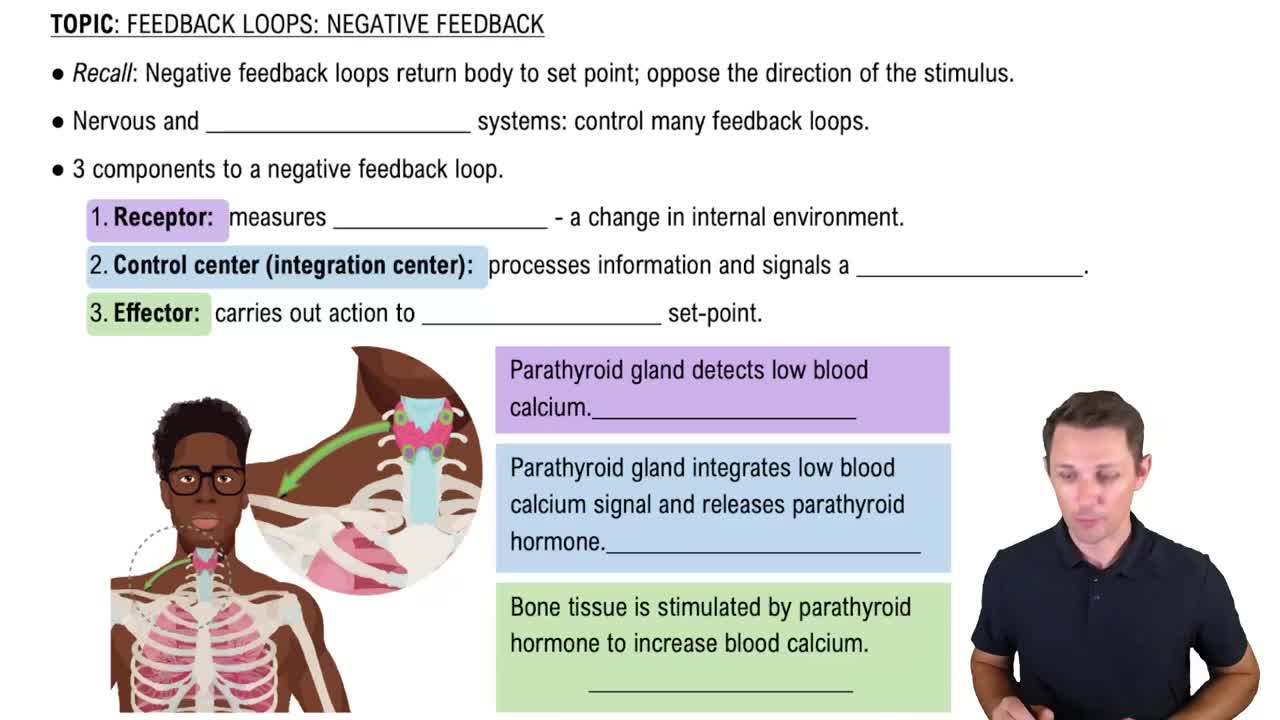
Understand that 'negative feedback' is the most common mechanism for temperature regulation, where the body detects a change and initiates responses to reverse it and restore balance.
Match 'Temperature regulation' with the letter corresponding to 'Negative feedback,' which is letter h in the provided list.
Confirm that other options like 'positive feedback' or anatomical terms do not directly relate to temperature regulation as a homeostatic process.

비슷한 문제에 대한 검증된 영상 답변:

이 영상 해법은 위 문제에 도움이 된다고 튜터들이 추천한 것입니다.
영상 길이:
3m

주요 개념

질문에 올바르게 답하기 위해 반드시 이해해야 하는 핵심 개념들은 다음과 같습니다.

Homeostasis

Homeostasis refers to the body's ability to maintain a stable internal environment despite external changes. Temperature regulation is a key aspect of homeostasis, involving mechanisms that keep body temperature within a narrow, healthy range. This concept is fundamental to understanding how organisms survive and function effectively.
추천 영상:
01:59
Introduction to Homeostasis

Negative Feedback

Negative feedback is a control mechanism that reverses a change in a physiological system to maintain stability. For temperature regulation, if the body gets too hot or cold, negative feedback triggers responses like sweating or shivering to restore normal temperature. It is the primary process maintaining homeostasis.
추천 영상:
03:26
Negative Feedback Loops

Physiology

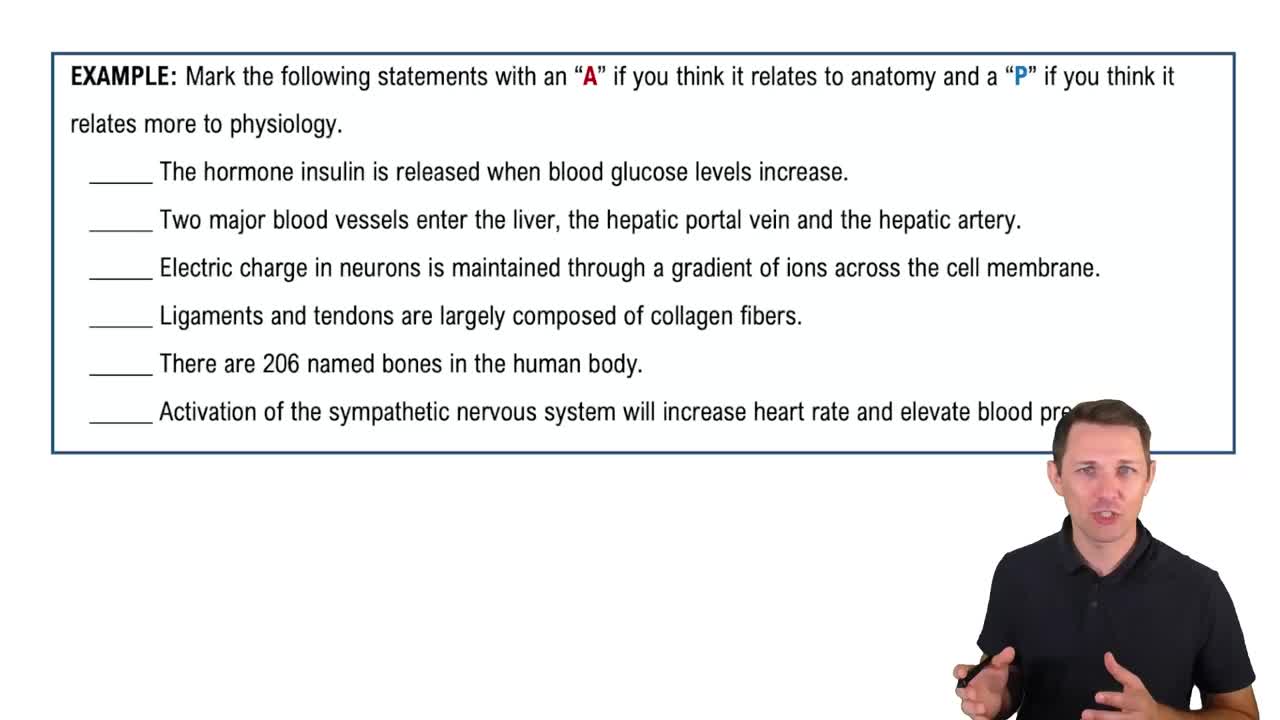
Physiology is the study of the functions and processes of living organisms and their parts. Understanding temperature regulation requires knowledge of physiological mechanisms such as heat production and loss. This concept helps explain how body systems work together to regulate internal conditions.
추천 영상:
02:52
What is Anatomy & Physiology? Example 1
관련 실천
교과서 질문

Match each numbered item with the most closely related lettered item. Use letters for answers in the spaces provided.

_____Endocrine

a. Study of tissues 

b. Constant internal environment 

c. Face-up position 

d. Study of functions 

e. Positive feedback 

f. Organ system 

g. Study of cells 

h. Negative feedback 

i. Serous membrane 

j. Study of internal and external body structures 

k. Diaphragm 

l. Tissue 

m. Peritoneal cavity 

n. Organ 

o. Face-down position

63
views
교과서 질문

Match each numbered item with the most closely related lettered item. Use letters for answers in the spaces provided.

___Heart

a. Study of tissues 

b. Constant internal environment 

c. Face-up position 

d. Study of functions 

e. Positive feedback 

f. Organ system 

g. Study of cells 

h. Negative feedback 

i. Serous membrane 

j. Study of internal and external body structures 

k. Diaphragm 

l. Tissue 

m. Peritoneal cavity 

n. Organ 

o. Face-down position

45
views
교과서 질문

Match each numbered item with the most closely related lettered item. Use letters for answers in the spaces provided.

_____Supine

a. Study of tissues 

b. Constant internal environment 

c. Face-up position 

d. Study of functions 

e. Positive feedback 

f. Organ system 

g. Study of cells 

h. Negative feedback 

i. Serous membrane 

j. Study of internal and external body structures 

k. Diaphragm 

l. Tissue 

m. Peritoneal cavity 

n. Organ 

o. Face-down position

60
views
교과서 질문

Match each numbered item with the most closely related lettered item. Use letters for answers in the spaces provided.

____Muscle

a. Study of tissues 

b. Constant internal environment 

c. Face-up position 

d. Study of functions 

e. Positive feedback 

f. Organ system 

g. Study of cells 

h. Negative feedback 

i. Serous membrane 

j. Study of internal and external body structures 

k. Diaphragm 

l. Tissue 

m. Peritoneal cavity 

n. Organ 

o. Face-down position

47
views
교과서 질문

Match each numbered item with the most closely related lettered item. Use letters for answers in the spaces provided.

____Prone

a. Study of tissues 

b. Constant internal environment 

c. Face-up position 

d. Study of functions 

e. Positive feedback 

f. Organ system 

g. Study of cells 

h. Negative feedback 

i. Serous membrane 

j. Study of internal and external body structures 

k. Diaphragm 

l. Tissue 

m. Peritoneal cavity 

n. Organ 

o. Face-down position

42
views
교과서 질문

Match each numbered item with the most closely related lettered item. Use letters for answers in the spaces provided.

_____Labor and delivery

a. Study of tissues 

b. Constant internal environment 

c. Face-up position 

d. Study of functions 

e. Positive feedback 

f. Organ system 

g. Study of cells 

h. Negative feedback 

i. Serous membrane 

j. Study of internal and external body structures 

k. Diaphragm 

l. Tissue 

m. Peritoneal cavity 

n. Organ 

o. Face-down position

46
views