Ch. 11 The Muscular System
Martini - Fundamentals of Anatomy & Physiology 11th Edition
Martini, Nath, Bartholomew11th EditionFundamentals of Anatomy & PhysiologyISBN: 9780136874089당신이 사용하는 게 아니라요?교과서 변경
11장, 문제 16

Which four muscle groups make up the axial musculature?

검증된 단계별 안내
1
Understand that the axial musculature refers to the muscles located along the central axis of the body, primarily responsible for movements of the head, neck, and trunk, as well as maintaining posture.
Identify that the axial muscles are grouped based on their location and function into four main categories.
The first group is the muscles of the head and neck, which include muscles involved in facial expression, mastication (chewing), and movements of the head.
The second group is the muscles of the vertebral column, which help in maintaining posture and moving the spine.
The third and fourth groups are the muscles of the thorax (including the muscles involved in respiration) and the muscles of the abdominal wall, which support the trunk and assist in breathing and core stability.

비슷한 문제에 대한 검증된 영상 답변:

이 영상 해법은 위 문제에 도움이 된다고 튜터들이 추천한 것입니다.
영상 길이:
2m
도움이 되었나요?

주요 개념

질문에 올바르게 답하기 위해 반드시 이해해야 하는 핵심 개념들은 다음과 같습니다.

Axial Musculature

Axial musculature refers to the muscles located along the central axis of the body, primarily responsible for movements and support of the head, neck, and trunk. These muscles maintain posture and facilitate breathing and movements of the vertebral column.
추천 영상:
4:50
Skeletal System

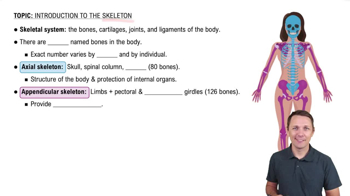
Muscle Groups of the Axial Skeleton

The axial musculature is divided into four main groups based on their location and function: muscles of the head and neck, muscles of the vertebral column, muscles of the thoracic wall, and muscles of the abdominal wall. Each group plays a specific role in movement and stability.
추천 영상:
가이드 코스
06:04
Functional Groups

Functions of Axial Muscle Groups

Each axial muscle group contributes to essential functions such as facial expression, chewing, head and neck movement, posture maintenance, respiration, and trunk movement. Understanding these functions helps identify and differentiate the four muscle groups.
추천 영상:
가이드 코스
06:04
Functional Groups