Ch. 12 Nervous Tissue
Martini - Fundamentals of Anatomy & Physiology 11th Edition
Martini, Nath, Bartholomew11th EditionFundamentals of Anatomy & PhysiologyISBN: 9780136874089당신이 사용하는 게 아니라요?교과서 변경
12장, 문제 3

In the CNS, a neuron typically receives information from other neurons at its:
(a) Axon
(b) Nissl bodies
(c) Dendrites
(d) Nucleus

검증된 단계별 안내
1
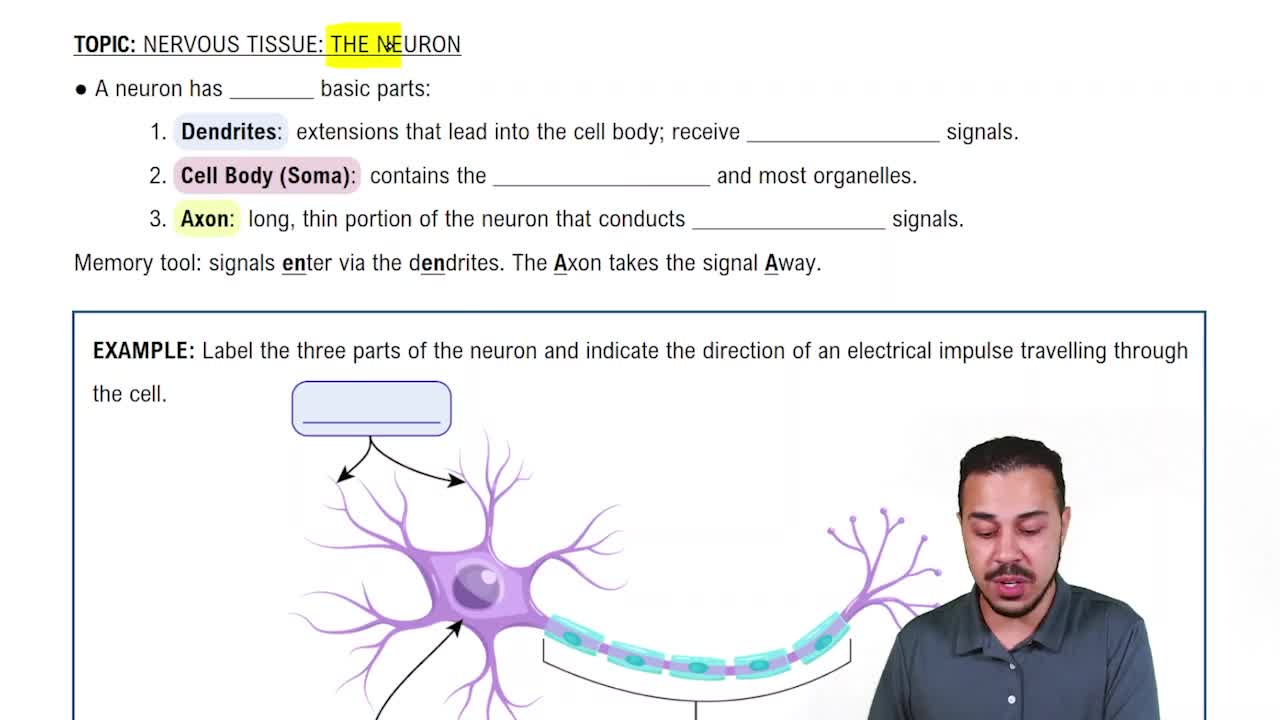
Understand the structure of a neuron: it has dendrites, a cell body (soma), an axon, and other components like the nucleus and Nissl bodies.
Recall the function of dendrites: they are branched extensions of the neuron that receive signals from other neurons.
Recognize that the axon is primarily responsible for transmitting information away from the neuron, not receiving it.
Know that Nissl bodies are involved in protein synthesis within the cell body and do not receive signals.
Identify that the nucleus controls cell activities but does not receive synaptic input; therefore, the correct answer is the dendrites.

비슷한 문제에 대한 검증된 영상 답변:

이 영상 해법은 위 문제에 도움이 된다고 튜터들이 추천한 것입니다.
영상 길이:
2m
도움이 되었나요?

주요 개념

질문에 올바르게 답하기 위해 반드시 이해해야 하는 핵심 개념들은 다음과 같습니다.

Neuron Structure

Neurons are specialized cells with distinct parts: dendrites, a cell body (soma), and an axon. Each part has a specific role in receiving, processing, and transmitting information within the nervous system.
추천 영상:
04:20
The Neuron

Dendrites and Synaptic Input

Dendrites are branched extensions of the neuron that primarily receive signals from other neurons. They contain receptors that detect neurotransmitters released at synapses, allowing the neuron to integrate incoming information.
추천 영상:
05:17
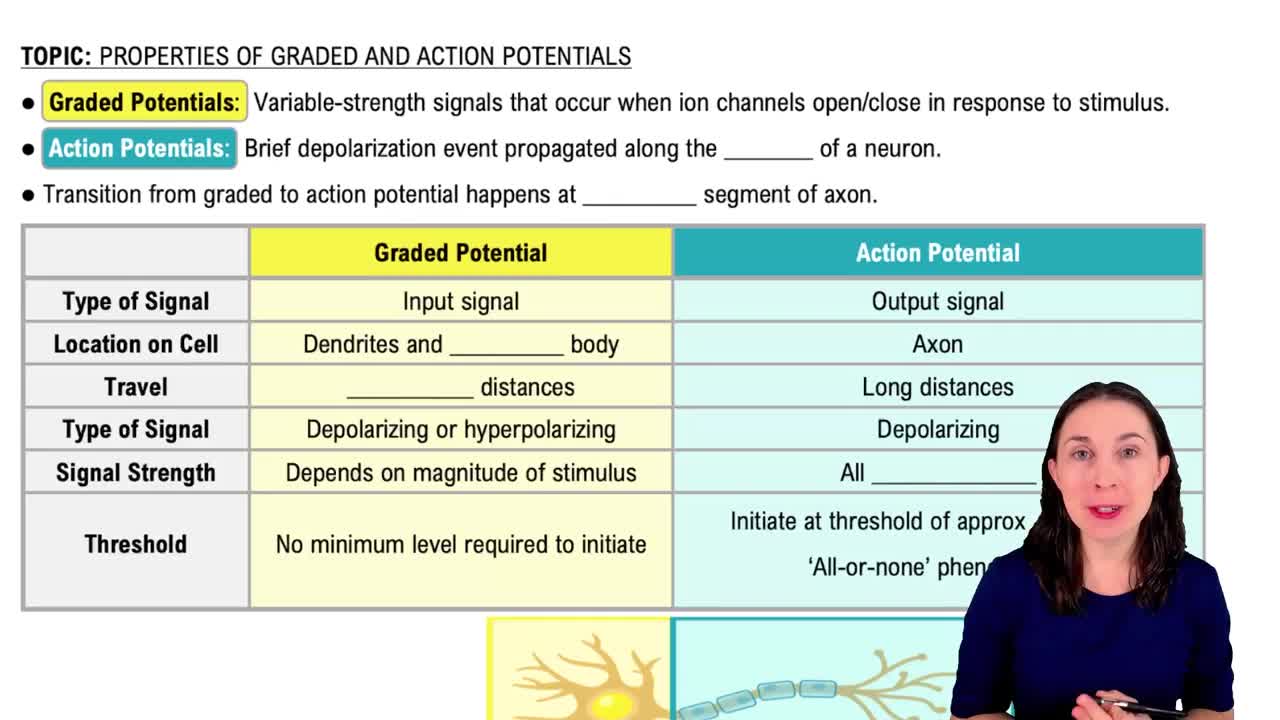
Graded and Action Potentials

Axon Function

The axon is a long projection that transmits electrical impulses away from the neuron's cell body to other neurons or muscles. It is not typically involved in receiving information but in sending it.
추천 영상:
가이드 코스
06:04
Functional Groups