
The primary purpose of the blood brain barrier (BBB) is to (a) provide the brain with oxygenated blood, (b) drain venous blood by the internal jugular veins, (c) isolate neural tissue in the CNS from the general circulation, (d) do all of these.
Ch. 14 The Brain and Cranial Nerves
Martini, Nath, Bartholomew11th EditionFundamentals of Anatomy & PhysiologyISBN: 9780136874089당신이 사용하는 게 아니라요?교과서 변경
14장, 문제 9
The centers in the pons that modify the activity of the respiratory rhythmicity centers in the medulla oblongata are the:
(a) Apneustic and pneumotaxic centers
(b) Inferior and superior peduncles
(c) Cardiac and vasomotor centers
(d) Gracile nucleus and cuneate nucleus
검증된 단계별 안내1
Step 1: Understand the role of the pons in respiratory control. The pons contains centers that influence the basic rhythm of breathing generated by the medulla oblongata.
Step 2: Identify the respiratory centers located in the pons. These centers are known to modify the rate and depth of breathing by interacting with the medullary respiratory rhythmicity centers.
Step 3: Recall the names of the specific centers in the pons involved in respiratory modulation. These are the apneustic center, which promotes inhalation, and the pneumotaxic center, which inhibits inhalation to regulate breathing rate.
Step 4: Compare the given options with the known respiratory centers. The apneustic and pneumotaxic centers correspond to the respiratory-modifying centers in the pons.
Step 5: Conclude that the correct answer is the option listing the apneustic and pneumotaxic centers, as these are the centers in the pons that modify the activity of the respiratory rhythmicity centers in the medulla oblongata.

비슷한 문제에 대한 검증된 영상 답변:
이 영상 해법은 위 문제에 도움이 된다고 튜터들이 추천한 것입니다.
영상 길이:
2m주요 개념
질문에 올바르게 답하기 위해 반드시 이해해야 하는 핵심 개념들은 다음과 같습니다.
Respiratory Rhythmicity Centers in the Medulla Oblongata
These centers in the medulla oblongata generate the basic rhythm of breathing by controlling the rate and depth of respiration. They include the dorsal and ventral respiratory groups, which coordinate inhalation and exhalation. Understanding their function is essential to grasp how breathing is regulated neurologically.
추천 영상:
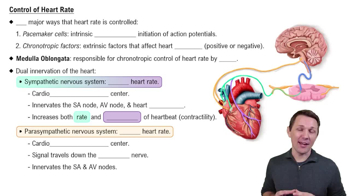
Control of Heart Rate
Apneustic and Pneumotaxic Centers in the Pons
Located in the pons, these centers modulate the activity of the medullary respiratory centers. The apneustic center promotes deep, prolonged inhalation, while the pneumotaxic center inhibits inspiration to regulate the breathing rate. Together, they fine-tune respiratory rhythm and prevent over-inflation of the lungs.
추천 영상:
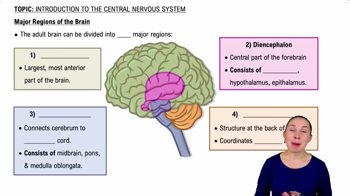
Major Regions of the Brain
Other Brainstem Centers and Their Functions
The brainstem contains various centers like the cardiac and vasomotor centers (regulating heart rate and blood pressure), inferior and superior peduncles (fiber tracts connecting brain regions), and sensory nuclei such as gracile and cuneate nuclei. Recognizing these helps differentiate their roles from respiratory control.
추천 영상:
가이드 코스
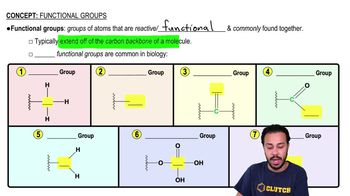
Functional Groups
관련 실천
교과서 질문
교과서 질문
The two cerebral hemispheres are functionally different, even though anatomically they appear the same.
(a) True
(b) False
1066
views
교과서 질문
Coordination of learned movement patterns at the subconscious level is performed by
(a) The cerebellum
(b) The substantia nigra
(c) Association fibers
(d) The hypothalamus
793
views
교과서 질문
The pons contains:
(a) Sensory and motor nuclei for six cranial nerves
(b) Nuclei concerned with the control of blood pressure
(c) Tracts that link the cerebellum with the brainstem
(d) No ascending or descending tracts
(e) Both a and b.
1021
views
교과서 질문
The establishment of emotional states is a function of the:
(a) Limbic system
(b) Tectum
(c) Mammillary bodies
(d) Thalamus
679
views
