Ch. 16 The Autonomic Nervous System and Higher-Order Functions
Martini - Fundamentals of Anatomy & Physiology 11th Edition
Martini, Nath, Bartholomew11th EditionFundamentals of Anatomy & PhysiologyISBN: 9780136874089당신이 사용하는 게 아니라요?교과서 변경
16장, 문제 2

The autonomic division of the nervous system directs
(a) Voluntary motor activity
(b) Conscious control of skeletal muscles
(c) Unconscious control of skeletal muscles
(d) Processes that maintain homeostasis
(e) Sensory input from the skin

검증된 단계별 안내
1
Step 1: Understand the autonomic nervous system (ANS) as a part of the peripheral nervous system that controls involuntary bodily functions, such as heart rate, digestion, respiratory rate, pupillary response, urination, and sexual arousal.
Step 2: Recognize that voluntary motor activity and conscious control of skeletal muscles are functions of the somatic nervous system, not the autonomic nervous system.
Step 3: Note that unconscious control of skeletal muscles is not typically a function of the autonomic nervous system, since skeletal muscles are generally under voluntary control, though some reflexes may be involuntary.
Step 4: Identify that the autonomic nervous system primarily regulates processes that maintain homeostasis, such as controlling smooth muscle, cardiac muscle, and glands without conscious effort.
Step 5: Understand that sensory input from the skin is processed by the somatic sensory system, not the autonomic nervous system, which mainly deals with internal organ regulation.

비슷한 문제에 대한 검증된 영상 답변:

이 영상 해법은 위 문제에 도움이 된다고 튜터들이 추천한 것입니다.
도움이 되었나요?

주요 개념

질문에 올바르게 답하기 위해 반드시 이해해야 하는 핵심 개념들은 다음과 같습니다.

Autonomic Nervous System (ANS)

The autonomic nervous system controls involuntary bodily functions such as heart rate, digestion, and respiratory rate. It operates without conscious effort and helps maintain internal balance, or homeostasis, by regulating smooth muscles, cardiac muscles, and glands.
추천 영상:
1:50
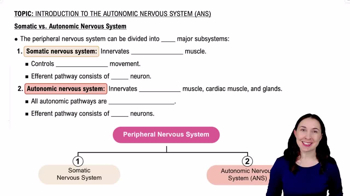
Somatic vs. Autonomic Nervous System

Voluntary vs. Involuntary Control

Voluntary control involves conscious movement of skeletal muscles, managed by the somatic nervous system. In contrast, involuntary control, managed by the autonomic nervous system, regulates functions that occur without conscious awareness, such as heartbeat and digestion.
추천 영상:
0:45
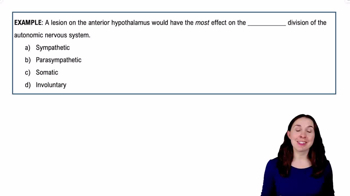
Control of the ANS Example 1

Homeostasis

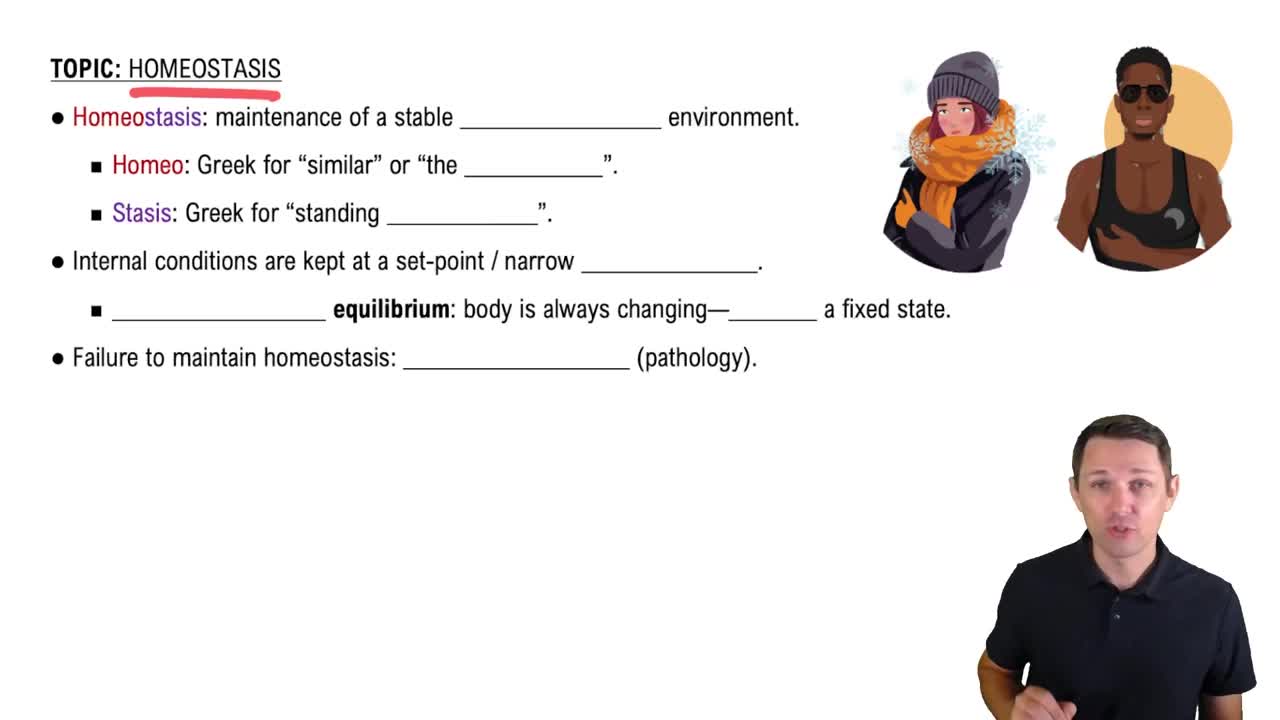
Homeostasis refers to the body's ability to maintain a stable internal environment despite external changes. The autonomic nervous system plays a key role in this by adjusting physiological processes like blood pressure and temperature to keep conditions optimal for survival.
추천 영상:
01:59
Introduction to Homeostasis