Ch. 18 The Endocrine System
Martini - Fundamentals of Anatomy & Physiology 11th Edition
Martini, Nath, Bartholomew11th EditionFundamentals of Anatomy & PhysiologyISBN: 9780136874089당신이 사용하는 게 아니라요?교과서 변경
18장, 문제 8

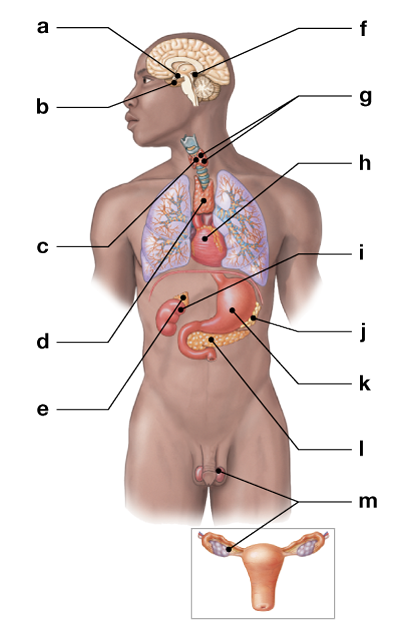
Identify the endocrine glands and tissues in the following diagram.
Diagram of a human body highlighting major endocrine glands and tissues with labeled pointers.
a. ___
b. ___
c. ___
d. ___
e. ___
f. ___
g. ___
h. ___
i. ___
j. ___
k. ___
l. ___
m. ___

검증된 단계별 안내
1
Step 1: Understand that endocrine glands are specialized organs that secrete hormones directly into the bloodstream to regulate various body functions. Common endocrine glands include the pituitary gland, thyroid gland, adrenal glands, pancreas (as an endocrine organ), and gonads (ovaries and testes).
Step 2: Identify the major endocrine glands typically shown in anatomical diagrams: the hypothalamus and pituitary gland in the brain, the thyroid gland in the neck, the parathyroid glands on the thyroid, the adrenal glands above the kidneys, the pancreas in the abdominal cavity, and the gonads in the pelvic region.
Step 3: Recognize that some tissues, such as the heart (which produces atrial natriuretic peptide), kidneys (which produce erythropoietin), and adipose tissue (which produces leptin), also have endocrine functions even though they are not traditional glands.
Step 4: Use anatomical landmarks in the diagram to locate each gland or tissue. For example, locate the brain region for the hypothalamus and pituitary, the neck area for the thyroid and parathyroids, the upper abdomen for the pancreas and adrenal glands, and the pelvic area for the gonads.
Step 5: Label each identified gland or tissue on the diagram accordingly, ensuring you distinguish between primary endocrine glands and other tissues with endocrine functions.

비슷한 문제에 대한 검증된 영상 답변:

이 영상 해법은 위 문제에 도움이 된다고 튜터들이 추천한 것입니다.
도움이 되었나요?

주요 개념

질문에 올바르게 답하기 위해 반드시 이해해야 하는 핵심 개념들은 다음과 같습니다.

Endocrine Glands

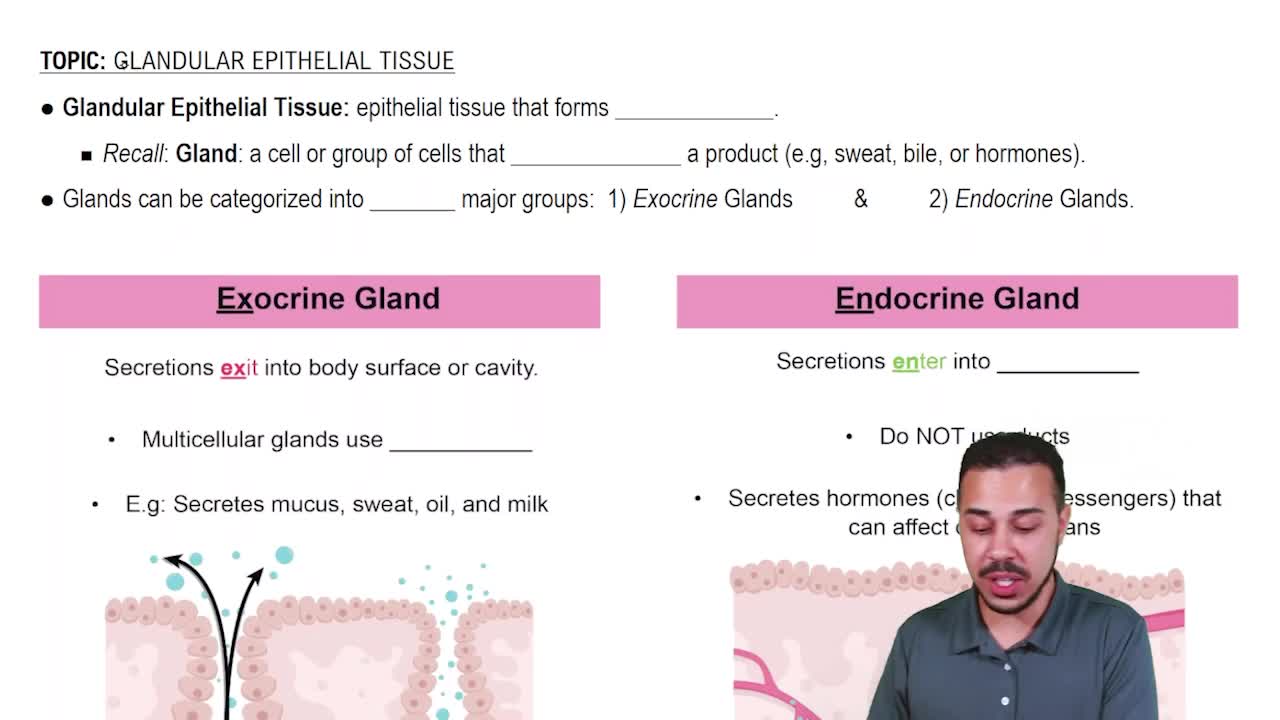
Endocrine glands are specialized organs that secrete hormones directly into the bloodstream to regulate various body functions. Examples include the pituitary, thyroid, adrenal glands, and pancreas. Understanding their location and function is essential for identifying them in diagrams.
추천 영상:
가이드 코스
06:14
Exocrine vs. Endocrine Glands

Hormone-Secreting Tissues

Some tissues not traditionally classified as glands also produce hormones, such as adipose tissue and the heart. Recognizing these hormone-secreting tissues helps in distinguishing all endocrine components in a diagram beyond the classic glands.
추천 영상:
01:33
Protein Secretion

Anatomical Identification in Diagrams

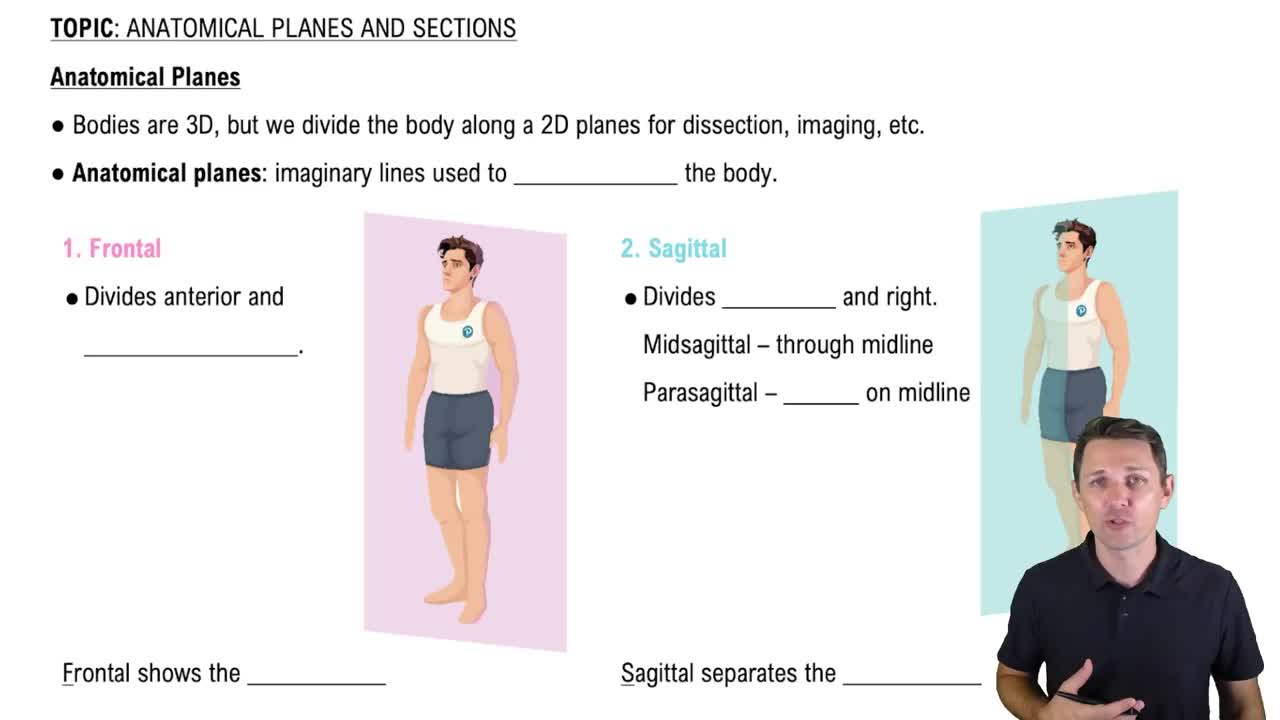
Interpreting anatomical diagrams requires knowledge of the shape, position, and relative size of endocrine glands and tissues. Familiarity with common visual markers and spatial relationships aids in accurately identifying these structures.
추천 영상:
가이드 코스
04:01
Anatomical Planes