Ch. 2 The Chemical Level of Organization
Martini - Fundamentals of Anatomy & Physiology 11th Edition
Martini, Nath, Bartholomew11th EditionFundamentals of Anatomy & PhysiologyISBN: 9780136874089당신이 사용하는 게 아니라요?교과서 변경
2장, 문제 21

What three components are required to create the high-energy compound ATP?

검증된 단계별 안내
1
Understand that ATP (adenosine triphosphate) is a molecule that stores and transfers energy within cells, essential for many biological processes.
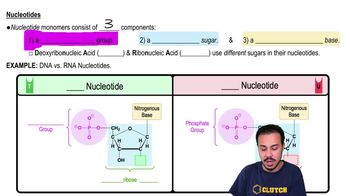
Identify the three main components of ATP: a nitrogenous base, a sugar molecule, and phosphate groups.
Recognize that the nitrogenous base in ATP is adenine, which is a purine base.
Know that the sugar component is ribose, a five-carbon sugar that connects adenine to the phosphate groups.
Understand that ATP contains three phosphate groups linked in a chain, and the bonds between these phosphates store high amounts of energy.

비슷한 문제에 대한 검증된 영상 답변:

이 영상 해법은 위 문제에 도움이 된다고 튜터들이 추천한 것입니다.
영상 길이:
3m
도움이 되었나요?

주요 개념

질문에 올바르게 답하기 위해 반드시 이해해야 하는 핵심 개념들은 다음과 같습니다.

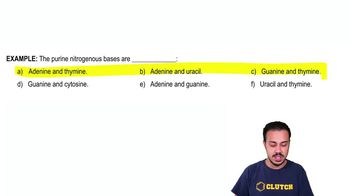
Adenine

Adenine is a nitrogenous base that forms part of the ATP molecule. It pairs with ribose to create adenosine, which is the core structure to which phosphate groups attach, making it essential for ATP's identity.
추천 영상:
가이드 코스
01:05
Nucleic Acids Example 2

Ribose Sugar

Ribose is a five-carbon sugar that connects adenine to the phosphate groups in ATP. It acts as the backbone of the molecule, linking the nitrogenous base to the phosphate chain, enabling the formation of adenosine triphosphate.
추천 영상:

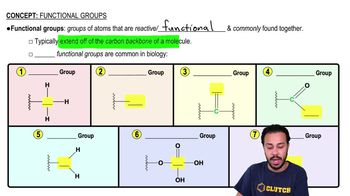
Phosphate Groups

ATP contains three phosphate groups linked by high-energy bonds. These phosphate groups store and release energy during cellular processes, making them critical for ATP's role as the cell’s primary energy carrier.
추천 영상:
가이드 코스
06:04
Functional Groups