Ch. 21 Blood Vessels and Circulation
Martini - Fundamentals of Anatomy & Physiology 11th Edition
Martini, Nath, Bartholomew11th EditionFundamentals of Anatomy & PhysiologyISBN: 9780136874089당신이 사용하는 게 아니라요?교과서 변경
21장, 문제 25

How do pressure and resistance affect cardiac output and peripheral blood flow?

검증된 단계별 안내
1
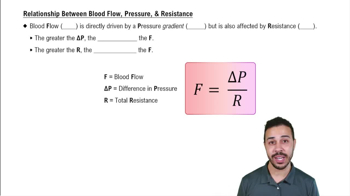
Understand the relationship between cardiac output (CO), blood pressure (P), and resistance (R) using the fundamental hemodynamic equation: \(CO = \frac{P}{R}\). This means cardiac output is directly proportional to pressure and inversely proportional to resistance.
Recognize that pressure in this context refers to the difference in blood pressure between the arterial and venous systems, which drives blood flow through the circulatory system.
Identify that resistance primarily comes from the diameter of blood vessels, blood viscosity, and vessel length, with vessel diameter being the most significant factor affecting resistance.
Analyze how an increase in resistance (for example, due to vasoconstriction) will decrease cardiac output if pressure remains constant, thereby reducing peripheral blood flow.
Consider how changes in pressure (such as increased arterial pressure) can increase cardiac output and peripheral blood flow if resistance remains unchanged, highlighting the dynamic balance between these factors in regulating circulation.

비슷한 문제에 대한 검증된 영상 답변:

이 영상 해법은 위 문제에 도움이 된다고 튜터들이 추천한 것입니다.
도움이 되었나요?

주요 개념

질문에 올바르게 답하기 위해 반드시 이해해야 하는 핵심 개념들은 다음과 같습니다.

Cardiac Output

Cardiac output is the volume of blood the heart pumps per minute, calculated as heart rate multiplied by stroke volume. It determines how much blood is delivered to tissues and is influenced by factors like preload, afterload, and contractility.
추천 영상:
9:44
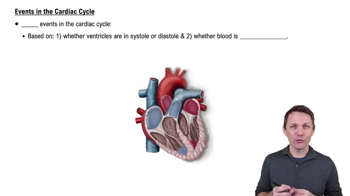
Events in the Cardiac Cycle

Vascular Resistance

Vascular resistance refers to the opposition blood faces when flowing through blood vessels, primarily determined by vessel diameter and blood viscosity. Higher resistance reduces blood flow and increases the workload on the heart.
추천 영상:
6:55
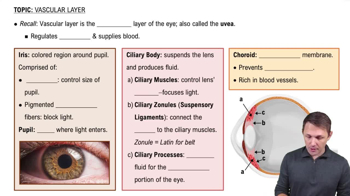
Vascular Layer

Relationship Between Pressure, Resistance, and Blood Flow

Blood flow is driven by the pressure gradient between arteries and veins and is inversely related to resistance, as described by Poiseuille’s law. Increased resistance or decreased pressure reduces flow, affecting tissue perfusion and cardiac workload.
추천 영상:
가이드 코스
6:40
Relationship Between Blood Flow, Pressure, & Resistance