Ch. 22 The Lymphatic System and Immunity
Martini - Fundamentals of Anatomy & Physiology 11th Edition
Martini, Nath, Bartholomew11th EditionFundamentals of Anatomy & PhysiologyISBN: 9780136874089당신이 사용하는 게 아니라요?교과서 변경
22장, 문제 17

Blocking the antigen receptors on the surface of lymphocytes would interfere with
(a) Phagocytosis of the antigen
(b) That lymphocyte's ability to produce antibodies
(c) Antigen recognition
(d) The ability of the lymphocyte to present antigen
(e) Opsonization of the antigen

검증된 단계별 안내
1
Step 1: Understand the role of antigen receptors on lymphocytes. These receptors are specialized proteins on the surface of lymphocytes that specifically recognize and bind to antigens.
Step 2: Analyze each option in relation to the function of antigen receptors. For example, phagocytosis (option a) is primarily performed by phagocytes like macrophages and neutrophils, not lymphocytes, so blocking antigen receptors on lymphocytes would not directly affect phagocytosis.
Step 3: Consider antibody production (option b). While lymphocytes (specifically B cells) produce antibodies, the initial step requires recognition of the antigen through the antigen receptor. Blocking the receptor would prevent recognition and thus interfere with antibody production.
Step 4: Evaluate antigen recognition (option c). Since antigen receptors are responsible for recognizing antigens, blocking these receptors would directly interfere with the lymphocyte's ability to recognize antigens.
Step 5: Review antigen presentation (option d) and opsonization (option e). Antigen presentation is typically done by antigen-presenting cells, and opsonization is a process where antibodies or complement coat antigens to enhance phagocytosis. Blocking antigen receptors on lymphocytes would not directly affect these processes.

비슷한 문제에 대한 검증된 영상 답변:

이 영상 해법은 위 문제에 도움이 된다고 튜터들이 추천한 것입니다.
도움이 되었나요?

주요 개념

질문에 올바르게 답하기 위해 반드시 이해해야 하는 핵심 개념들은 다음과 같습니다.

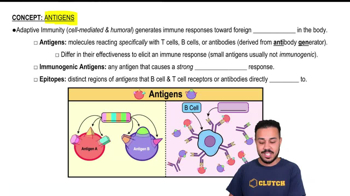
Antigen Receptors on Lymphocytes

Antigen receptors are specialized proteins on lymphocytes that specifically bind to antigens. This binding is crucial for recognizing foreign molecules and initiating an immune response. Blocking these receptors prevents the lymphocyte from detecting antigens, impairing its function.
추천 영상:
3:59
Antigens

Antigen Recognition

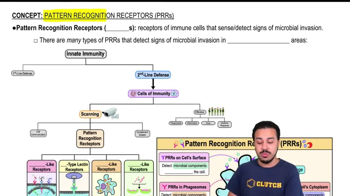
Antigen recognition is the process by which lymphocytes identify and bind to specific antigens via their receptors. This step is essential for activating lymphocytes to respond appropriately, such as producing antibodies or initiating cell-mediated immunity.
추천 영상:
4:24
Pattern Recognition Receptors

Lymphocyte Functions: Antibody Production vs. Antigen Presentation

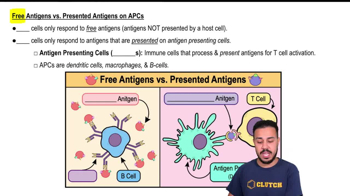
Lymphocytes have distinct roles: B cells produce antibodies after recognizing antigens, while some lymphocytes can present antigens to other immune cells. Blocking antigen receptors mainly affects antigen recognition and subsequent antibody production, but not antigen presentation or phagocytosis directly.
추천 영상:
4:11
Free Antigens vs. Presented Antigens on APCs