Ch. 22 The Lymphatic System and Immunity
Martini - Fundamentals of Anatomy & Physiology 11th Edition
Martini, Nath, Bartholomew11th EditionFundamentals of Anatomy & PhysiologyISBN: 9780136874089당신이 사용하는 게 아니라요?교과서 변경
22장, 문제 1

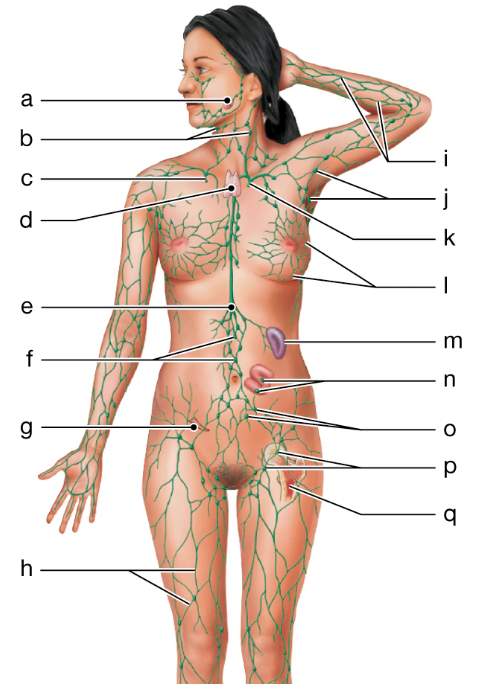
Identify the structures of the lymphatic system in the following diagram.
Diagram of a female body showing labeled lymphatic vessels and lymphoid organs throughout the head, neck, arms, torso, and legs.
a. ___
b. ___
c. ___
d. ___
e. ___
f. ___
g. ___
h. ___
i. ___
j. ___
k. ___
l. ___
m. ___
n. ___
o. ___
p. ___
q. ___

검증된 단계별 안내
1
Step 1: Begin by familiarizing yourself with the major components of the lymphatic system, which typically include lymph nodes, lymphatic vessels, the thymus, spleen, tonsils, and lymphatic ducts. Understanding these will help you identify structures in the diagram.
Step 2: Examine each labeled part (a through q) in the diagram carefully, noting their shape, location, and connections. For example, lymph nodes are usually small, bean-shaped structures along lymphatic vessels, while the thymus is a gland located in the upper chest.
Step 3: Use anatomical landmarks to assist identification. For instance, the spleen is located on the left side of the body near the stomach, and the thoracic duct is a large lymphatic vessel running along the vertebral column.
Step 4: Match each label to the corresponding lymphatic structure by comparing the diagram’s features with your knowledge of lymphatic anatomy. For example, if a label points to a cluster of small nodules in the throat area, it likely represents the tonsils.
Step 5: Confirm your identifications by cross-referencing with a reliable anatomy resource or textbook to ensure each structure (a through q) is correctly named according to its position and appearance in the diagram.

비슷한 문제에 대한 검증된 영상 답변:

이 영상 해법은 위 문제에 도움이 된다고 튜터들이 추천한 것입니다.
도움이 되었나요?

주요 개념

질문에 올바르게 답하기 위해 반드시 이해해야 하는 핵심 개념들은 다음과 같습니다.

Anatomy of the Lymphatic System

The lymphatic system consists of a network of vessels, nodes, and organs that help maintain fluid balance and immune defense. Key structures include lymphatic vessels, lymph nodes, the spleen, thymus, and tonsils. Understanding their location and function is essential for identifying them in diagrams.
추천 영상:
가이드 코스
3:57
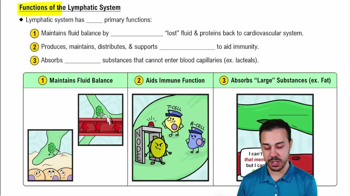
Functions of the Lymphatic System

Lymph Nodes and Their Function

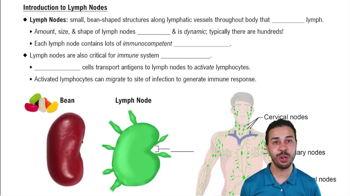
Lymph nodes are small, bean-shaped structures distributed along lymphatic vessels. They filter lymph fluid, trapping pathogens and foreign particles, and house immune cells that initiate immune responses. Recognizing their typical shape and position helps in diagram identification.
추천 영상:
가이드 코스
5:05
Introduction to Lymph Nodes

Primary and Secondary Lymphoid Organs

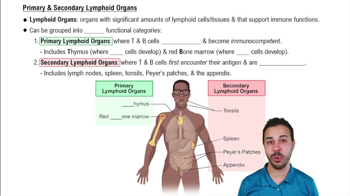
Primary lymphoid organs, like the thymus and bone marrow, are where lymphocytes mature. Secondary lymphoid organs, such as the spleen and lymph nodes, are sites where immune responses are activated. Differentiating these organs aids in correctly labeling lymphatic system diagrams.
추천 영상:
가이드 코스
4:34
Primary & Secondary Lymphoid Organs