Ch. 26 The Urinary System
Martini - Fundamentals of Anatomy & Physiology 11th Edition
Martini, Nath, Bartholomew11th EditionFundamentals of Anatomy & PhysiologyISBN: 9780136874089당신이 사용하는 게 아니라요?교과서 변경
25장, 문제 6

Changing the luminal diameters of the afferent and efferent arterioles to alter the GFR can be an example of 
(a) Hormonal regulation
(b) Autonomic regulation
(c) Autoregulation
(d) All of these

검증된 단계별 안내
1
Step 1: Understand the key terms in the question. The afferent and efferent arterioles are small blood vessels that regulate blood flow into and out of the glomerulus in the kidney, which directly affects the Glomerular Filtration Rate (GFR).
Step 2: Define the types of regulation mentioned: (a) Hormonal regulation involves hormones like angiotensin II or atrial natriuretic peptide affecting arteriole diameter; (b) Autonomic regulation involves nervous system control, such as sympathetic nervous system input; (c) Autoregulation refers to the kidney's intrinsic ability to maintain a stable GFR by adjusting arteriole diameter without external signals.
Step 3: Recognize that changing the luminal diameter of afferent and efferent arterioles to alter GFR can occur through intrinsic mechanisms (autoregulation), hormonal signals, and autonomic nervous system input.
Step 4: Since all three mechanisms can influence arteriole diameter and thus GFR, consider that the correct answer might encompass all these regulatory methods.
Step 5: Conclude that the process described is an example of (d) All of these, because hormonal, autonomic, and autoregulatory mechanisms all contribute to changing arteriole diameter and regulating GFR.

비슷한 문제에 대한 검증된 영상 답변:

이 영상 해법은 위 문제에 도움이 된다고 튜터들이 추천한 것입니다.

주요 개념

질문에 올바르게 답하기 위해 반드시 이해해야 하는 핵심 개념들은 다음과 같습니다.

Glomerular Filtration Rate (GFR)

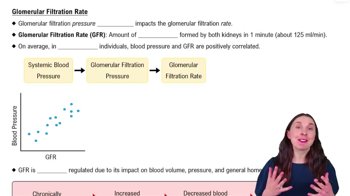
GFR is the rate at which blood is filtered through the glomeruli of the kidneys. It depends on the pressure within the glomerular capillaries, which is influenced by the diameter of afferent and efferent arterioles. Changes in these diameters directly affect filtration efficiency.
추천 영상:
3:15
Glomerular Filtration Rate

Autoregulation of Kidney Function

Autoregulation refers to the kidney's intrinsic ability to maintain a stable GFR despite fluctuations in blood pressure. It involves adjusting the luminal diameter of afferent and efferent arterioles to control blood flow and filtration pressure without external signals.
추천 영상:
1:00
The Kidneys Example 1

Hormonal and Autonomic Regulation

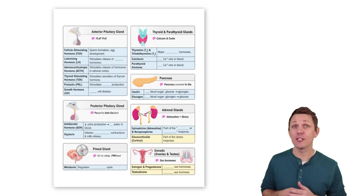
Hormonal regulation involves substances like angiotensin II and atrial natriuretic peptide that alter arteriole diameter to influence GFR. Autonomic regulation uses sympathetic nervous system signals to constrict or dilate arterioles, affecting kidney blood flow and filtration.
추천 영상:
13:06
Review of Major Hormones