Ch. 29 Development and Inheritance
Martini - Fundamentals of Anatomy & Physiology 11th Edition
Martini, Nath, Bartholomew11th EditionFundamentals of Anatomy & PhysiologyISBN: 9780136874089당신이 사용하는 게 아니라요?교과서 변경
28장, 문제 17

Problems involving the formation of the chorion would affect 
(a) The embryo’s ability to produce blood cells
(b) The formation of limbs
(c) The embryo’s ability to derive nutrition from the mother
(d) Lung formation
(e) The urinary system

검증된 단계별 안내
1
Step 1: Understand the role of the chorion in embryonic development. The chorion is one of the extraembryonic membranes that contributes to forming the placenta, which is essential for nutrient and gas exchange between the mother and the embryo.
Step 2: Recognize that the chorion's primary function is related to supporting the embryo by facilitating the transfer of nutrients and oxygen from the mother to the developing embryo, rather than directly forming embryonic tissues like limbs, lungs, or the urinary system.
Step 3: Analyze each option in the problem: (a) blood cell production is mainly from the yolk sac and later fetal liver and bone marrow; (b) limb formation is a function of the embryo's mesoderm; (c) nutrition from the mother is linked to the placenta, which involves the chorion; (d) lung formation is part of the embryo's endodermal development; (e) the urinary system develops from the mesoderm.
Step 4: Conclude that problems with the chorion would most directly affect the embryo's ability to derive nutrition from the mother, since the chorion is integral to placenta formation and nutrient exchange.
Step 5: Therefore, the correct focus is on the function related to maternal-fetal nutrient transfer, which corresponds to option (c).

비슷한 문제에 대한 검증된 영상 답변:

이 영상 해법은 위 문제에 도움이 된다고 튜터들이 추천한 것입니다.
도움이 되었나요?

주요 개념

질문에 올바르게 답하기 위해 반드시 이해해야 하는 핵심 개념들은 다음과 같습니다.

Chorion and Its Role in Embryonic Development

The chorion is an extraembryonic membrane that contributes to forming the placenta, facilitating nutrient and gas exchange between the mother and embryo. It surrounds the embryo and other membranes, playing a crucial role in supporting embryonic growth by enabling maternal-fetal nutrient transfer.
추천 영상:
0:43
Embryonic Development (Weeks 3-8) Example 3

Placenta Formation and Maternal-Fetal Nutrition

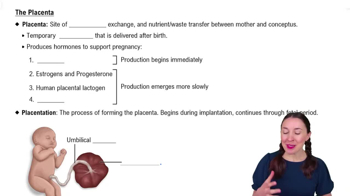
The placenta develops partly from the chorion and is essential for providing oxygen and nutrients to the embryo while removing waste. Problems in chorion formation can impair placental function, leading to inadequate nutrition and oxygen supply to the developing embryo.
추천 영상:
2:19
The Placenta

Embryonic Structures Derived from the Chorion

Unlike organs such as limbs, lungs, or the urinary system, which develop from the embryo's germ layers, the chorion is an extraembryonic structure. Its primary function is not organogenesis but supporting the embryo through nutrient exchange, so defects mainly affect embryonic nutrition rather than direct organ formation.
추천 영상:
0:43
Embryonic Development (Weeks 3-8) Example 3