
교과서 질문
The two major components of the integumentary system are
(a) The cutaneous membrane and the accessory structures
(b) The epidermis and the subcutaneous layer
(c) The hair and the nails
(d) The dermis and the subcutaneous layer
59
views

 검증된 단계별 안내
 06:49
06:49
 04:09
04:09 02:46
02:46The two major components of the integumentary system are
(a) The cutaneous membrane and the accessory structures
(b) The epidermis and the subcutaneous layer
(c) The hair and the nails
(d) The dermis and the subcutaneous layer
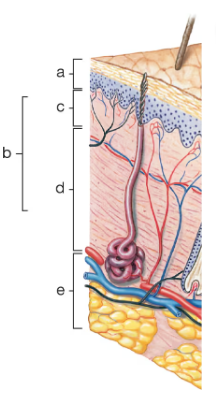
Identify the different portions (a–d) of the cutaneous membrane and the underlying layer of loose connective tissue (e) in the diagram to the right.
c. ____
Identify the different portions (a–d) of the cutaneous membrane and the underlying layer of loose connective tissue (e) in the diagram to the right.
b. ____
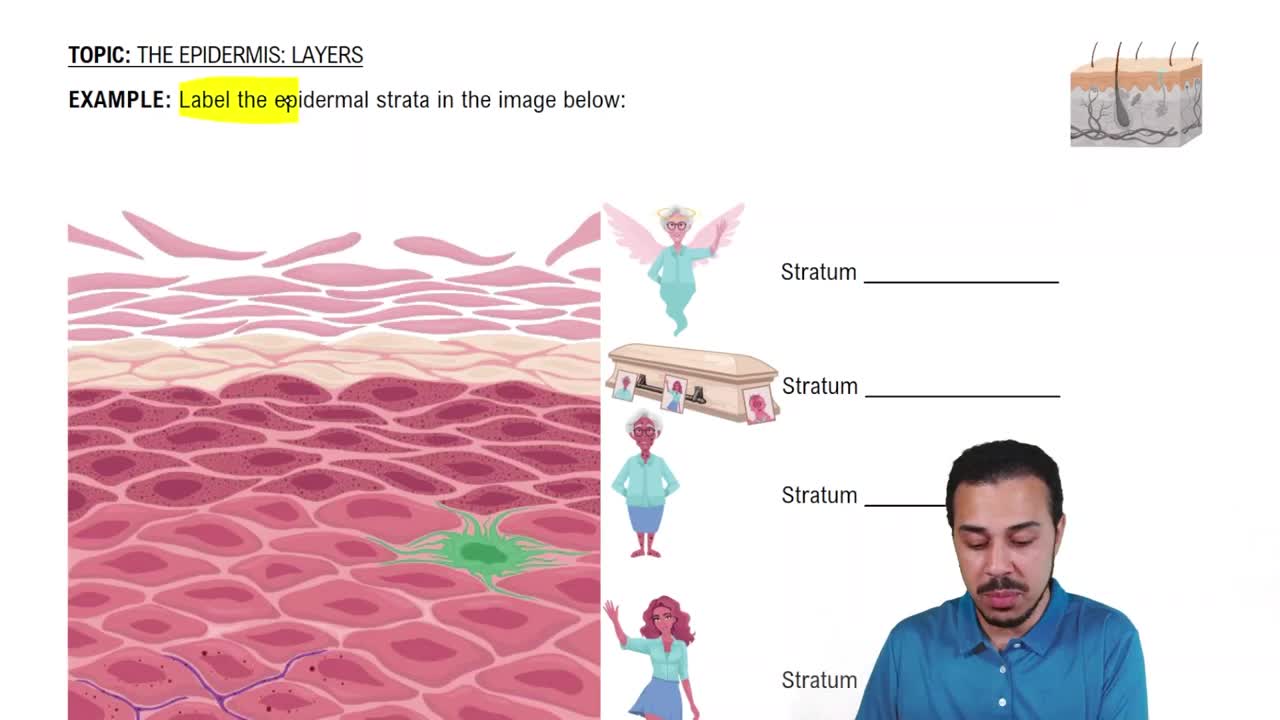
Beginning at the basement membrane and traveling toward the free surface, the epidermis includes the following strata:
(a) Corneum, lucidum, granulosum, spinosum, basale
(b) Granulosum, lucidum, spinosum, basale, corneum
(c) Basale, spinosum, granulosum, lucidum, corneum
(d) Lucidum, granulosum, spinosum, basale, corneum
Identify the different portions (a–d) of the cutaneous membrane and the underlying layer of loose connective tissue (e) in the diagram to the right.
e. ____
Identify the different portions (a–d) of the cutaneous membrane and the underlying layer of loose connective tissue (e) in the diagram to the right.
a. ____