Ch. 5 The Integumentary System
Martini - Fundamentals of Anatomy & Physiology 11th Edition
Martini, Nath, Bartholomew11th EditionFundamentals of Anatomy & PhysiologyISBN: 9780136874089당신이 사용하는 게 아니라요?교과서 변경
5장, 문제 21

In clinical practice, drugs can be delivered by diffusion across the skin. This delivery method is called transdermal administration. Why are fat-soluble drugs more suitable for transdermal administration than drugs that are water soluble?

검증된 단계별 안내
1
Understand the structure of the skin, focusing on the outermost layer called the stratum corneum, which is composed mainly of dead skin cells embedded in a lipid (fat) matrix.
Recognize that the stratum corneum acts as a barrier to substances trying to penetrate the skin, and its lipid-rich nature makes it more permeable to fat-soluble (lipophilic) substances than to water-soluble (hydrophilic) substances.
Explain that fat-soluble drugs can dissolve in the lipid matrix of the stratum corneum, allowing them to diffuse more easily through this barrier and reach deeper layers of the skin and eventually the bloodstream.
Contrast this with water-soluble drugs, which have difficulty passing through the lipid-rich stratum corneum because they do not dissolve well in lipids, limiting their ability to penetrate the skin effectively.
Conclude that the lipophilicity of fat-soluble drugs enhances their transdermal absorption, making them more suitable for delivery via the skin compared to water-soluble drugs.

비슷한 문제에 대한 검증된 영상 답변:

이 영상 해법은 위 문제에 도움이 된다고 튜터들이 추천한 것입니다.
영상 길이:
2m
도움이 되었나요?

주요 개념

질문에 올바르게 답하기 위해 반드시 이해해야 하는 핵심 개념들은 다음과 같습니다.

Transdermal Drug Delivery

Transdermal drug delivery involves administering medication through the skin to enter the bloodstream. This method bypasses the digestive system and provides controlled, sustained release of drugs. The skin's outer layer, the stratum corneum, acts as a barrier that drugs must penetrate to be effective.
추천 영상:
1:08
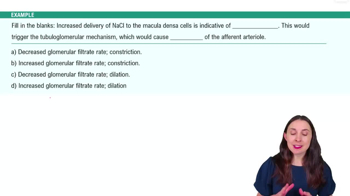
Renal Physiology: Regulation of Glomerular Filtration Example 3

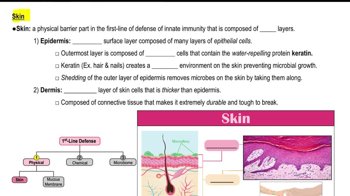
Skin Structure and Barrier Function

The skin's outermost layer, the stratum corneum, is composed mainly of lipids and dead cells, creating a hydrophobic barrier. This lipid-rich environment favors the passage of fat-soluble substances, while water-soluble drugs have difficulty crossing due to their inability to dissolve in lipids.
추천 영상:

Solubility and Drug Permeability

Drug solubility affects its ability to penetrate biological membranes. Fat-soluble (lipophilic) drugs dissolve well in the lipid layers of the skin, enhancing absorption. In contrast, water-soluble drugs struggle to cross the lipid barrier, making fat-soluble drugs more suitable for transdermal delivery.
추천 영상:
4:58
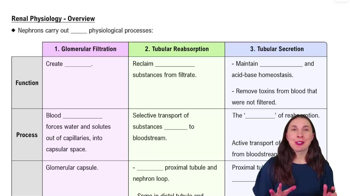
Overview of Renal Physiology