Ch. 6 Bones and Bone Structure
Martini - Fundamentals of Anatomy & Physiology 11th Edition
Martini, Nath, Bartholomew11th EditionFundamentals of Anatomy & PhysiologyISBN: 9780136874089당신이 사용하는 게 아니라요?교과서 변경
6장, 문제 15

List the organic and inorganic components of bone matrix.

검증된 단계별 안내
1
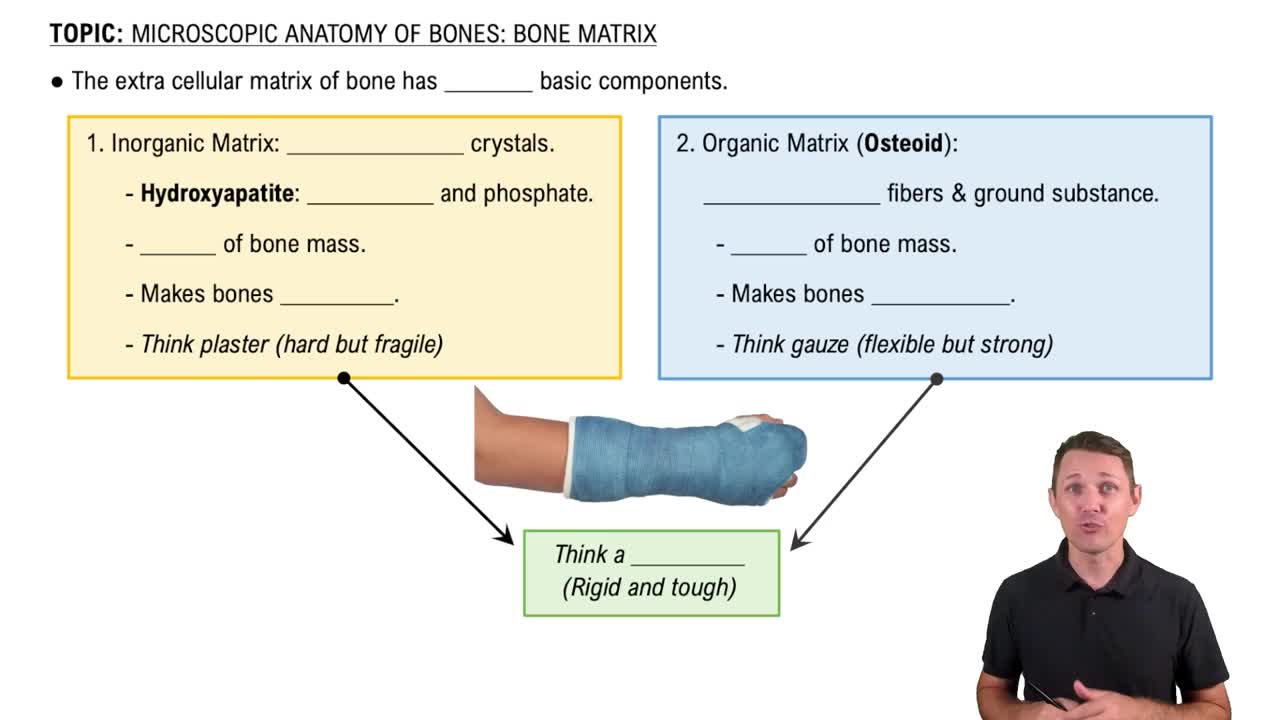
Understand that the bone matrix is composed of both organic and inorganic components, each contributing to the bone's structure and function.
Identify the organic components, which primarily include collagen fibers (mostly type I collagen) that provide tensile strength and flexibility to the bone.
Recognize other organic substances such as proteoglycans and glycoproteins that help maintain the matrix and facilitate mineralization.
Identify the inorganic components, mainly hydroxyapatite crystals, which are composed of calcium phosphate and provide hardness and rigidity to the bone.
Note that other inorganic ions like calcium carbonate and small amounts of magnesium, sodium, and fluoride are also part of the mineral content in the bone matrix.

비슷한 문제에 대한 검증된 영상 답변:

이 영상 해법은 위 문제에 도움이 된다고 튜터들이 추천한 것입니다.
영상 길이:
2m
도움이 되었나요?

주요 개념

질문에 올바르게 답하기 위해 반드시 이해해야 하는 핵심 개념들은 다음과 같습니다.

Bone Matrix Composition

The bone matrix is the intercellular substance of bone tissue, consisting of organic and inorganic components. It provides structural support and strength to bones, enabling them to perform their functions effectively.
추천 영상:

Organic Components of Bone Matrix

Organic components mainly include collagen fibers (primarily type I collagen) and ground substance made of proteoglycans and glycoproteins. These provide flexibility and tensile strength, allowing bones to resist stretching and twisting forces.
추천 영상:

Inorganic Components of Bone Matrix

Inorganic components are primarily mineral salts, mainly hydroxyapatite crystals (calcium phosphate), which give bones their hardness and rigidity. These minerals enable bones to bear weight and resist compression.
추천 영상: