Ch. 6 Bones and Bone Structure
Martini - Fundamentals of Anatomy & Physiology 11th Edition
Martini, Nath, Bartholomew11th EditionFundamentals of Anatomy & PhysiologyISBN: 9780136874089당신이 사용하는 게 아니라요?교과서 변경
6장, 문제 6

The hormones that coordinate the storage, absorption, and excretion of calcium ions are:
(a) Growth hormone and thyroxine
(b) Calcitonin and parathyroid hormone
(c) Calcitriol and cholecalciferol
(d) Estrogens and androgens

검증된 단계별 안내
1
Understand that calcium ion homeostasis in the body is primarily regulated by hormones that control calcium storage in bones, absorption from the digestive tract, and excretion by the kidneys.
Recall that parathyroid hormone (PTH) increases blood calcium levels by stimulating bone resorption, increasing calcium absorption in the intestines (indirectly via calcitriol), and reducing calcium excretion by the kidneys.
Recognize that calcitonin lowers blood calcium levels by inhibiting bone resorption and promoting calcium deposition in bones.
Note that growth hormone and thyroxine mainly influence growth and metabolism, not directly calcium regulation; calcitriol and cholecalciferol are forms of vitamin D involved in calcium absorption but not the primary hormones coordinating all three processes; estrogens and androgens influence bone density but are not the main regulators of calcium ion balance.
Conclude that the hormones coordinating storage, absorption, and excretion of calcium ions are calcitonin and parathyroid hormone.

비슷한 문제에 대한 검증된 영상 답변:

이 영상 해법은 위 문제에 도움이 된다고 튜터들이 추천한 것입니다.
영상 길이:
2m
도움이 되었나요?

주요 개념

질문에 올바르게 답하기 위해 반드시 이해해야 하는 핵심 개념들은 다음과 같습니다.

Calcitonin and Parathyroid Hormone

Calcitonin and parathyroid hormone (PTH) are key regulators of calcium homeostasis. Calcitonin lowers blood calcium levels by inhibiting bone resorption, while PTH increases calcium levels by stimulating bone breakdown, enhancing intestinal absorption, and reducing renal excretion.
추천 영상:
4:31
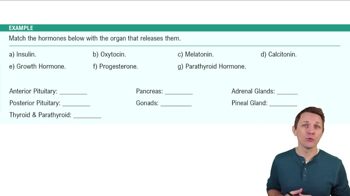
Hormone Review Table Example 1

Calcium Ion Homeostasis

Calcium ion homeostasis involves maintaining stable calcium levels in the blood and tissues, essential for muscle contraction, nerve function, and bone health. Hormones regulate calcium absorption from the gut, storage in bones, and excretion via kidneys to keep this balance.
추천 영상:
01:59
Introduction to Homeostasis

Role of Vitamin D Metabolites (Calcitriol and Cholecalciferol)

Cholecalciferol (vitamin D3) is converted into calcitriol, the active form of vitamin D, which promotes calcium absorption in the intestines. While important for calcium metabolism, these metabolites primarily enhance absorption rather than directly coordinating storage and excretion.