Ch. 7 The Axial Skeleton
Martini - Fundamentals of Anatomy & Physiology 11th Edition
Martini, Nath, Bartholomew11th EditionFundamentals of Anatomy & PhysiologyISBN: 9780136874089당신이 사용하는 게 아니라요?교과서 변경
7장, 문제 16

What is the relationship between the ethmoid and the nasal cavity?

검증된 단계별 안내
1
Step 1: Understand the anatomical location of the ethmoid bone. The ethmoid is a delicate, spongy bone located between the eyes, forming part of the anterior cranial base and the medial wall of the orbits.
Step 2: Identify the structures of the ethmoid bone that relate to the nasal cavity. Key parts include the perpendicular plate, which forms the superior part of the nasal septum, and the ethmoidal labyrinths, which contain air cells (ethmoidal sinuses) opening into the nasal cavity.
Step 3: Recognize that the ethmoid bone contributes to the roof, lateral walls, and the nasal septum of the nasal cavity, thus playing a crucial role in separating the nasal cavity from the brain and supporting the nasal structure.
Step 4: Note the functional significance: the ethmoidal air cells within the ethmoid bone lighten the skull and help warm and humidify inhaled air as it passes through the nasal cavity.
Step 5: Summarize the relationship by stating that the ethmoid bone structurally forms part of the nasal cavity's framework and contains sinuses that communicate directly with the nasal passages.

비슷한 문제에 대한 검증된 영상 답변:

이 영상 해법은 위 문제에 도움이 된다고 튜터들이 추천한 것입니다.
도움이 되었나요?

주요 개념

질문에 올바르게 답하기 위해 반드시 이해해야 하는 핵심 개념들은 다음과 같습니다.

Ethmoid Bone Anatomy

The ethmoid bone is a delicate, spongy bone located between the eyes, forming part of the anterior cranial base. It contributes to the medial wall of the orbit, the roof of the nasal cavity, and the nasal septum, playing a crucial structural role in the nasal region.
추천 영상:
2:21
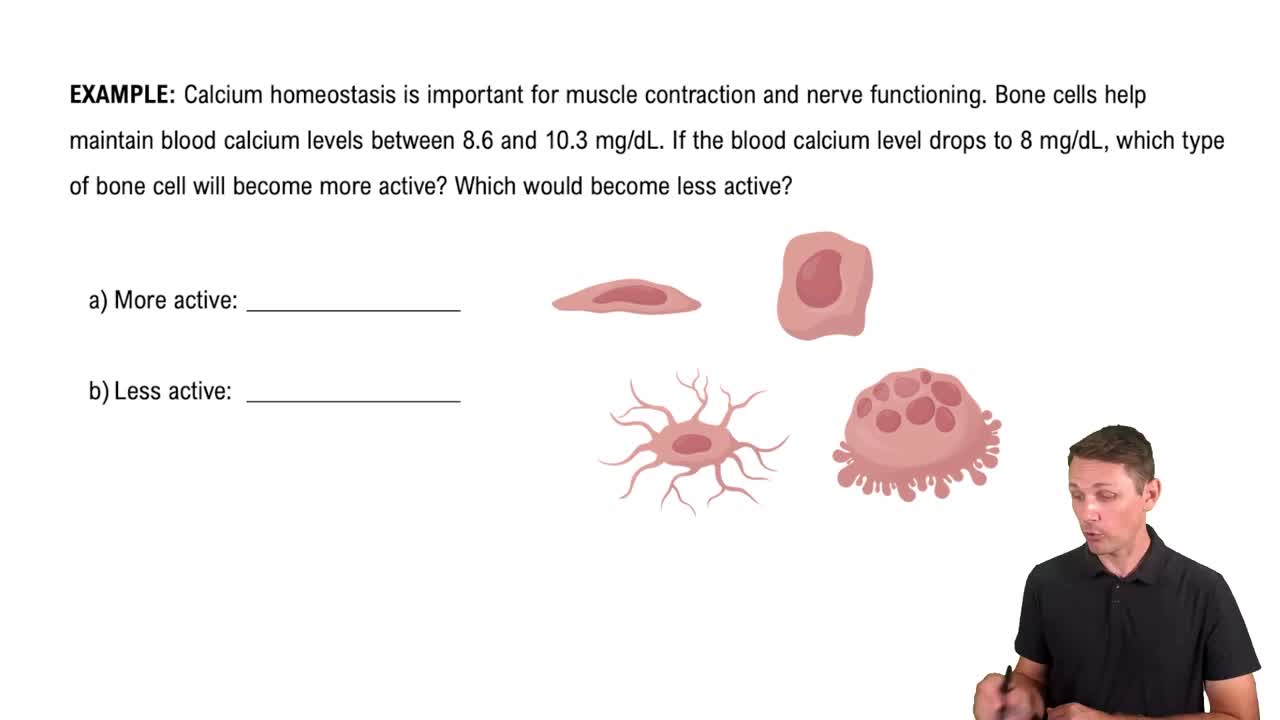
Microscopic Anatomy of Bones - Bone Cells Example 1

Nasal Cavity Structure

The nasal cavity is a hollow space within the nose that conditions inhaled air by filtering, warming, and humidifying it. It is divided by the nasal septum and contains structures like the nasal conchae, which increase surface area for air processing.
추천 영상:
5:46
Organization of the Abdominopelvic Cavity

Ethmoid Bone's Role in the Nasal Cavity

The ethmoid bone forms the roof and part of the lateral walls of the nasal cavity, including the superior and middle nasal conchae. It also contains ethmoidal air cells (sinuses) that open into the nasal cavity, linking the bone directly to nasal function and airflow.
추천 영상:
6:30
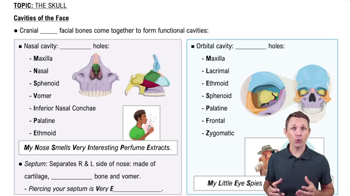
Cavities of the Face