Ch. 8 The Appendicular Skeleton
Martini - Fundamentals of Anatomy & Physiology 11th Edition
Martini, Nath, Bartholomew11th EditionFundamentals of Anatomy & PhysiologyISBN: 9780136874089당신이 사용하는 게 아니라요?교과서 변경
8장, 문제 2

Which of the following is primarily responsible for stabilizing, positioning, and bracing the pectoral girdle?
(a) Tendons
(b) Ligaments
(c) The joint shape
(d) Muscles
(e) The shape of the bones within the joint

검증된 단계별 안내
1
Step 1: Understand the function of each option in relation to joint stability and movement. Tendons connect muscles to bones and primarily transmit force to move bones, but they are not the main stabilizers of the pectoral girdle.
Step 2: Consider ligaments, which connect bone to bone and help stabilize joints by limiting excessive movement. Ligaments contribute to stability but are not the primary stabilizers for the pectoral girdle.
Step 3: Analyze the role of the joint shape and the shape of the bones within the joint. While these anatomical features influence joint stability, the pectoral girdle is known for its high mobility and relatively loose bony connections, so these shapes provide limited stability.
Step 4: Focus on muscles, which surround the pectoral girdle and actively stabilize, position, and brace it during movement. Muscles provide dynamic stability by contracting and adjusting tension to maintain the girdle's position.
Step 5: Conclude that among the options, muscles are primarily responsible for stabilizing, positioning, and bracing the pectoral girdle due to their active and dynamic control over the girdle's movements.

비슷한 문제에 대한 검증된 영상 답변:

이 영상 해법은 위 문제에 도움이 된다고 튜터들이 추천한 것입니다.
영상 길이:
3m
도움이 되었나요?

주요 개념

질문에 올바르게 답하기 위해 반드시 이해해야 하는 핵심 개념들은 다음과 같습니다.

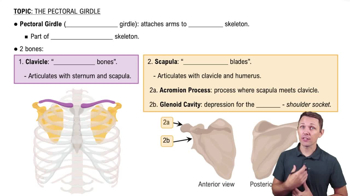
Pectoral Girdle Anatomy and Function

The pectoral girdle consists of the clavicle and scapula, connecting the upper limb to the axial skeleton. Its main functions include providing attachment points for muscles and allowing a wide range of shoulder movements while maintaining stability.
추천 영상:
가이드 코스
6:23
Pectoral Girdle

Role of Muscles in Joint Stability

Muscles surrounding the pectoral girdle actively stabilize and position it by contracting and maintaining tension. Unlike ligaments or bone shapes, muscles can dynamically adjust to movement demands, providing bracing and control during arm motions.
추천 영상:
05:39
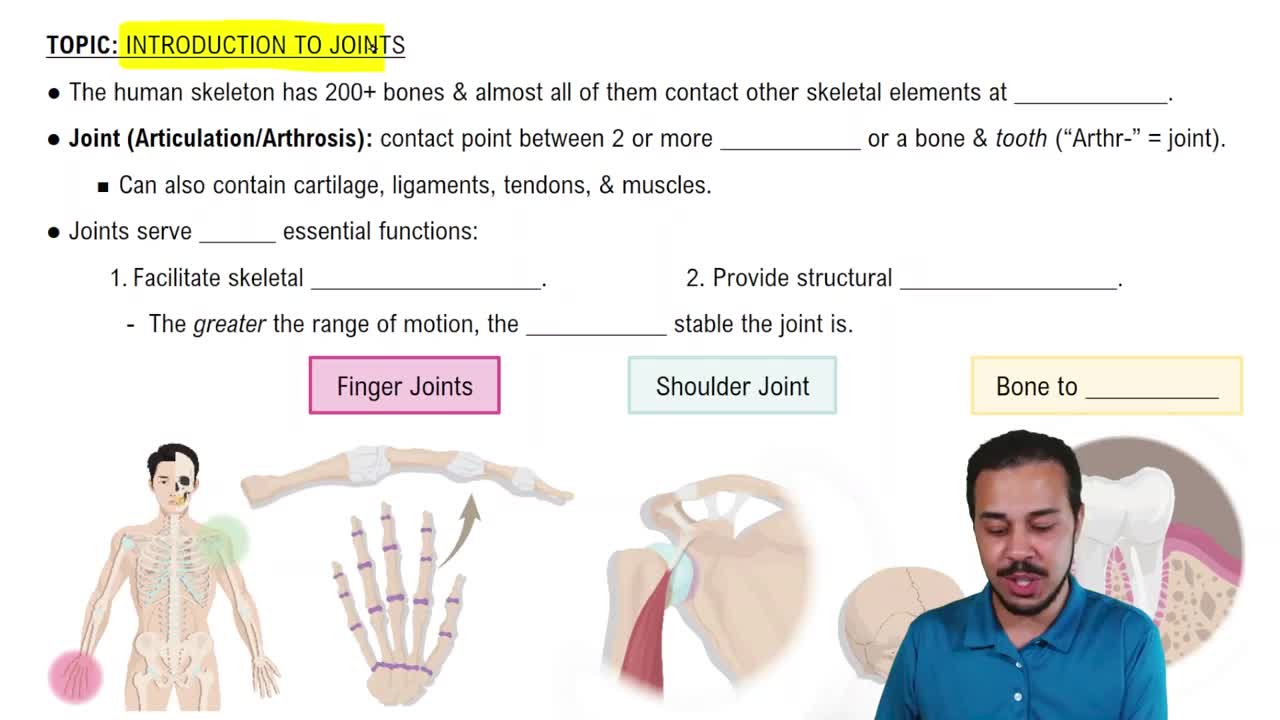
Introduction to Joints

Difference Between Ligaments, Tendons, and Bone Structure in Joint Stability

Ligaments connect bone to bone and provide passive stability, while tendons connect muscle to bone and transmit force. The shape of bones and joints contributes to stability but is less significant in the pectoral girdle, which relies more on muscular support due to its high mobility.
추천 영상:
4:08
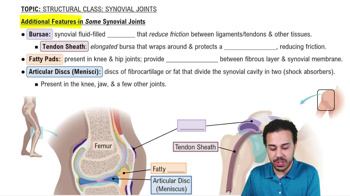
Additional Features