Ch. 8 The Appendicular Skeleton
Martini - Fundamentals of Anatomy & Physiology 11th Edition
Martini, Nath, Bartholomew11th EditionFundamentals of Anatomy & PhysiologyISBN: 9780136874089당신이 사용하는 게 아니라요?교과서 변경
8장, 문제 25

While fireman Fred is fighting a fire in a building, part of the ceiling collapses, and a beam strikes him on his left shoulder. He is rescued, but has a great deal of pain in his shoulder. He cannot move his arm properly, especially in the anterior direction. His clavicle is not broken, and his humerus is intact. What is the probable nature of Fred’s injury?

검증된 단계별 안내
1
Step 1: Identify the anatomical structures involved in shoulder movement, especially those responsible for moving the arm anteriorly. The main muscles that flex the arm at the shoulder (move it anteriorly) include the pectoralis major, anterior deltoid, and the coracobrachialis, all of which attach near the clavicle and humerus.
Step 2: Since Fred's clavicle and humerus are intact, the injury likely involves soft tissues such as muscles, tendons, ligaments, or nerves around the shoulder joint rather than bone fractures.
Step 3: Consider the mechanism of injury—a beam striking the left shoulder could cause damage to the shoulder joint capsule, rotator cuff muscles, or the brachial plexus nerves that innervate the muscles responsible for arm movement.
Step 4: Given the inability to move the arm anteriorly and the absence of bone fractures, suspect a dislocation of the shoulder joint (glenohumeral joint), particularly an anterior dislocation, which is the most common type and can impair anterior arm movement.
Step 5: Alternatively, consider injury to the muscles or tendons that flex the shoulder, such as a tear in the pectoralis major or damage to the anterior deltoid, or nerve injury affecting motor control; clinical examination and imaging would help confirm the diagnosis.

비슷한 문제에 대한 검증된 영상 답변:

이 영상 해법은 위 문제에 도움이 된다고 튜터들이 추천한 것입니다.
영상 길이:
6m
도움이 되었나요?

주요 개념

질문에 올바르게 답하기 위해 반드시 이해해야 하는 핵심 개념들은 다음과 같습니다.

Shoulder Anatomy and Joint Structure

Understanding the anatomy of the shoulder, including the clavicle, scapula, humerus, and associated joints like the glenohumeral joint, is essential. The shoulder's mobility depends on these structures, and injury to any can affect arm movement, especially in specific directions such as anteriorly.
추천 영상:
08:25
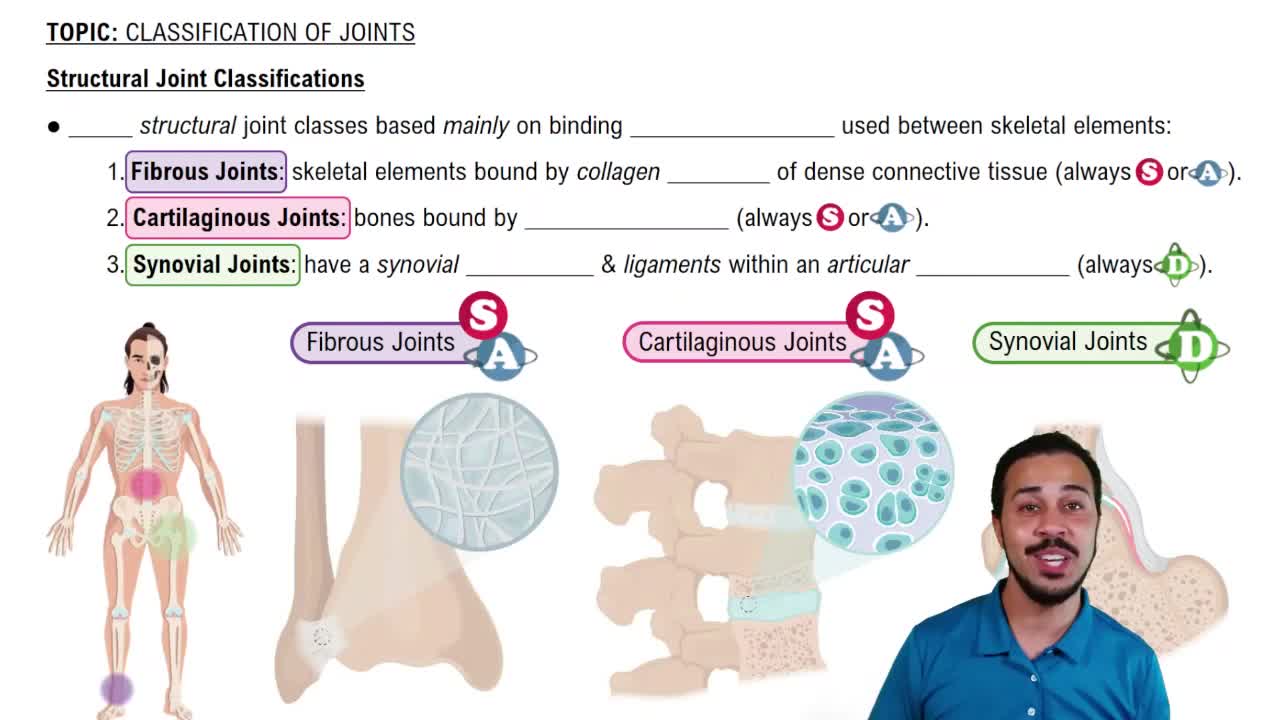
Structural Joint Classifications

Types of Shoulder Injuries

Common shoulder injuries include dislocations, strains, and ligament tears. Anterior shoulder dislocation is frequent after trauma and causes difficulty moving the arm forward. Recognizing injury patterns helps differentiate between fractures and soft tissue damage.
추천 영상:
3:00
Types-Of-Phosphorylation-C-2-V-1

Clinical Signs and Symptoms of Shoulder Trauma

Pain location, range of motion limitations, and absence of bone fractures guide diagnosis. In this case, pain and impaired anterior arm movement without clavicle or humerus fracture suggest soft tissue injury or joint dislocation, aiding in identifying the probable injury.
추천 영상:
3:32
Introduction to the Lymphatic System Example 2