Ch.10 - Structure and Synthesis of Alcohols
Wade - Organic Chemistry 9th Edition
Wade9th EditionOrganic ChemistryISBN: 9780135213728당신이 사용하는 게 아니라요?교과서 변경
10장, 문제 13b

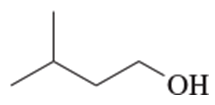
Show how you would synthesize the following primary alcohol by adding an appropriate Grignard reagent to formaldehyde.
(b)

검증된 단계별 안내
1
Step 1: Identify the target molecule, which is a primary alcohol. The structure provided shows a primary alcohol with a branched alkyl chain.
Step 2: Recall the general mechanism for synthesizing a primary alcohol using a Grignard reagent and formaldehyde. Grignard reagents react with formaldehyde to form primary alcohols after hydrolysis.
Step 3: Determine the Grignard reagent needed. The alkyl group attached to the alcohol in the target molecule suggests that the Grignard reagent should be an alkyl magnesium halide with the same alkyl group (e.g., isobutyl magnesium bromide).
Step 4: Write the reaction mechanism. The Grignard reagent (R-MgX) attacks the carbonyl carbon of formaldehyde (HCHO), forming a tetrahedral intermediate. This intermediate is then protonated during the acidic workup to yield the primary alcohol.
Step 5: Summarize the synthesis. Combine formaldehyde with the appropriate Grignard reagent (e.g., isobutyl magnesium bromide) in an ether solvent, followed by an acidic workup to produce the desired primary alcohol.

비슷한 문제에 대한 검증된 영상 답변:

이 영상 해법은 위 문제에 도움이 된다고 튜터들이 추천한 것입니다.
영상 길이:
4m

주요 개념

질문에 올바르게 답하기 위해 반드시 이해해야 하는 핵심 개념들은 다음과 같습니다.

Grignard Reagents

Grignard reagents are organomagnesium compounds represented as R-MgX, where R is an organic group and X is a halogen. They are highly reactive nucleophiles that can react with electrophiles, such as carbonyl compounds, to form new carbon-carbon bonds. In the synthesis of alcohols, Grignard reagents can add to carbonyl groups, leading to the formation of alcohols upon hydrolysis.
추천 영상:
02:12
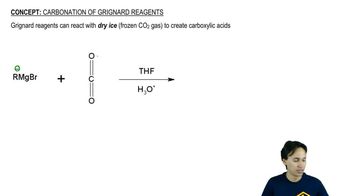
Carbonation of Grignard Reagents

Formaldehyde

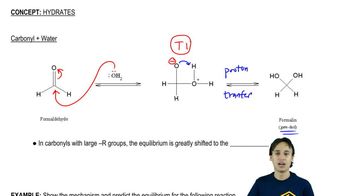
Formaldehyde (HCHO) is the simplest aldehyde and serves as a key electrophile in organic synthesis. It has a carbonyl group (C=O) that is highly reactive towards nucleophiles, such as Grignard reagents. When a Grignard reagent reacts with formaldehyde, it forms a primary alcohol after subsequent hydrolysis, making it a valuable starting material for synthesizing alcohols.
추천 영상:
04:10
Mechanism

Synthesis of Primary Alcohols

The synthesis of primary alcohols from aldehydes involves the nucleophilic addition of a Grignard reagent to the carbonyl carbon of the aldehyde. This reaction results in the formation of a magnesium alkoxide intermediate, which can be converted to the corresponding primary alcohol by hydrolysis. This method is significant in organic chemistry for constructing alcohols with specific carbon chain lengths.
추천 영상:
01:44
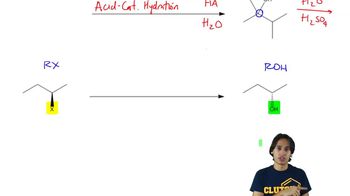
Forming alcohols through SN2 reactions.