뒤로
뒤로
문제 1a
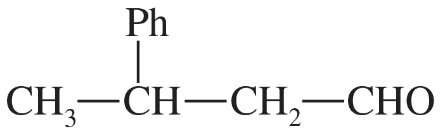
Give the IUPAC name and (if possible) a common name for each compound.
(a)
문제 1a,b
Draw the structure for each of the following:
a. 2-phenylhexane
b. benzyl alcohol
문제 1b
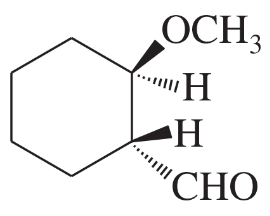
Give the IUPAC name and (if possible) a common name for each compound.
(b)
문제 1c,d
Draw the structure for each of the following:
c. 3-benzylpentane
d. bromomethylbenzene
문제 1c
Give the IUPAC name and (if possible) a common name for each compound.
(c)
문제 3
Why were no products from the McLafferty rearrangement observed in the spectrum of butan-2-one (Figure 18-3)?
<IMAGE>
문제 4d(3,4)
Give the structure of the principal product(s) when each of the following alcohols reacts with (3) DMP and (4) 1 equiv NaOCl-TEMPO.
d. 1-methylcyclohexan-1,4-diol
문제 6
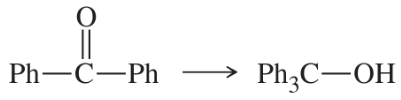
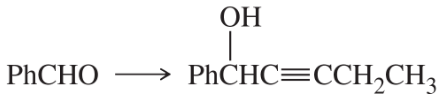
Show how you would synthesize each compound from starting materials containing no more than six carbon atoms.
문제 7a
Show how you would accomplish the following synthetic conversions by adding an organolithium reagent to an acid.
(a)
문제 7b
Show how you would accomplish the following synthetic conversions by adding an organolithium reagent to an acid.
(b)
문제 7c
Show how you would accomplish the following synthetic
conversions by adding an organolithium reagent to an acid.
(c) pentanoic acid → heptan-3-one
문제 7d
Show how you would accomplish the following synthetic conversions by adding an organolithium reagent to an acid.
(d) phenylacetic acid → 3,3-dimethyl-1-phenylbutan-2-one
문제 8
Predict the products of the following reactions.
(c) benzyl bromide + sodium cyanide
문제 8d
Predict the products of the following reactions.
(d) product of (c) + cyclopentylmagnesium bromide, then acidic hydrolysis
문제 8e
Predict the products of the following reactions.
(e) product of (c) + DIBAL-H, then hydrolysis
문제 9a,b
Show how the following transformations may be accomplished in good yield. You may use any additional reagents that are needed.
(a) bromobenzene → propiophenone
(b) CH3CH2CN → heptan-3-one
문제 9c,d
Show how the following transformations may be accomplished in good yield. You may use any additional reagents that are needed.
(c) benzoic acid → phenyl cyclopentyl ketone
(d) 1-bromohept-2-ene → oct-3-enal
문제 10a,b
Predict the products of the following reactions:
(a)
(b)
문제 10c,d
Predict the products of the following reactions:
(c)
(d)
문제 10e,f
Predict the products of the following reactions:
(e)
(f)
문제 11a
Show how you would accomplish the following synthetic conversions. You may use any additional reagents and solvents you need.
(a)
문제 11b
Show how you would accomplish the following synthetic conversions. You may use any additional reagents and solvents you need.
(b)
문제 11d
Show how you would accomplish the following synthetic conversions. You may use any additional reagents and solvents you need.
(d)
문제 12a
Sodium triacetoxyborohydride, NaBH(OAc)3, is a mild reducing agent that reduces aldehydes much more quickly than ketones. It can be used to reduce aldehydes in the presence of ketones, such as in the following reaction:
(a) Draw a complete Lewis structure for sodium triacetoxyborohydride.
문제 12b
Sodium triacetoxyborohydride, NaBH(OAc)3, is a mild reducing agent that reduces aldehydes much more quickly than ketones. It can be used to reduce aldehydes in the presence of ketones, such as in the following reaction:

(b) Propose a mechanism for the reduction of an aldehyde by sodium triacetoxyborohydride.
문제 13a
Propose mechanisms for
(a) the acid-catalyzed hydration of chloral to form chloral hydrate.
문제 13b
Propose mechanisms for
(b) the base-catalyzed hydration of acetone to form acetone hydrate.
문제 15
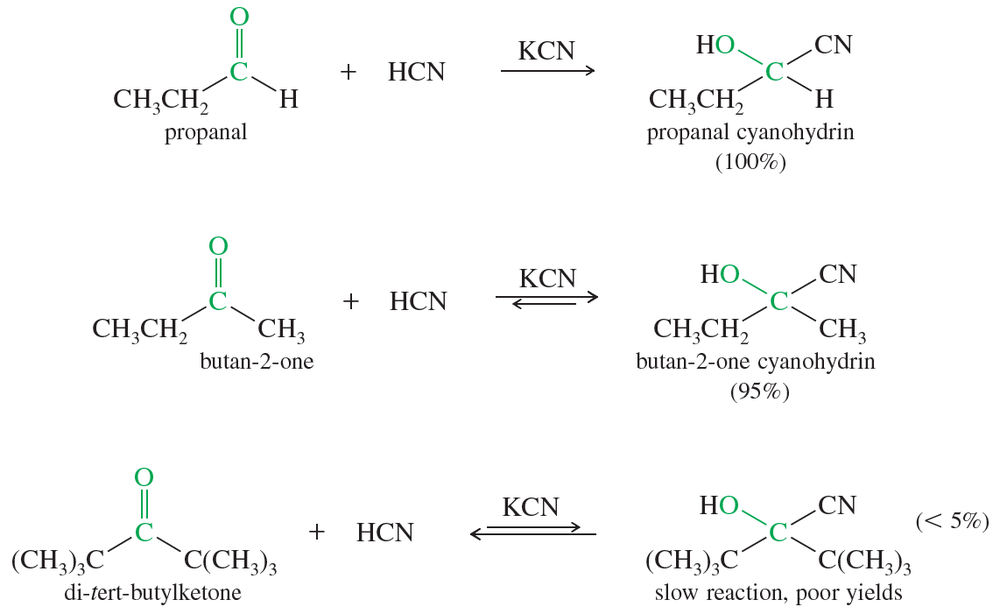
Propose a mechanism for each cyanohydrin synthesis just shown.
문제 16a
Show how you would accomplish the following syntheses.
(a) acetophenone → acetophenone cyanohydrin
문제 16b
Show how you would accomplish the following syntheses.
b. cyclopentanecarbaldehyde → 2-cyclopentyl-2-hydroxyacetic acid