뒤로
뒤로
문제 1
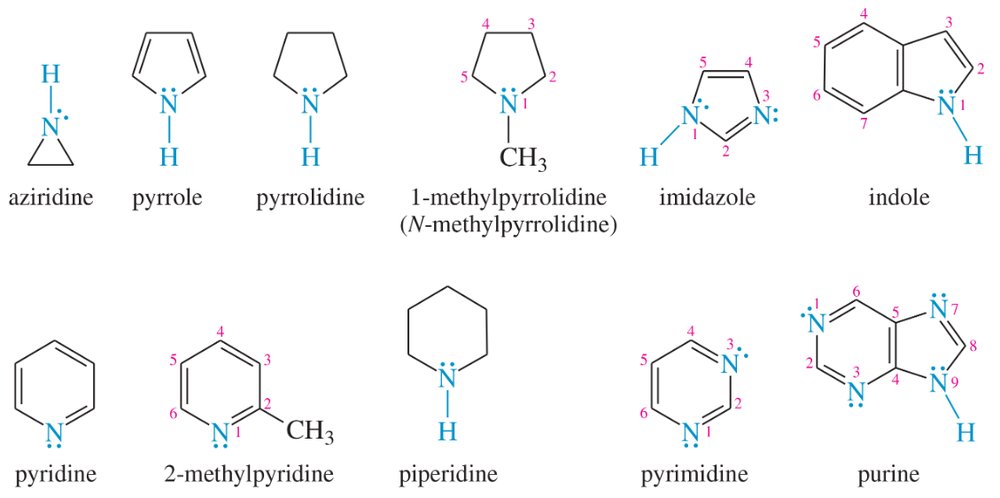
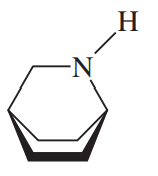
Determine which of the heterocyclic amines just shown are aromatic. Give the reasons for your conclusions.
문제 2a,b,c
Draw the structures of the following compounds:
(a) tert-butylamine
(b) α-aminopropionaldehyde
(c) 4-(dimethylamino)pyridine
문제 2d,e,f
Draw the structures of the following compounds:
(d) 2-methylaziridine
(e) N-ethyl-N-methylhexan-3-amine
(f) m-chloroaniline
문제 3a,b,c
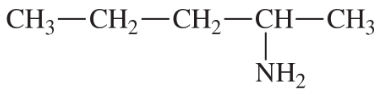
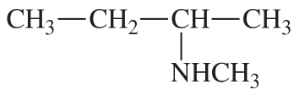
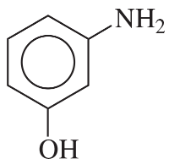
Give correct names for the following amines:
(a)
(b)
(c)
문제 4
Which of the amines listed next is resolved into enantiomers? In each case, explain why interconversion of the enantiomers does or does not take place.
(a) cis-2-methylcyclohexanamine
(b) N-ethyl-N-methylcyclohexanamine
(c) N-methylaziridine
(d) ethylmethylanilinium iodide
(e) methylethylpropylisopropylammoniumiodide
문제 5
Rank each set of compounds in order of increasing boiling points.
(a) triethylamine, di-n-propylamine, n-propyl ether
(b) ethanol, dimethylamine, dimethyl ether
(c) diethylamine, diisopropylamine, trimethylamine
문제 6b
Rank each set of compounds in order of increasing basicity.
(b) aniline, p-methylaniline, p-nitroaniline
문제 6c
Rank each set of compounds in order of increasing basicity.
(c) aniline, pyrrole, pyridine, piperidine
문제 6d
Rank each set of compounds in order of increasing basicity.
(d) pyrrole, imidazole, 3-nitropyrrole
문제 8
The proton and 13C NMR spectra of a compound of formula C4H11N are shown here. Determine the structure of this amine, and give peak assignments for all of the protons in the structure.
<IMAGE>
문제 11
Propose a mechanism for nitration of pyridine at the 4-position, and show why this orientation is not observed.
문제 12
Propose a mechanism for the sulfonation of pyridine, and point out why sulfonation occurs at the 3-position.
문제 13
We have considered nucleophilic aromatic substitution of pyridine at the 2-position and 3-position but not at the 4-position. Complete the three possible cases by showing the mechanism for the reaction of methoxide ion with 4-chloropyridine. Show how the intermediate is stabilized by delocalization of the charge onto the nitrogen atom.
문제 14a
(a) Propose a mechanism for the reaction of 2-bromopyridine with sodium amide to give 2-aminopyridine.
문제 14b
(b) When 3-bromopyridine is used in this reaction, stronger reaction conditions are required and a mixture of 3-aminopyridine and 4-aminopyridine results. Propose a mechanism to explain this curious result.
문제 15
Propose a mechanism to show the individual alkylations that form this quaternary ammonium salt.
문제 16
Show how you would use direct alkylation to synthesize the following compounds.
(a) benzyltrimethylammonium iodide
(b) pentan-1-amine
(c) benzylamine
문제 17
Give the products expected from the following reactions.
(a) acetyl chloride + ethylamine
(b)
(c)
문제 18
What would happen in the synthesis of sulfanilamide if the amino group were not protected as an amide in the chlorosulfonation step?
문제 19
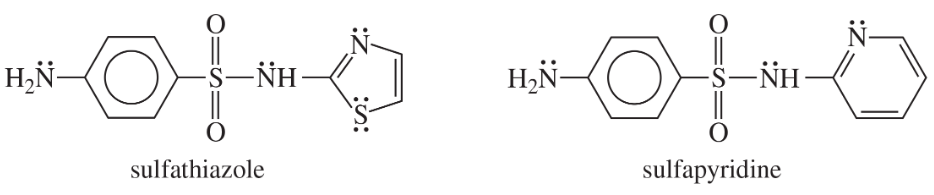
Show how you would use the same sulfonyl chloride as used in the sulfanilamide synthesis to make sulfathiazole and sulfapyridine.
문제 19.39i
Predict the products of the following reactions:
(i) <IMAGE of reaction>
문제 20a,b,c
Predict the major products formed when the following amines undergo exhaustive methylation, treatment with Ag2O, and heating.
(a) hexan-2-amine
(b) 2-methylpiperidine
(c) N-ethylpiperidine
문제 20e
Predict the major products formed when the following amines undergo exhaustive methylation, treatment with Ag2O, and heating.
(e)
문제 21a
Give the products expected when the following tertiary amines are treated with a peroxyacid and heated.
(a) N,N-dimethylhexan-2-amine
문제 21b
Give the products expected when the following tertiary amines are treated with a peroxyacid and heated.
(b) N,N-diethylhexan-2-amine
문제 21c
Give the products expected when the following tertiary amines are treated with a peroxyacid and heated.
(c) cyclohexyldimethylamine
문제 21d
Give the products expected when the following tertiary amines are treated with a peroxyacid and heated.
(d) N-ethylpiperidine
문제 22a
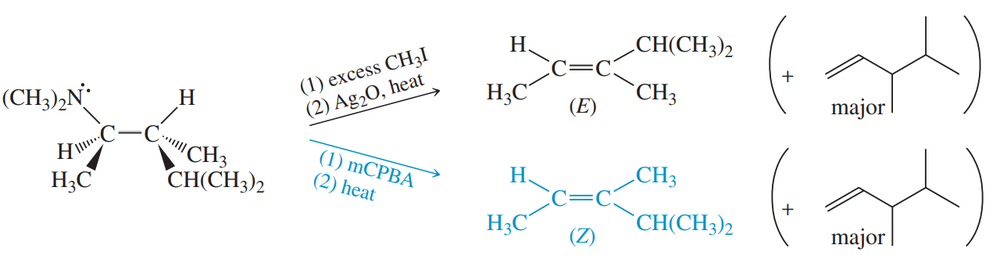
When the (R,R) isomer of the amine shown is treated with an excess of methyl iodide, then silver oxide, then heated, the major product is the Hofmann product.
(a) Draw the structure of the major (Hofmann) product.
문제 22b
When the (R,R) isomer of the amine shown is treated with an excess of methyl iodide, then silver oxide, then heated, the major product is the Hofmann product.
(b) Some Zaitsev product is also formed. It has the (E) configuration. When the same amine is treated with mCPBA and heated, the Zaitsev product has the (Z) configuration. Use stereochemical drawings of the transition states to explain these observations.
문제 23b
Predict the products from the reactions of the following amines with sodium nitrite in dilute HCl.
(b) N-ethylhexan-2-amine