Ch.11 - Reactions of Alcohols
Wade - Organic Chemistry 9th Edition
Wade9th EditionOrganic ChemistryISBN: 9780135213728당신이 사용하는 게 아니라요?교과서 변경
11장, 문제 19

Suggest how you would convert trans-4-methylcyclohexanol to
a. trans-1-chloro-4-methylcyclohexane.
b. cis-1-chloro-4-methylcyclohexane.

검증된 단계별 안내
1
Step 1: Recognize that the starting compound, trans-4-methylcyclohexanol, is a secondary alcohol. To convert it into a chlorinated compound, the hydroxyl group (-OH) must first be replaced with a chlorine atom (-Cl). This can be achieved using reagents like thionyl chloride (SOCl₂) or phosphorus trichloride (PCl₃).
Step 2: For part (a), to obtain trans-1-chloro-4-methylcyclohexane, ensure that the stereochemistry of the product remains trans. The reaction with SOCl₂ typically proceeds via an SN2 mechanism, which inverts the configuration at the carbon bearing the hydroxyl group. Since the starting material is trans, the inversion will maintain the trans relationship between the substituents. Use SOCl₂ in the presence of pyridine to achieve this.
Step 3: For part (b), to obtain cis-1-chloro-4-methylcyclohexane, the stereochemistry must be altered. This can be achieved by first converting the alcohol into a good leaving group, such as a tosylate (using p-toluenesulfonyl chloride and pyridine), followed by an SN2 substitution with an appropriate nucleophile like Cl⁻. The SN2 mechanism will invert the configuration at the carbon, resulting in the cis product.
Step 4: Ensure that the reaction conditions are carefully controlled to favor the desired stereochemical outcome. For part (a), the direct use of SOCl₂ is sufficient. For part (b), the tosylation step followed by substitution is necessary to achieve the inversion required for the cis product.
Step 5: Verify the stereochemistry of the final products using spectroscopic techniques such as NMR or by analyzing the product's physical properties. This ensures that the desired trans or cis isomer has been successfully synthesized.

비슷한 문제에 대한 검증된 영상 답변:

이 영상 해법은 위 문제에 도움이 된다고 튜터들이 추천한 것입니다.
영상 길이:
6m

주요 개념

질문에 올바르게 답하기 위해 반드시 이해해야 하는 핵심 개념들은 다음과 같습니다.

Stereochemistry

Stereochemistry is the study of the spatial arrangement of atoms in molecules and how this affects their chemical behavior. In this question, understanding the difference between trans and cis isomers is crucial, as it influences the reactivity and the products formed during chemical reactions. The stereochemical configuration of the starting material and the desired products must be carefully considered to achieve the correct transformation.
추천 영상:
가이드 코스
1:38
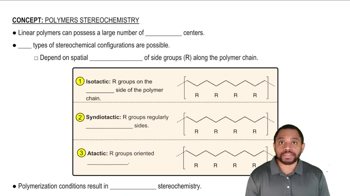
Polymer Stereochemistry Concept 1

Nucleophilic Substitution Reactions

Nucleophilic substitution reactions involve the replacement of a leaving group in a molecule with a nucleophile. In the context of converting alcohols to alkyl halides, this typically involves the conversion of the alcohol (trans-4-methylcyclohexanol) to a better leaving group, such as a chloride, through reactions like the conversion to a tosylate followed by nucleophilic attack. Understanding the mechanism (SN1 or SN2) is essential for predicting the stereochemical outcome.
추천 영상:
01:47
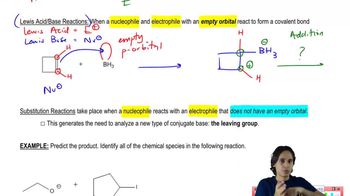
Nucleophiles and Electrophiles can react in Substitution Reactions.

Rearrangement and Elimination Reactions

Rearrangement and elimination reactions can alter the structure of a molecule, affecting its stereochemistry. In this case, to achieve the cis product, one might need to consider elimination reactions that lead to the formation of a double bond, followed by a stereospecific addition of a halogen. Recognizing how these reactions can be manipulated to achieve the desired stereochemical configuration is key to solving the problem.
추천 영상:
06:28
Definition of Cope Rearrangement