Ch. 14 - Ethers, Epoxides, and Thioethers
Wade - Organic Chemistry 9th Edition
Wade9th EditionOrganic ChemistryISBN: 9780135213728당신이 사용하는 게 아니라요?교과서 변경
14장, 문제 43c

Give the structures of the intermediates represented by letters O, P, and Q in this synthesis.
Synthesis pathway diagram showing intermediates labeled A to Q in the oxidation of alcohols and carbonyl compounds.

검증된 단계별 안내
1
Begin by examining the starting material and the reagents used in the first step of the synthesis. Identify the functional groups present and consider how the reagents might interact with these groups.
For each reaction step, determine the type of reaction occurring (e.g., addition, elimination, substitution, rearrangement) and predict the structural changes to the molecule. Use your knowledge of reaction mechanisms to guide this prediction.
Draw the structure of the intermediate formed after the first reaction step. Pay attention to stereochemistry, regiochemistry, and any new functional groups that may be introduced.
Repeat the process for each subsequent reaction step, analyzing the reagents and conditions to predict the structure of the next intermediate. Consider any possible side reactions or competing pathways.
Once all intermediates are identified, review the entire synthesis pathway to ensure that each intermediate logically leads to the next, culminating in the final product. Verify that the transformations are consistent with the reagents and conditions provided.

비슷한 문제에 대한 검증된 영상 답변:

이 영상 해법은 위 문제에 도움이 된다고 튜터들이 추천한 것입니다.
영상 길이:
9m
도움이 되었나요?

주요 개념

질문에 올바르게 답하기 위해 반드시 이해해야 하는 핵심 개념들은 다음과 같습니다.

Synthesis Pathways

Synthesis pathways illustrate the step-by-step transformation of reactants into products through various intermediates. Understanding these pathways is crucial for identifying the structures of intermediates, as each step often involves specific reagents and conditions that dictate the outcome of the reaction.
추천 영상:
가이드 코스
2:13
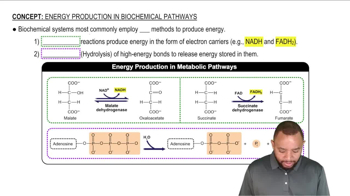
Energy Production In Biochemical Pathways Concept 1

Reagents and Their Functions

Different reagents play specific roles in organic reactions, such as reducing agents, oxidizing agents, or catalysts. For instance, LiAlH4 is a strong reducing agent used to convert carbonyl compounds to alcohols, while TsCl is used for activating alcohols for further reactions. Recognizing the function of each reagent helps in predicting the structure of intermediates.
추천 영상:
02:36
Identifying Functional Groups

Functional Group Transformations

Functional group transformations involve the conversion of one functional group into another, which is a common theme in organic synthesis. For example, the conversion of an alcohol to a carbonyl compound or vice versa is essential for understanding the intermediates in the synthesis pathway. Familiarity with these transformations aids in deducing the structures of intermediates labeled in the synthesis.
추천 영상:
02:36
Identifying Functional Groups