Ch. 14 - Ethers, Epoxides, and Thioethers
Wade - Organic Chemistry 9th Edition
Wade9th EditionOrganic ChemistryISBN: 9780135213728당신이 사용하는 게 아니라요?교과서 변경
14장, 문제 40a,b,c

Show how you would convert hex-1-ene to each of the following compounds. You may use any additional reagents and solvents you need.
(a) 2-methoxyhexane
(b) 1-methoxyhexane
(c) 1-methoxyhexan-2-ol

검증된 단계별 안내
1
Step 1: For part (a), to convert hex-1-ene to 2-methoxyhexane, first perform an oxymercuration-demercuration reaction. Use Hg(OAc)2, H2O, and NaBH4 to add an -OH group to the more substituted carbon (Markovnikov addition), forming 2-hexanol.
Step 2: Next, convert the -OH group in 2-hexanol to a methoxy group (-OCH3) using a Williamson ether synthesis. React 2-hexanol with NaH (to deprotonate the alcohol) followed by CH3I to form 2-methoxyhexane.
Step 3: For part (b), to convert hex-1-ene to 1-methoxyhexane, perform an anti-Markovnikov addition of methanol. Use BH3·THF followed by H2O2, NaOH to form 1-hexanol. Then, react 1-hexanol with NaH and CH3I to replace the -OH group with a -OCH3 group, yielding 1-methoxyhexane.
Step 4: For part (c), to convert hex-1-ene to 1-methoxyhexan-2-ol, first perform an oxymercuration-demercuration reaction (Hg(OAc)2, H2O, NaBH4) to form 2-hexanol. Then, react 2-hexanol with NaH and CH3I to form 2-methoxyhexane.
Step 5: Finally, oxidize 2-methoxyhexane selectively at the terminal carbon to introduce a hydroxyl group (-OH) using a reagent like OsO4 or KMnO4 under mild conditions, forming 1-methoxyhexan-2-ol.

비슷한 문제에 대한 검증된 영상 답변:

이 영상 해법은 위 문제에 도움이 된다고 튜터들이 추천한 것입니다.
영상 길이:
13m
도움이 되었나요?

주요 개념

질문에 올바르게 답하기 위해 반드시 이해해야 하는 핵심 개념들은 다음과 같습니다.

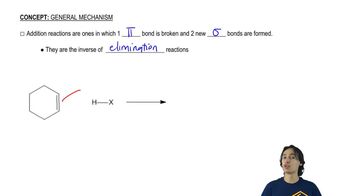
Electrophilic Addition Reactions

Electrophilic addition reactions are fundamental in organic chemistry, particularly for alkenes like hex-1-ene. In these reactions, an electrophile reacts with the double bond of the alkene, leading to the formation of a more stable carbocation intermediate. This process is crucial for converting alkenes into alcohols or ethers, as seen in the synthesis of methoxy derivatives.
추천 영상:
05:39
Features of Addition Mechanisms.

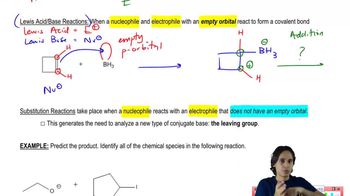
Nucleophilic Substitution Reactions

Nucleophilic substitution reactions involve the replacement of a leaving group by a nucleophile. In the context of converting hex-1-ene to methoxy derivatives, nucleophiles such as methanol can attack carbocations formed during electrophilic addition, leading to the formation of ethers. Understanding the mechanism of these reactions is essential for predicting the products of the transformations.
추천 영상:
01:47
Nucleophiles and Electrophiles can react in Substitution Reactions.

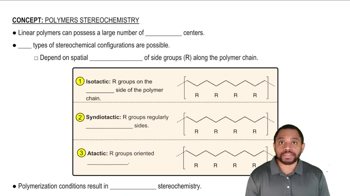
Stereochemistry and Regioselectivity

Stereochemistry and regioselectivity are critical concepts in organic synthesis that determine the spatial arrangement of atoms in molecules and the preferential formation of certain products. When converting hex-1-ene to various methoxy compounds, the orientation of the substituents and the position of the methoxy group can lead to different isomers, such as 1-methoxyhexane versus 2-methoxyhexane. Recognizing these aspects is vital for achieving the desired product.
추천 영상:
가이드 코스
1:38
Polymer Stereochemistry Concept 1
관련 실천
교과서 질문

The following reaction resembles the acid-catalyzed cyclization of squalene oxide. Propose a mechanism for this reaction.

999
views

교과서 질문

Both LiAlH4 and Grignard reagents react with carbonyl compounds to give alkoxide ion intermediates (that become protonated in an aqueous workup). Those alkoxides can react with 1° or methyl alkyl halides or tosylates to give ethers. Show how the following ethers can be formed in this two-step process. As starting materials you may use any reactants containing 7 carbons or fewer.

(b)

614
views
교과서 질문

Both LiAlH4 and Grignard reagents react with carbonyl compounds to give alkoxide ion intermediates (that become protonated in an aqueous workup). Those alkoxides can react with 1° or methyl alkyl halides or tosylates to give ethers. Show how the following ethers can be formed in this two-step process. As starting materials you may use any reactants containing 7 carbons or fewer.

(a)

762
views
교과서 질문

Both LiAlH4 and Grignard reagents react with carbonyl compounds to give alkoxide ion intermediates (that become protonated in an aqueous workup). Those alkoxides can react with 1° or methyl alkyl halides or tosylates to give ethers. Show how the following ethers can be formed in this two-step process. As starting materials you may use any reactants containing 7 carbons or fewer.

(c)

506
views
교과서 질문

(A true story.) An inexperienced graduate student moved into a laboratory and began work. He needed some diethyl ether for a reaction, so he opened an old, rusty 1-gallon can marked 'ethyl ether' and found there was half a gallon left. To purify the ether, the student set up a distillation apparatus, started a careful distillation, and went to the stockroom for the other reagents he needed. While he was at the stockroom, the student heard a muffled "boom." He quickly returned to his lab to find a worker from another laboratory putting out a fire. Most of the distillation apparatus was embedded in the ceiling.

(a) Explain what probably happened.

(b) Explain how this near-disaster might have been prevented.

1202
views
교과서 질문

(a) Show how you would synthesize the pure (R) enantiomer of 2-butyl methyl sulfide, starting with pure (R)-butan-2-ol and any reagents you need

(b) Show how you would synthesize the pure (S) enantiomer of the product, still starting with (R)-butan-2-ol and any reagents you need.

737
views