
Ch. 16 - Aromatic Compounds
Wade - Organic Chemistry 9th Edition
Wade9th EditionOrganic ChemistryISBN: 9780135213728당신이 사용하는 게 아니라요?교과서 변경
16장, 문제 40c,d

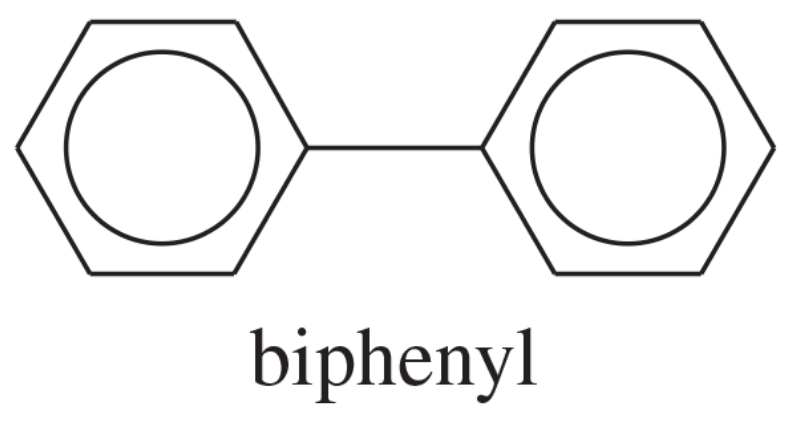
Biphenyl has the following structure.

c. The heat of hydrogenation for biphenyl is about 418 kJ/mol (100 kcal/mol). Calculate the resonance energy of biphenyl.
d. Compare the resonance energy of biphenyl with that of naphthalene and with that of two benzene rings. Explain the difference in the resonance energies of naphthalene and biphenyl.

검증된 단계별 안내
1
Step 1: Understand the concept of resonance energy. Resonance energy is the stabilization energy due to delocalization of electrons in a conjugated system compared to the hypothetical energy of localized bonds. It is calculated by comparing the experimental heat of hydrogenation with the theoretical heat of hydrogenation for a system without resonance.
Step 2: Calculate the theoretical heat of hydrogenation for biphenyl. Assume that biphenyl consists of two isolated benzene rings. The heat of hydrogenation for one benzene ring is approximately 208 kJ/mol (49.8 kcal/mol). For two benzene rings, the theoretical heat of hydrogenation would be 2 × 208 kJ/mol = 416 kJ/mol.
Step 3: Compare the experimental heat of hydrogenation of biphenyl (418 kJ/mol) with the theoretical heat of hydrogenation (416 kJ/mol). The resonance energy is the difference between these values. Since the experimental value is slightly higher, this indicates minimal resonance stabilization in biphenyl.
Step 4: Compare the resonance energy of biphenyl with naphthalene. Naphthalene has a resonance energy of approximately 61 kJ/mol (14.6 kcal/mol), which is significantly higher than biphenyl. This difference arises because naphthalene has a fully conjugated system with delocalized π-electrons across two fused rings, whereas biphenyl has limited conjugation due to the twisting of the rings.
Step 5: Compare the resonance energy of biphenyl with two benzene rings. Two benzene rings have a combined resonance energy of approximately 2 × 150 kJ/mol = 300 kJ/mol. Biphenyl's resonance energy is much lower because the two rings are not conjugated due to steric hindrance and twisting, which prevents effective π-electron delocalization between the rings.

비슷한 문제에 대한 검증된 영상 답변:

이 영상 해법은 위 문제에 도움이 된다고 튜터들이 추천한 것입니다.
영상 길이:
9m

주요 개념

질문에 올바르게 답하기 위해 반드시 이해해야 하는 핵심 개념들은 다음과 같습니다.

Resonance Energy

Resonance energy is the difference in energy between a molecule's actual structure and the energy of the most stable Lewis structure. It reflects the stabilization gained from resonance, where electrons are delocalized over multiple atoms. In biphenyl, resonance energy can be calculated by comparing the heat of hydrogenation of biphenyl to that of its fully saturated counterpart, indicating how much energy is saved due to resonance.
추천 영상:
03:04
Drawing Resonance Structures

Heat of Hydrogenation

The heat of hydrogenation is the amount of energy released when an unsaturated compound reacts with hydrogen to become saturated. It serves as a measure of the stability of the compound; lower heat of hydrogenation indicates greater stability due to resonance. For biphenyl, the heat of hydrogenation provides a basis for calculating its resonance energy by comparing it to the heat of hydrogenation of the corresponding saturated compound.
추천 영상:
00:48
The definition of hydrogenation.

Comparative Resonance in Polycyclic Aromatic Hydrocarbons

In polycyclic aromatic hydrocarbons like biphenyl and naphthalene, resonance energy varies due to structural differences. Naphthalene, with its fused benzene rings, has a higher resonance energy than biphenyl, which consists of two separate benzene rings. This difference arises because naphthalene allows for greater delocalization of π-electrons across its structure, leading to increased stability and lower energy compared to biphenyl.
추천 영상:
02:41
Comparing hydrocarbon acidity