Ch. 18 - Ketones and Aldehydes
Wade - Organic Chemistry 9th Edition
Wade9th EditionOrganic ChemistryISBN: 9780135213728당신이 사용하는 게 아니라요?교과서 변경
18장, 문제 7d

Show how you would accomplish the following synthetic conversions by adding an organolithium reagent to an acid.
(d) phenylacetic acid → 3,3-dimethyl-1-phenylbutan-2-one

검증된 단계별 안내
1
Step 1: Begin by understanding the target transformation. The goal is to convert phenylacetic acid (C₆H₅CH₂COOH) into 3,3-dimethyl-1-phenylbutan-2-one. This involves adding a new carbon chain and introducing a ketone functional group.
Step 2: Convert phenylacetic acid into a more reactive intermediate. Use a reagent like thionyl chloride (SOCl₂) to transform the carboxylic acid group (-COOH) into an acid chloride (-COCl). This step increases the electrophilicity of the carbonyl carbon, making it more reactive toward nucleophiles.
Step 3: Prepare the organolithium reagent. To introduce the 3,3-dimethyl group, synthesize tert-butyllithium ((CH₃)₃CLi) by reacting tert-butyl bromide ((CH₃)₃CBr) with lithium metal. This organolithium reagent will act as a nucleophile in the next step.
Step 4: Perform the nucleophilic addition. React the acid chloride (C₆H₅CH₂COCl) with tert-butyllithium ((CH₃)₃CLi). The organolithium reagent will attack the carbonyl carbon of the acid chloride, forming a tetrahedral intermediate. This intermediate will collapse, expelling the chloride ion (Cl⁻) and forming a ketone.
Step 5: Verify the structure of the product. The final compound, 3,3-dimethyl-1-phenylbutan-2-one, should have the phenyl group (C₆H₅) attached to the 1-position, a ketone group at the 2-position, and two methyl groups at the 3-position. Ensure the reaction conditions are optimized to achieve the desired product.

비슷한 문제에 대한 검증된 영상 답변:

이 영상 해법은 위 문제에 도움이 된다고 튜터들이 추천한 것입니다.
영상 길이:
6m

주요 개념

질문에 올바르게 답하기 위해 반드시 이해해야 하는 핵심 개념들은 다음과 같습니다.

Organolithium Reagents

Organolithium reagents are highly reactive compounds containing a carbon-lithium bond. They act as strong nucleophiles in organic synthesis, allowing for the formation of carbon-carbon bonds. In the context of the question, they can be used to add alkyl groups to carbonyl compounds, facilitating the transformation of phenylacetic acid into more complex structures.
추천 영상:
01:52
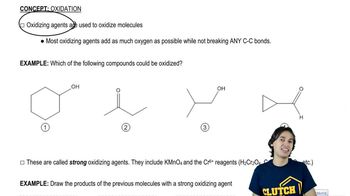
Reagents

Acid-Base Reactions

Acid-base reactions are fundamental chemical processes where an acid donates a proton (H+) and a base accepts it. In organic synthesis, the reactivity of acids can be exploited to generate reactive intermediates. When phenylacetic acid reacts with an organolithium reagent, it can deprotonate, leading to the formation of a carbanion that can further react with electrophiles to create desired products.
추천 영상:
02:49
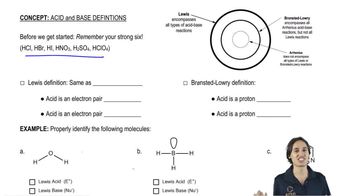
The Lewis definition of acids and bases.

Carbonyl Chemistry

Carbonyl chemistry involves the study of compounds containing a carbonyl group (C=O), which is a key functional group in organic molecules. Carbonyl compounds, such as ketones and aldehydes, are pivotal in synthetic transformations. In this case, the reaction of the carbanion generated from phenylacetic acid with a suitable electrophile can lead to the formation of the target ketone, 3,3-dimethyl-1-phenylbutan-2-one.
추천 영상:
04:20
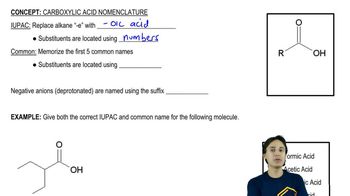
Carboxylic Acids Nomenclature