Ch. 18 - Ketones and Aldehydes
Wade - Organic Chemistry 9th Edition
Wade9th EditionOrganic ChemistryISBN: 9780135213728당신이 사용하는 게 아니라요?교과서 변경
18장, 문제 30

Trimethylphosphine is a stronger nucleophile than triphenylphosphine, but it is rarely used to make ylides. Why is trimethylphosphine unsuitable for making most phosphorus ylides?

검증된 단계별 안내
1
Understand the structure of trimethylphosphine (P(CH₃)₃) and triphenylphosphine (P(C₆H₅)₃). Trimethylphosphine has three methyl groups attached to the phosphorus atom, while triphenylphosphine has three phenyl groups attached to the phosphorus atom.
Recall that phosphorus ylides are compounds with a phosphorus atom bonded to a carbon atom that carries a negative charge (a carbanion). These ylides are typically formed by deprotonating a phosphonium salt, which is created by the reaction of a phosphine with an alkyl halide.
Consider the steric and electronic properties of trimethylphosphine. The methyl groups are small and do not provide significant steric hindrance, making trimethylphosphine a stronger nucleophile compared to triphenylphosphine. However, this also means that the resulting phosphonium salt is less stable due to the lack of resonance stabilization.
Analyze the stability of ylides formed from trimethylphosphine. The methyl groups on trimethylphosphine do not have the ability to delocalize the negative charge on the carbanion through resonance. In contrast, the phenyl groups in triphenylphosphine can stabilize the ylide through resonance, making the ylide more stable and easier to handle.
Conclude that trimethylphosphine is unsuitable for making most phosphorus ylides because the ylides formed are highly unstable due to the lack of resonance stabilization. This instability makes them difficult to isolate and use in reactions, limiting their practical applications.

비슷한 문제에 대한 검증된 영상 답변:

이 영상 해법은 위 문제에 도움이 된다고 튜터들이 추천한 것입니다.
영상 길이:
4m

주요 개념

질문에 올바르게 답하기 위해 반드시 이해해야 하는 핵심 개념들은 다음과 같습니다.

Nucleophilicity

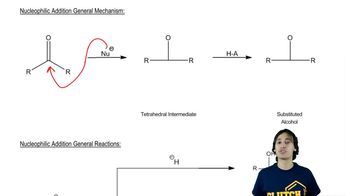
Nucleophilicity refers to the ability of a species to donate an electron pair to an electrophile, forming a chemical bond. In organic chemistry, stronger nucleophiles are more reactive and can participate in various reactions, such as forming ylides. Trimethylphosphine is a stronger nucleophile than triphenylphosphine due to its less sterically hindered structure, allowing it to more easily approach electrophiles.
추천 영상:
08:27
Nucleophilic Addition

Steric Hindrance

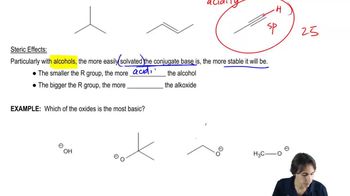
Steric hindrance occurs when the spatial arrangement of atoms within a molecule prevents other molecules from approaching closely. In the case of triphenylphosphine, the bulky phenyl groups create significant steric hindrance, making it less reactive as a nucleophile. Conversely, while trimethylphosphine is less hindered and more nucleophilic, its own steric properties and electronic effects can make it less suitable for forming stable ylides.
추천 영상:
02:53
Understanding steric effects.

Phosphorus Ylides

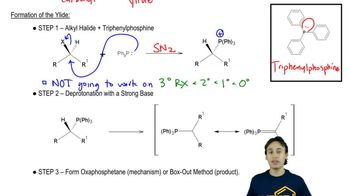
Phosphorus ylides are compounds characterized by a phosphorus atom bonded to a carbon atom that carries a negative charge. They are typically formed through the reaction of a phosphine with an alkyl halide. The stability and reactivity of ylides depend on the nature of the phosphine used; trimethylphosphine, despite being a strong nucleophile, may lead to unstable ylides due to its electronic properties and the resulting instability of the ylide formed.
추천 영상:
15:39
Box-Out Method and Full-Mechanism