Ch. 19 - Amines
Wade - Organic Chemistry 9th Edition
Wade9th EditionOrganic ChemistryISBN: 9780135213728당신이 사용하는 게 아니라요?교과서 변경
19장, 문제 33c

Rank the amines in each set in order of increasing basicity.
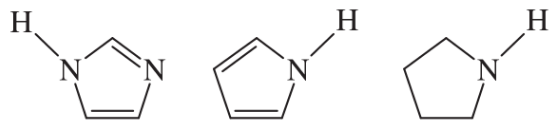
(c)

검증된 단계별 안내
1
Step 1: Identify the amines in the given structures. The first structure is imidazole, the second is pyrrole, and the third is pyrrolidine. These are nitrogen-containing heterocycles with different electronic environments around the nitrogen atoms.
Step 2: Understand the factors affecting basicity. Basicity in amines is influenced by the availability of the lone pair on the nitrogen atom for protonation. Electron-withdrawing groups or delocalization of the lone pair reduce basicity, while electron-donating groups or lack of delocalization increase basicity.
Step 3: Analyze the first structure (imidazole). Imidazole has two nitrogen atoms, one of which is part of an aromatic system. The lone pair on the aromatic nitrogen is delocalized into the aromatic ring, reducing its availability for protonation and thus lowering its basicity.
Step 4: Analyze the second structure (pyrrole). Pyrrole has a nitrogen atom whose lone pair is fully delocalized into the aromatic ring, making it less available for protonation. This results in pyrrole being less basic than imidazole.
Step 5: Analyze the third structure (pyrrolidine). Pyrrolidine is a saturated ring with a nitrogen atom whose lone pair is not delocalized. This makes the lone pair readily available for protonation, resulting in pyrrolidine being the most basic among the three.

비슷한 문제에 대한 검증된 영상 답변:

이 영상 해법은 위 문제에 도움이 된다고 튜터들이 추천한 것입니다.
영상 길이:
7m
도움이 되었나요?

주요 개념

질문에 올바르게 답하기 위해 반드시 이해해야 하는 핵심 개념들은 다음과 같습니다.

Basicity of Amines

Basicity in amines refers to their ability to accept protons (H+) from acids. This property is influenced by the availability of the lone pair of electrons on the nitrogen atom, which can bond with protons. The more readily an amine can donate its lone pair, the stronger its basicity.
추천 영상:
07:12
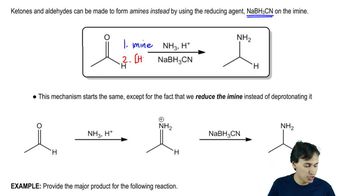
Reductive Amination

Inductive Effect

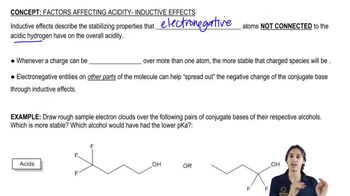
The inductive effect describes how electron-withdrawing or electron-donating groups attached to the amine can influence its basicity. Electron-withdrawing groups decrease basicity by stabilizing the lone pair on nitrogen, while electron-donating groups enhance basicity by increasing electron density on nitrogen, making it more likely to accept protons.
추천 영상:
01:47
Understanding the Inductive Effect.

Steric Hindrance

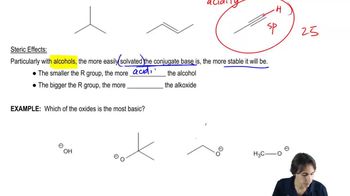
Steric hindrance refers to the spatial arrangement of atoms around the nitrogen atom in amines. Bulky groups can hinder the approach of protons, thereby reducing the basicity of the amine. In contrast, less hindered amines can more easily interact with protons, leading to higher basicity.
추천 영상:
02:53
Understanding steric effects.