Ch. 21 - Carboxylic Acid Derivatives
Wade - Organic Chemistry 9th Edition
Wade9th EditionOrganic ChemistryISBN: 9780135213728당신이 사용하는 게 아니라요?교과서 변경
21장, 문제 16c

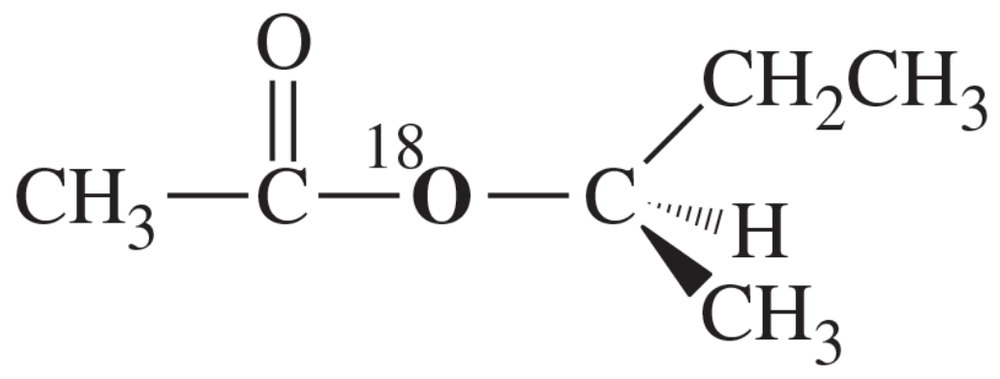
Suppose we have some optically pure (R)-2-butyl acetate that has been 'labeled' with the heavy 18O isotope at one oxygen atom as shown.

(c) Explain how you would prove experimentally where the 18O label appears in the products. (18O is not radioactive.)

검증된 단계별 안내
1
Step 1: Understand the structure of the compound provided. The molecule is (R)-2-butyl acetate, which is an ester. The heavy isotope O-18 is labeled on the oxygen atom connected to the butyl group (the alkoxy oxygen). This labeling is crucial for tracking the fate of the O-18 during chemical reactions.
Step 2: Plan an experiment to track the O-18 label. Hydrolysis of the ester is a common method to break it down into its components. When hydrolyzed under acidic or basic conditions, the ester will produce an alcohol (2-butanol) and a carboxylic acid (acetic acid). The goal is to determine which product contains the O-18 label.
Step 3: Perform the hydrolysis reaction. Use either acidic or basic conditions to hydrolyze the ester. For example, in acidic hydrolysis, the ester reacts with water to form the alcohol and carboxylic acid. Ensure the reaction is complete to isolate the products.
Step 4: Analyze the products using mass spectrometry. Mass spectrometry is a powerful tool for detecting isotopes like O-18. Analyze both the alcohol (2-butanol) and the carboxylic acid (acetic acid) to determine which one contains the O-18 label. The mass spectrum will show a peak corresponding to the molecular weight of the compound with the O-18 isotope.
Step 5: Interpret the results. Based on the mechanism of ester hydrolysis, the O-18 label should remain with the oxygen atom that was originally part of the ester bond. This means the O-18 label will appear in the carboxylic acid (acetic acid) product. Confirm this by comparing the mass spectrometry data of the products.

비슷한 문제에 대한 검증된 영상 답변:

이 영상 해법은 위 문제에 도움이 된다고 튜터들이 추천한 것입니다.
영상 길이:
3m

주요 개념

질문에 올바르게 답하기 위해 반드시 이해해야 하는 핵심 개념들은 다음과 같습니다.

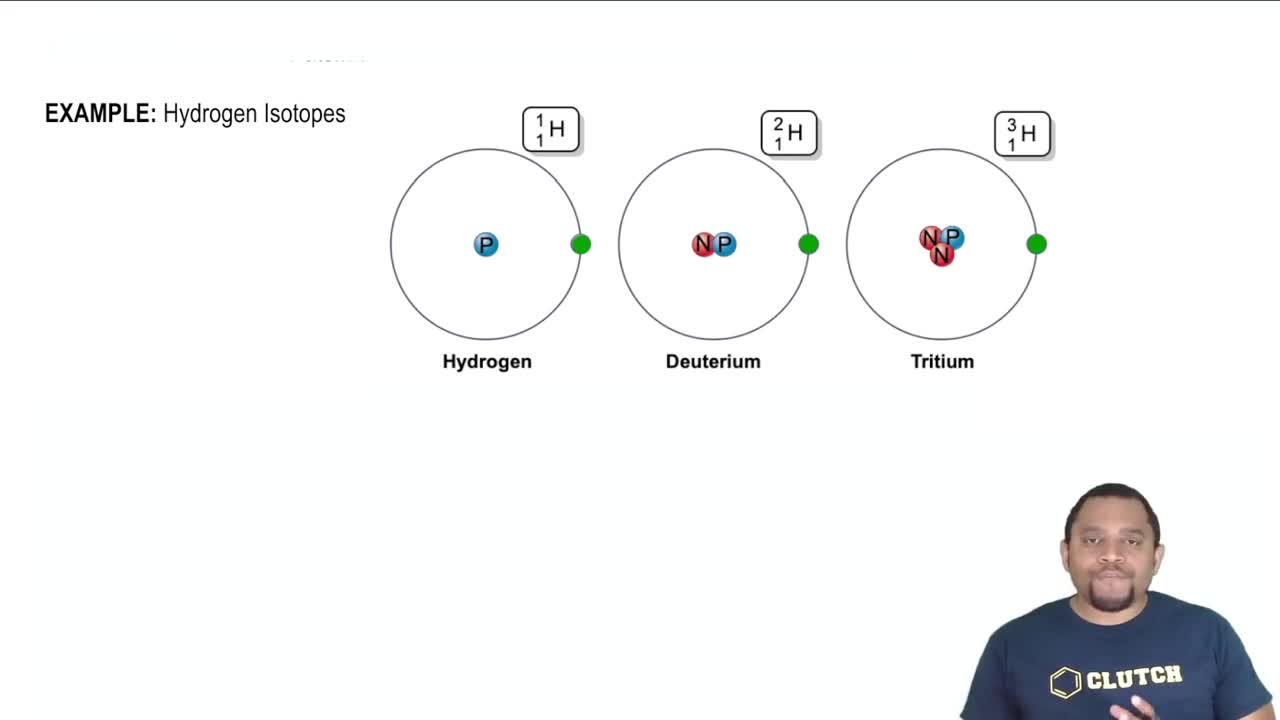
Isotope Labeling

Isotope labeling involves substituting a stable isotope, such as O-18, for a naturally occurring isotope in a molecule. This technique allows chemists to trace the movement and incorporation of the labeled atom during chemical reactions. In this case, the O-18 label in (R)-2-butyl acetate can help identify which products contain the heavy oxygen, providing insights into reaction mechanisms and pathways.
추천 영상:
03:06
Understanding the hydrogen isotopes.

Mass Spectrometry

Mass spectrometry (MS) is an analytical technique used to measure the mass-to-charge ratio of ions. It can effectively distinguish between molecules based on their mass, allowing for the identification of products containing the O-18 label. By comparing the mass spectra of the reaction products, one can determine which species incorporate the heavy isotope, thus proving where the O-18 label appears.
추천 영상:
01:25
How to Read a Mass Spectrum

Nuclear Magnetic Resonance (NMR) Spectroscopy

Nuclear Magnetic Resonance (NMR) spectroscopy is a powerful technique used to determine the structure of organic compounds. In the context of isotope labeling, NMR can provide information about the chemical environment of the labeled oxygen atom. By analyzing the NMR spectra of the products, one can infer the presence of O-18 based on shifts in chemical shifts or coupling patterns, confirming the location of the label.
추천 영상:
10:06
General NMR Features