 Back
BackAcellular Infectious Agents: Viruses, Viroids & Prions quiz #4
You can tap to flip the card.
Control buttons has been changed to "navigation" mode.
1/5- Acellular Infectious Agents: Viruses, Viroids & Prions quiz #1Acellular Infectious Agents: Viruses, Viroids & Prions27 Terms
- Acellular Infectious Agents: Viruses, Viroids & Prions quiz #2Acellular Infectious Agents: Viruses, Viroids & Prions12 Terms
- Acellular Infectious Agents: Viruses, Viroids & Prions quiz #3Acellular Infectious Agents: Viruses, Viroids & Prions14 Terms
Acellular Infectious Agents: Viruses, Viroids & Prions
1. Introduction to Microbiology
7 problems
Topic

Nicole
Importance of Microorganisms
1. Introduction to Microbiology
7 problems
Topic
Monica
1. Introduction to Microbiology - Part 1 of 2
5 topics 14 problems
Chapter
Monica
1. Introduction to Microbiology - Part 2 of 2
6 topics 14 problems
Chapter
Brendan
 03:22
03:22
Terms in this set (5)
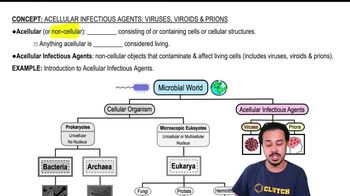
Bacteria, viruses, parasites, and fungi are considered which type of hazard?
They are considered biological hazards.
What needs a host to survive?
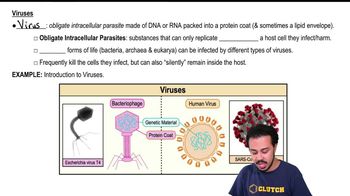
Viruses, viroids, and prions need a host to survive and replicate.
What eventually stops the spread of the virus in the host?
The host's immune response eventually stops the spread of the virus.
What is the structural difference between a viroid and a virus?
A viroid consists of a single short strand of circular RNA, while a virus contains either DNA or RNA enclosed in a protein coat and sometimes a lipid envelope.
How do prions cause disease in the host organism?
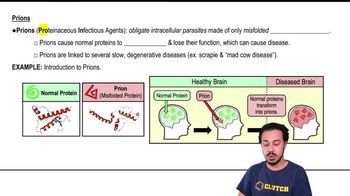
Prions cause disease by inducing normal proteins to misfold, resulting in loss of protein function and leading to slow degenerative diseases.