Back

How Antimicrobial Drugs Work definitions

Control buttons has been changed to "navigation" mode.
1/15
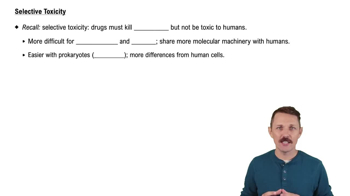
  • Selective Toxicity

    Ability of a drug to harm microbes without damaging human cells by exploiting structural or metabolic differences.
  • Peptidoglycan

    Unique bacterial cell wall component targeted by several antibiotics, absent in human cells.
  • Cell Wall

    Rigid bacterial structure providing shape and protection, often disrupted by bactericidal drugs.
  • Cell Membrane

    Barrier with distinct bacterial lipids, allowing selective targeting by certain antimicrobials.
  • Nucleic Acid Synthesis

    Process involving bacterial-specific enzymes for DNA and RNA production, targeted by some antibiotics.
  • 70S Ribosome

    Bacterial protein synthesis machinery structurally different from eukaryotic counterparts, enabling selective inhibition.
  • Protein Synthesis

    Essential cellular process in bacteria, often halted by drugs acting on ribosomal differences.
  • Metabolic Pathways

    Bacterial-specific biochemical routes, such as folic acid synthesis, targeted by selective drugs.
  • Folic Acid Synthesis

    Bacterial pathway for producing a vital vitamin, absent in humans due to dietary intake.
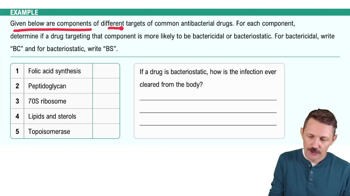
  • Bactericidal

    Classification for drugs that directly kill bacteria, often by disrupting cell walls or membranes.
  • Bacteriostatic

    Classification for drugs that halt bacterial growth, relying on the immune system for infection clearance.
  • Replication

    Bacterial DNA duplication process involving unique enzymes, serving as a drug target.
  • Transcription

    Bacterial RNA synthesis process using distinct enzymes, susceptible to selective inhibition.
  • Antimicrobial Therapy

    Treatment approach utilizing drugs to exploit microbial vulnerabilities while sparing human cells.
  • Antibiotic Resistance

    Microbial adaptation reducing drug effectiveness, challenging successful infection treatment.