Back

Immunoassay: ELISA definitions

Control buttons has been changed to "navigation" mode.
1/15
  • ELISA

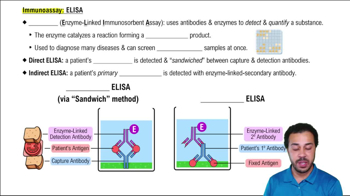
    A laboratory technique using enzyme-linked antibodies to detect and quantify antigens or antibodies through a measurable color change.
  • Antigen

    A molecule, often from pathogens, that is specifically recognized and bound by antibodies in immunoassays.
  • Antibody

    A protein produced by the immune system that binds specifically to antigens, enabling detection in assays.
  • Enzyme

    A catalyst attached to antibodies in ELISA, responsible for generating a colored product upon substrate addition.
  • Microplate

    A flat plate with multiple wells used to hold samples and reagents during ELISA procedures for simultaneous testing.
  • Capture Antibody

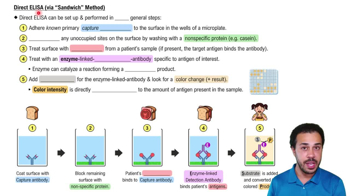
    An antibody fixed to the well surface that binds the target antigen, forming the base of the sandwich in direct ELISA.
  • Detection Antibody

    An enzyme-linked antibody that binds to the antigen, enabling color development in direct ELISA.
  • Secondary Antibody

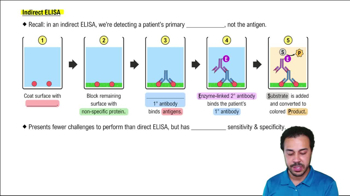
    An enzyme-linked antibody that binds to the patient's primary antibody in indirect ELISA, allowing detection.
  • Substrate

    A molecule added to react with the enzyme, producing a visible color change indicating the presence of the target.
  • Colorimetric Detection

    A method where the intensity of color produced reflects the amount of target antigen or antibody present.
  • Blocking

    A step using nonspecific proteins to cover unoccupied well surfaces, preventing false positives from unwanted binding.
  • Sandwich Method

    A format where the antigen is bound between two antibodies, enhancing specificity in direct ELISA.
  • Primary Antibody

    A patient's antibody that binds to the antigen coated on the well in indirect ELISA, indicating prior exposure.
  • Specificity

    The ability of an assay to distinguish the target molecule from others, reducing false positives.
  • Sensitivity

    The capacity of an assay to detect even small amounts of the target, minimizing false negatives.