Back

Introduction to Inflammation definitions

Control buttons has been changed to "navigation" mode.
1/14
  • Inflammation

    A coordinated set of events triggered by infection or tissue damage, marked by distinct physical changes and immune cell activity.
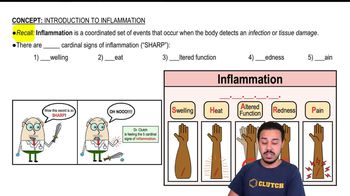
  • SHARP

    An acronym summarizing the five cardinal signs: swelling, heat, altered function, redness, and pain.
  • Swelling

    A cardinal sign resulting from fluid accumulation at the site of tissue injury or infection.
  • Heat

    A cardinal sign caused by increased blood flow to affected tissues during the inflammatory response.
  • Altered Function

    A cardinal sign where normal activity of the affected area is impaired due to inflammation.
  • Redness

    A cardinal sign resulting from dilation of blood vessels and increased blood flow to the inflamed area.
  • Pain

    A cardinal sign arising from chemical mediators and pressure on nerve endings at the site of inflammation.
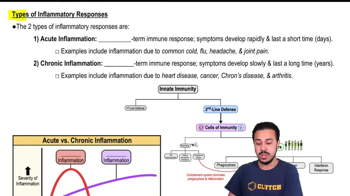
  • Acute Inflammation

    A short-term immune response with rapid symptom onset, primarily involving neutrophils, resolving in days.
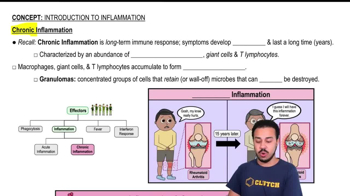
  • Chronic Inflammation

    A long-term immune response with slow symptom development, involving macrophages, giant cells, and T lymphocytes.
  • Neutrophils

    Immune cells rapidly recruited to sites of acute inflammation, acting as the first responders to infection or injury.
  • Macrophages

    Immune cells abundant in chronic inflammation, responsible for engulfing pathogens and cellular debris.
  • Giant Cells

    Large cells formed by the fusion of macrophages, commonly found in chronic inflammatory sites.
  • T Lymphocytes

    Adaptive immune cells present in chronic inflammation, contributing to the formation of granulomas.
  • Granuloma

    A structured cluster of immune cells that walls off microbes resistant to elimination during chronic inflammation.