Back

Phagoctytosis definitions

Control buttons has been changed to "navigation" mode.
1/15
  • Phagocytosis

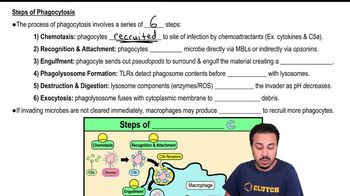
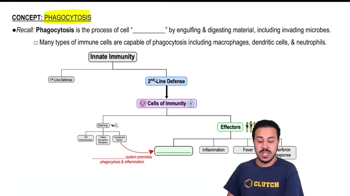
    A multi-step innate immune process where cells ingest and degrade microbes, preventing infection and promoting host defense.
  • Macrophage

    A large immune cell capable of engulfing and digesting pathogens, playing a central role in innate immunity.
  • Dendritic Cell

    An antigen-presenting cell that engulfs microbes and initiates immune responses by activating other immune cells.
  • Neutrophil

    A short-lived, abundant white blood cell specializing in rapid ingestion and destruction of invading microbes.
  • Chemotaxis

    Directed movement of immune cells toward infection sites in response to chemical signals like cytokines or C5a.
  • Chemoattractant

    A molecule, such as a cytokine or C5a, that signals and recruits immune cells to sites of infection.
  • Opsonin

    A molecule that coats microbes, enhancing their recognition and ingestion by phagocytes for efficient clearance.
  • Phagosome

    A membrane-bound compartment formed within a phagocyte that encloses an ingested microbe.
  • Phagolysosome

    A hybrid organelle resulting from fusion of a phagosome with lysosomes, enabling microbial degradation.
  • Lysosome

    A cellular structure containing digestive enzymes and reactive oxygen species, crucial for breaking down pathogens.
  • Reactive Oxygen Species

    Highly reactive molecules within lysosomes that contribute to the destruction of engulfed microbes.
  • Hydrolytic Enzyme

    A digestive protein within lysosomes that breaks down microbial components during phagocytosis.
  • Exocytosis

    The process by which degraded microbial debris is expelled from a phagocyte after digestion.
  • Cytokine

    A signaling protein released by immune cells to modulate inflammation and recruit additional phagocytes.
  • Mannose Binding Lectin

    A recognition molecule that binds to specific sugars on microbes, facilitating their identification by phagocytes.