Skip to main content
Nutrition
My Course
Learn
Exam Prep
AI Tutor
Study Guides
Flashcards
Try the app
My Course
Learn
Exam Prep
AI Tutor
Study Guides
Flashcards
Try the app
Back
Alcohol Metabolism definitions
You can tap to flip the card.
Ethanol
You can tap to flip the card.
👆
Ethanol
Primary type of alcohol found in beverages, rapidly absorbed in the digestive tract and processed by the liver.
Track progress
Control buttons has been changed to "navigation" mode.
1/15
Related flashcards
Related practice
Recommended videos
Alcohol Metabolism quiz #1
Alcohol Metabolism
10 Terms
Alcohol Metabolism
9. Alcohol
10 problems
Topic
Short-Term Effects of Alcohol
9. Alcohol
10 problems
Topic
9. Alcohol
4 topics
15 problems
Chapter
03:10
Alcohol Metabolism Example 1
182
views
2
rank
04:02
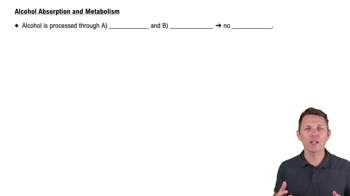
Alcohol Absorption and Metabolism
253
views
4
rank
03:09
Alcohol Metabolism Example 2
159
views
2
rank
1
comments
Terms in this set (15)
Hide definitions
Ethanol
Primary type of alcohol found in beverages, rapidly absorbed in the digestive tract and processed by the liver.
Alcohol Dehydrogenase
Enzyme that initiates alcohol breakdown, converting ethanol into toxic acetaldehyde, mainly in the liver and stomach.
Acetaldehyde
Toxic intermediate produced during alcohol metabolism, responsible for negative effects if accumulated.
Acetaldehyde Dehydrogenase
Enzyme that converts acetaldehyde into non-toxic acetate, with genetic variations affecting its activity.
Acetate
Non-toxic end product of alcohol metabolism, utilized by cells for energy and contributing to caloric value.
Blood Alcohol Content
Measurement of alcohol concentration in the blood, expressed as a percentage, influencing physiological effects.
Body Composition
Proportion of muscle and fat in the body, affecting alcohol dilution due to differences in water content.
Stomach Contents
Presence of food in the stomach, which slows alcohol absorption and increases time for initial metabolism.
Genetic Variation
Differences in genes, such as those coding for ALDH, impacting individual responses to alcohol metabolism.
Asian Flush
Reaction characterized by skin flushing due to acetaldehyde buildup, commonly linked to ALDH deficiency.
Liver
Primary organ responsible for metabolizing alcohol, housing key enzymes for detoxification.
Small Intestine
Main site of alcohol absorption into the bloodstream, following limited absorption in the stomach.
Toxicity
Harmful effects caused by substances like ethanol and acetaldehyde before complete metabolism.
Enzyme
Protein catalyst that accelerates chemical reactions, crucial for alcohol breakdown in the body.
Metabolism
Cellular process involving chemical modification of substances, such as converting alcohol to acetate.
 BackBack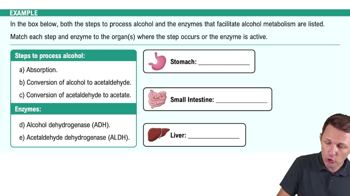
 03:10
03:10