Skip to main content
Nutrition
My Course
Learn
Exam Prep
AI Tutor
Study Guides
Flashcards
Try the app
My Course
Learn
Exam Prep
AI Tutor
Study Guides
Flashcards
Try the app
Back
Alternative Sweeteners definitions
You can tap to flip the card.
Alternative Sweeteners
You can tap to flip the card.
👆
Alternative Sweeteners
Sugar substitutes providing sweetness with fewer or no calories, often much sweeter than sucrose and used to reduce caloric intake.
Track progress
Control buttons has been changed to "navigation" mode.
1/15
Related flashcards
Related practice
Recommended videos
Alternative Sweeteners quiz
Alternative Sweeteners
15 Terms
Alternative Sweeteners exam
Alternative Sweeteners
26 Terms
Alternative Sweeteners
4. Carbohydrates
10 problems
Topic
Blood Glucose Regulation
4. Carbohydrates
10 problems
Topic
4. Carbohydrates
9 topics
15 problems
Chapter
Guided course
03:28
Alternative Sweeteners
245
views
5
rank
Guided course
02:01
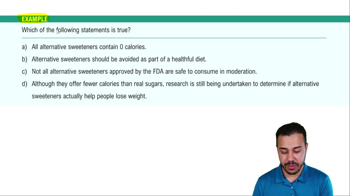
Alternative Sweeteners Example 1
217
views
1
rank
Terms in this set (15)
Hide definitions
Alternative Sweeteners
Sugar substitutes providing sweetness with fewer or no calories, often much sweeter than sucrose and used to reduce caloric intake.
Non-Nutritive Sweeteners
Compounds offering sweetness without significant calories or energy, commonly used as sugar alternatives.
Sugar Substitutes
Ingredients replacing table sugar in foods and drinks, delivering similar taste with reduced or zero caloric content.
Sucrose
Common table sugar used as a reference point for measuring the relative sweetness of alternative sweeteners.
Acceptable Daily Intake
Maximum recommended amount of a substance, measured per kilogram of body weight, considered safe for daily consumption.
Caloric Intake
Total number of calories consumed, which alternative sweeteners help manage by providing sweetness with fewer calories.
Relative Sweetness
Measurement comparing how much sweeter a substance is than sucrose, often hundreds of times greater for alternative sweeteners.
Saccharin
Alternative sweetener commonly found in pink packets, known for being much sweeter than sucrose and containing few or no calories.
Sucralose
Highly potent sweetener, often in yellow packets, used to sweeten foods and beverages without adding calories.
Stevia
Naturally derived sweetener from plants, typically found in green packets, offering high sweetness with minimal calories.
Milligrams
Unit of measurement used to express the acceptable daily intake of alternative sweeteners per kilogram of body weight.
Appetite
Desire to eat, which may be influenced by alternative sweeteners, potentially affecting overall food consumption.
Weight Management
Process of controlling body weight, for which alternative sweeteners are used, though their effectiveness remains under study.
FDA Approval
Official recognition that a sweetener is considered safe for consumption in moderation based on current research.
Healthful Diet
Eating pattern that supports overall well-being, which can include moderate use of alternative sweeteners within recommended limits.
 BackBack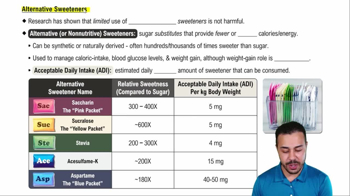
 03:28
03:28