Major Mineral: Chloride, Magnesium, & Sulfur exam Flashcards

Major Mineral: Chloride, Magnesium, & Sulfur exam
Control buttons has been changed to "navigation" mode.
1/30
  • What is the main function of chloride in the body?
    Chloride is a major extracellular electrolyte that helps maintain water balance and acts as a buffer in blood pH.
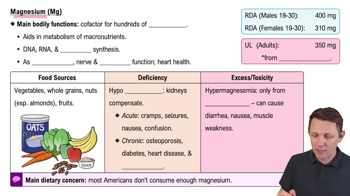
  • Magnesium (Mg)
    A major mineral that acts as a cofactor for hundreds of enzymes, important for metabolism and protein synthesis.
  • What is the primary dietary source of chloride?
    Table salt (sodium chloride) is the main source of chloride in the diet.
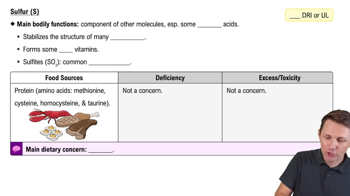
  • Sulfur (S)
    A major mineral found in amino acids that stabilizes protein structures and is present in some B vitamins.
  • What is the RDA for magnesium for adult males?
    400 mg per day.
  • What is the main dietary concern for sulfur?
    None; if you eat, you get enough sulfur, and toxicity is not a concern.
  • What is the adequate intake (AI) for chloride?
    2.3 grams (2300 mg) per day.
  • What is the role of magnesium in nerve and muscle function?
    Magnesium acts as an electrolyte, essential for proper nerve and muscle function, including heart health.
  • What is the tolerable upper intake level (UL) for magnesium from supplements?
    350 mg per day.
  • What happens if you consume too much chloride?
    There are no specific toxicity symptoms for chloride, but intake should be limited due to its link with sodium and hypertension.
  • What is hypomagnesemia?
    A deficiency of magnesium, which can cause cramps, seizures, nausea, and confusion.
  • Which foods are high in magnesium?
    Vegetables, whole grains, nuts (especially almonds), and fruits.
  • What is the main function of sulfur in proteins?
    Sulfur stabilizes the three-dimensional structure of proteins by forming bonds between amino acids.
  • What is the relationship between sodium and chloride intake?
    Most chloride comes from sodium chloride; limiting sodium also limits chloride intake.
  • What is hypermagnesemia?
    A condition caused by excess magnesium, usually from supplements, leading to diarrhea, nausea, and muscle weakness.
  • Is there a DRI (Dietary Reference Intake) for sulfur?
    No, there is no DRI, AI, or UL for sulfur.
  • What is the RDA for magnesium for adult females?
    310 mg per day.
  • What is the main concern with magnesium intake in the U.S.?
    Most Americans do not consume enough magnesium.
  • What is the main function of chloride in the stomach?
    Chloride is a component of hydrochloric acid, which makes stomach acid acidic.
  • What are the symptoms of chronic magnesium deficiency?
    Osteoporosis, diabetes, heart disease, and hypertension.
  • What is the tolerable upper intake level (UL) for chloride?
    3,600 mg per day.
  • What is the main risk of excess magnesium intake?
    Toxicity symptoms occur only from supplements, not from food.
  • Which amino acids contain sulfur?
    Methionine, cysteine, homocysteine, and taurine.
  • What is the main dietary source of sulfur?
    Protein-rich foods, due to sulfur-containing amino acids.
  • What is the effect of dehydration on chloride levels?
    Severe dehydration (e.g., from vomiting or diarrhea) can cause chloride deficiency.
  • What is the function of magnesium in macronutrient metabolism?
    Magnesium acts as a cofactor for enzymes involved in breaking down carbohydrates, proteins, and fats.
  • What is the main dietary concern for chloride?
    None directly, but intake should be monitored due to its link with sodium and hypertension.
  • What is the function of sulfites in food?
    Sulfites are used as preservatives and are generally safe unless you have a sulfite sensitivity.
  • What is the connection between magnesium and the DASH diet?
    The DASH diet emphasizes magnesium intake to help lower hypertension.
  • What happens if you consume too much sulfur?
    There are no toxicity concerns with sulfur; excess intake is not a problem.