Skip to main content
Nutrition
My Course
Learn
Exam Prep
AI Tutor
Study Guides
Flashcards
Try the app
My Course
Learn
Exam Prep
AI Tutor
Study Guides
Flashcards
Try the app
Back
Nutritional Needs for Infants quiz
You can tap to flip the card.
What percentage of an infant's energy should come from fat during the first year of life?
You can tap to flip the card.
👆
What percentage of an infant's energy should come from fat during the first year of life?
Infants should get 40-50% of their energy from fat during the first year of life.
Track progress
Control buttons has been changed to "navigation" mode.
1/15
Related flashcards
Related practice
Recommended videos
Nutritional Needs for Infants definitions
Nutritional Needs for Infants
15 Terms
Nutritional Needs for Infants
14. Nutrition: Pregnancy Through Infancy
10 problems
Topic
Breastfeeding
14. Nutrition: Pregnancy Through Infancy
10 problems
Topic
14. Nutrition: Pregnancy Through Infancy
5 topics
15 problems
Chapter
Guided course
02:53
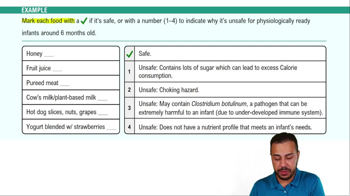
Nutritional Needs for Infants Example 3
78
views
1
rank
Guided course
02:26
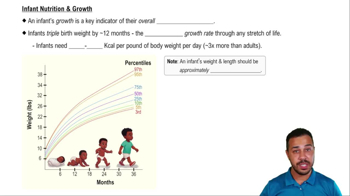
Infant Nutrition & Growth
98
views
Guided course
01:40
Nutritional Needs for Infants Example 2
69
views
Terms in this set (15)
Hide definitions
What percentage of an infant's energy should come from fat during the first year of life?
Infants should get 40-50% of their energy from fat during the first year of life.
What are the primary sources of nutrition and hydration for infants in their first year?
Breast milk and/or formula are the primary sources of nutrition and hydration for infants in their first year.
Why are vitamin K injections given to newborns?
Vitamin K injections are given to newborns to prevent blood clotting issues because they lack gut bacteria that synthesize vitamin K.
At what age is it appropriate to start introducing semi-solid foods to infants?
Semi-solid foods can be introduced to infants around six months of age when they show signs of readiness.
Why should honey be avoided in infants under one year old?
Honey should be avoided because it may contain Clostridium botulinum, which can cause fatal illness in infants with underdeveloped immune systems.
What is the recommended fluid intake for infants from birth to six months?
Infants should consume about two fluid ounces per pound of body weight per day from birth to six months.
Why are iron-rich foods important for infants starting at six months?
Iron-rich foods are important because infants' iron stores are typically depleted by six months, and breast milk is low in iron.
What is the purpose of growth charts in infant nutrition?
Growth charts track proportional weight and length percentiles to monitor an infant's growth and nutritional status.
What are signs that an infant is ready for solid foods?
Signs include head and neck control, sitting up with minimal support, and turning their head to indicate fullness.
Why should animal and plant milks be avoided before one year of age?
Animal and plant milks should be avoided because they lack the appropriate nutrient profile for infants.
Why are vitamin D supplements recommended for breastfed infants?
Vitamin D supplements are recommended because breast milk is naturally low in vitamin D.
How much does an infant's weight typically change by 12 months of age?
By 12 months, an infant's weight is expected to nearly triple from birth.
Why should new foods be introduced one at a time to infants?
New foods should be introduced one at a time to monitor for potential allergies.
What types of foods are considered choking hazards for infants?
Choking hazards include grapes, nuts, raw carrots, and sliced hotdogs.
Why is proper nutrition especially critical in the first 36 months of life?
Proper nutrition supports brain development, immunity, and overall health during this vital period.
 BackBack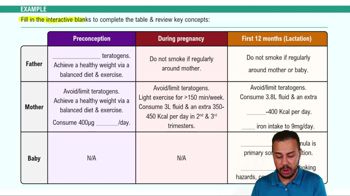
 02:53
02:53