Skip to main content
Nutrition
My Course
Learn
Exam Prep
AI Tutor
Study Guides
Flashcards
Try the app
My Course
Learn
Exam Prep
AI Tutor
Study Guides
Flashcards
Try the app
Back
Protein-Related Disorders exam
You can tap to flip the card.
What is marasmus?
You can tap to flip the card.
👆
What is marasmus?
A form of protein-energy malnutrition (PEM) caused by chronic calorie and protein deficiency, leading to severe weight loss and stunted growth.
Track progress
Control buttons has been changed to "navigation" mode.
1/26
Related flashcards
Related practice
Recommended videos
Protein-Related Disorders definitions
Protein-Related Disorders
15 Terms
Protein-Related Disorders quiz
Protein-Related Disorders
15 Terms
Protein-Related Disorders
6. Proteins
10 problems
Topic
Dietary Guidelines for Proteins
6. Proteins
10 problems
Topic
6. Proteins
7 topics
15 problems
Chapter
Guided course
04:26
What Happens if We Consume Too Little or Too Much Proteins?
242
views
2
rank
Terms in this set (26)
Hide definitions
What is marasmus?
A form of protein-energy malnutrition (PEM) caused by chronic calorie and protein deficiency, leading to severe weight loss and stunted growth.
Kwashiorkor
A type of PEM characterized by adequate calorie intake but insufficient protein, resulting in edema and tissue wasting.
What does PEM stand for?
Protein-Energy Malnutrition.
Marasmic kwashiorkor
A combination of marasmus and kwashiorkor, showing features of both conditions.
What is the Acceptable Macronutrient Distribution Range (AMDR) for protein?
10-35% of total daily calories should come from protein.
What are the main symptoms of marasmus?
Severe weight loss, stunted growth, and a skin-and-bones appearance.
What causes edema in kwashiorkor?
Protein deficiency disrupts fluid balance, leading to fluid buildup in tissues.
What is the primary difference between marasmus and kwashiorkor?
Marasmus involves overall calorie and protein deficiency; kwashiorkor involves adequate calories but insufficient protein.
Edema
Swelling caused by excess fluid trapped in the body's tissues.
Who is most at risk for protein-related disorders?
Young infants and children in resource-poor regions.
What is the appearance of someone with kwashiorkor?
Bloated or puffy appearance, especially in the face, abdomen, arms, and legs.
Why is maintaining protein intake within the AMDR important?
To prevent protein deficiencies and ensure overall nutrient balance.
What happens if you consume too much protein?
Health effects are unclear; research shows both risks and benefits.
Protein-Energy Malnutrition (PEM)
A condition caused by insufficient intake of protein and/or calories.
What is a key sign of marasmic kwashiorkor?
Bloated limbs (kwashiorkor) with skin-and-bones appearance elsewhere (marasmus).
What role do proteins play in fluid balance?
Proteins help maintain fluid balance; deficiency can cause fluid buildup (edema).
What is the effect of chronic calorie deficiency?
Leads to marasmus, with severe weight loss and inhibited growth.
What is tissue wasting?
Loss of muscle and fat tissue, often seen in kwashiorkor and marasmus.
What is the recommended approach to protein intake?
Consume protein within the AMDR to avoid deficiencies or excesses.
What can happen if you eat too little protein?
Malnutrition, diseases like marasmus and kwashiorkor, and even death in extreme cases.
How does kwashiorkor differ from marasmus in terms of calorie intake?
Kwashiorkor occurs with adequate calories but low protein; marasmus is due to low calories and protein.
What is the impact of protein deficiency on children?
Stunted growth, weight loss, edema, and increased risk of mortality.
Why is overconsumption of protein not recommended?
It may lead to imbalances in other nutrients and has unclear health effects.
What is the skin-and-bones appearance associated with?
Marasmus.
What is the main cause of marasmus?
Chronic deficiency of both calories and protein.
What is the main cause of kwashiorkor?
Adequate calorie intake but insufficient protein.
 BackBack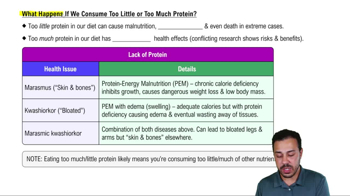
 04:26
04:26