Back

Alkene Metathesis definitions

Control buttons has been changed to "navigation" mode.
1/15
  • Alkene Metathesis

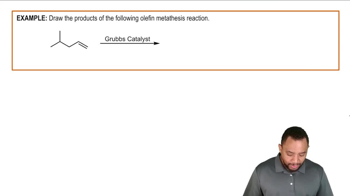
    Exchange of carbon atoms between two alkenes, producing a mix of E and Z isomers, often catalyzed by a ruthenium complex.
  • Grubbs Catalyst

    A ruthenium-based complex with two chlorines and ligands, enabling efficient alkene metathesis under mild conditions.
  • Ruthenium

    A transition metal at the core of Grubbs Catalyst, crucial for facilitating the metathesis reaction.
  • E Isomer

    A product where substituents on the double bond are on opposite sides, resulting from alkene metathesis.
  • Z Isomer

    A product where substituents on the double bond are on the same side, formed during alkene metathesis.
  • Ring-Closing Metathesis

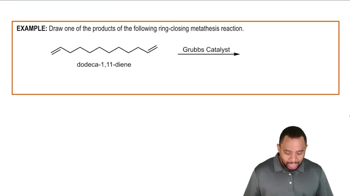
    An intramolecular process that forms cycloalkenes, especially large rings, by joining two alkene ends.
  • Cycloalkene

    A ring structure containing a carbon-carbon double bond, often synthesized via ring-closing metathesis.
  • 2+2 Cycloaddition

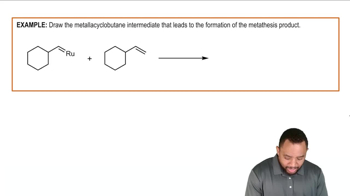
    A step forming a four-membered ring, specifically cyclobutane, as part of the metathesis mechanism.
  • Cycloreversion

    The reverse of cycloaddition, breaking a four-membered ring to yield new alkenes and intermediates.
  • Metallocyclobutane

    A four-membered ring intermediate containing a metal atom, central to the metathesis mechanism.
  • Ligand

    An atom or group attached to the central metal in Grubbs Catalyst, influencing its reactivity.
  • Terminal Alkene

    An alkene with a double bond at the end of the carbon chain, providing optimal yields in metathesis.
  • Intermediate

    A transient species formed during the two-phase mechanism, essential for product formation in metathesis.
  • Equilibrium Process

    A reaction state where forward and reverse reactions occur, with product yield influenced by volatile byproducts.
  • Phenyl

    An aromatic ring attached to the Grubbs Catalyst, contributing to its stability and reactivity.