Back

Molecular Orbitals definitions

Control buttons has been changed to "navigation" mode.
1/15
  • Sigma Bond

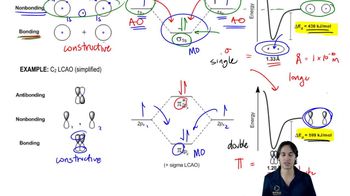
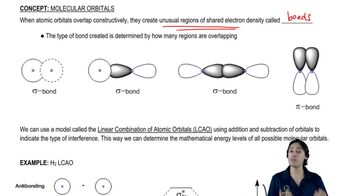
    A single region of orbital overlap, typically stronger and more stable than other bond types, formed by s-s, s-p, or p-p orbital interactions.
  • Pi Bond

    Two regions of overlap between p orbitals, present in double bonds, contributing less to bond strength than single bonds.
  • Molecular Orbital

    A region describing electron behavior in an entire molecule, resulting from the combination of atomic orbitals.
  • Bonding Orbital

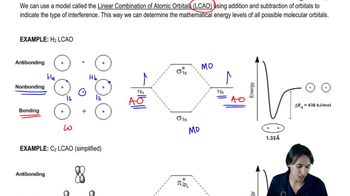
    A lower energy state formed by constructive interference, increasing electron density between atoms and enhancing stability.
  • Antibonding Orbital

    A higher energy state, denoted with a star, formed by destructive interference, leading to instability and electron repulsion.
  • Nonbonding Orbital

    An atomic orbital that does not interact with others, resulting in no shared electron density or bond formation.
  • Linear Combination of Atomic Orbitals

    A model predicting molecular orbital formation by mathematically combining atomic orbitals from different atoms.
  • Constructive Interference

    An interaction where orbital overlaps increase electron probability between atoms, favoring bond formation.
  • Destructive Interference

    An interaction where orbital overlaps decrease electron probability between atoms, leading to nodes and instability.
  • Atomic Orbital

    A region around a single atom where electrons are likely to be found, such as s or p types, before bonding.
  • Node

    A region between atoms in an antibonding orbital where electron probability is zero due to destructive interference.
  • Bond Length

    The distance between nuclei of bonded atoms, typically measured in angstroms, varying with bond type.
  • Double Bond

    A bond consisting of one sigma and one pi bond, resulting in two regions of orbital overlap and increased stability.
  • Energy State

    A quantifiable level of energy associated with electrons in orbitals, influencing molecular stability.
  • Kilojoules per Mole

    A unit measuring energy changes during bond formation or breaking, indicating bond strength and stability.