Back

Naming Thiols definitions

Control buttons has been changed to "navigation" mode.
1/15
  • Thiols

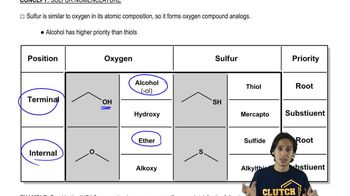
    Sulfur analogs of alcohols with a terminal sulfur atom bonded to hydrogen, named as the root when highest priority.
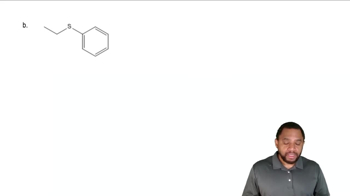
  • Sulfides

    Sulfur analogs of ethers with a sulfur atom bonded to two carbon groups, often named using the common or IUPAC system.
  • Alcohols

    Oxygen-containing compounds with a terminal hydroxyl group, typically given naming priority over sulfur analogs.
  • Ethers

    Oxygen-containing compounds with an internal oxygen atom bonded to two carbon groups, analogous to sulfides.
  • Mercapto

    Substituent name for a thiol group when a higher priority functional group is present in the molecule.
  • Hydroxy

    Substituent name for an alcohol group when it is not the highest priority functional group in the molecule.
  • Alkoxy

    IUPAC substituent name for an ether group, used when the ether is not the main functional group.
  • Alkyl thiol

    IUPAC substituent name for a sulfide group, analogous to alkoxy but with sulfur instead of oxygen.
  • Functional group priority

    Order used in nomenclature to determine which group forms the root name, with alcohols generally outranking thiols.
  • Terminal sulfur

    Sulfur atom located at the end of a carbon chain, characteristic of thiols.
  • Internal sulfur

    Sulfur atom bonded to two carbon groups within a chain, characteristic of sulfides.
  • IUPAC system

    Standardized method for naming organic compounds, often using substituent names like alkoxy or alkyl thiol.
  • Common system

    Traditional naming method for ethers and sulfides, using simple names like ether or sulfide.
  • Substituent

    Group attached to the main carbon chain, named differently when not the highest priority group.
  • Root name

    Base name of a compound determined by the highest priority functional group present.