Back

Octet Rule definitions

Control buttons has been changed to "navigation" mode.
1/15
  • Octet Rule

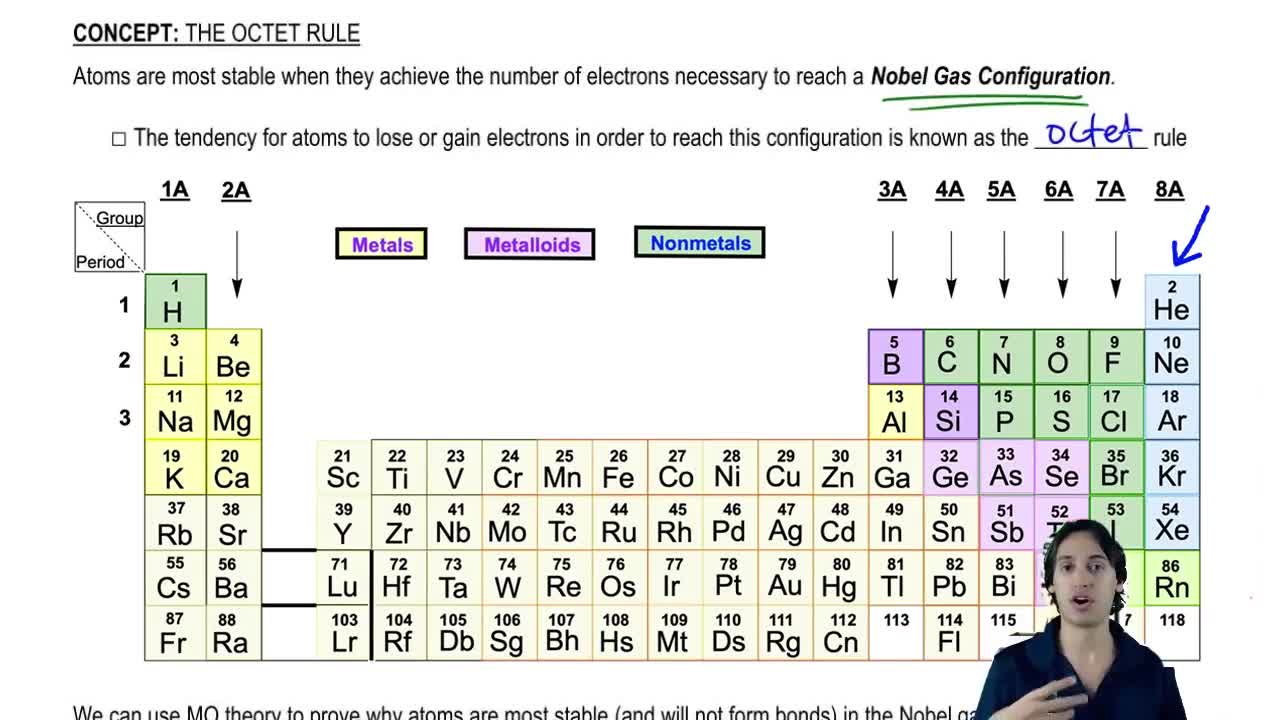
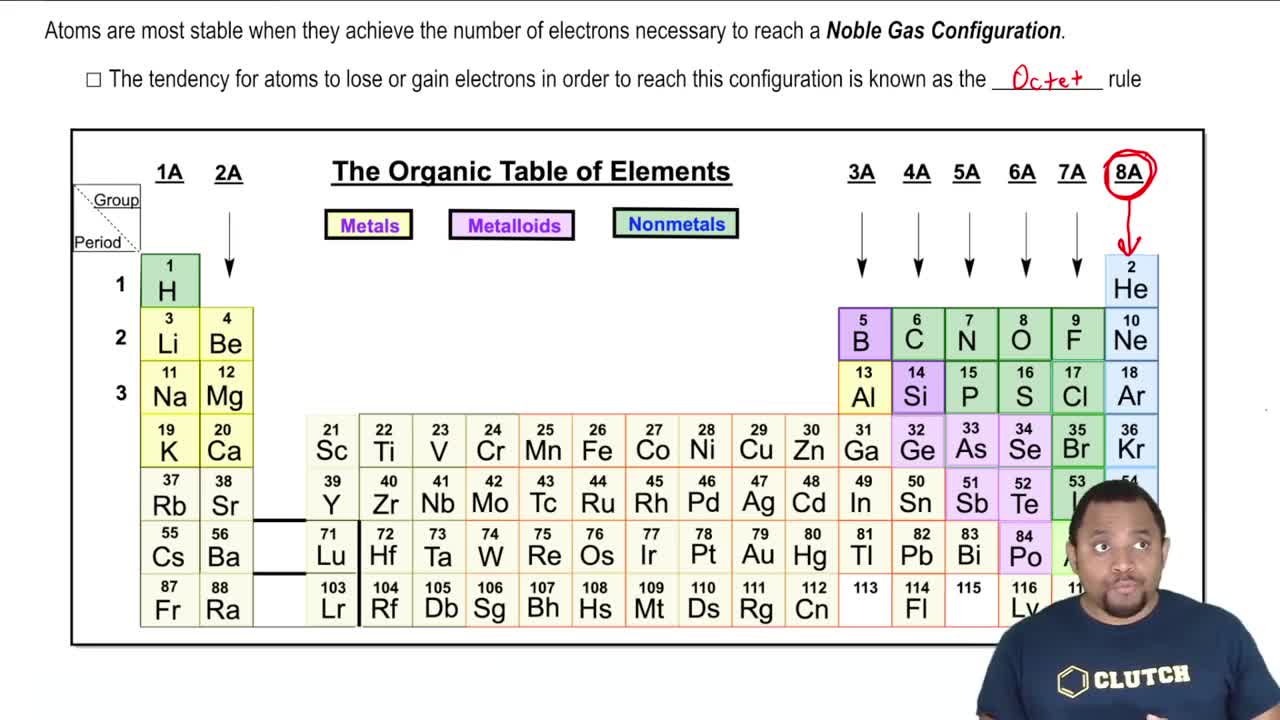
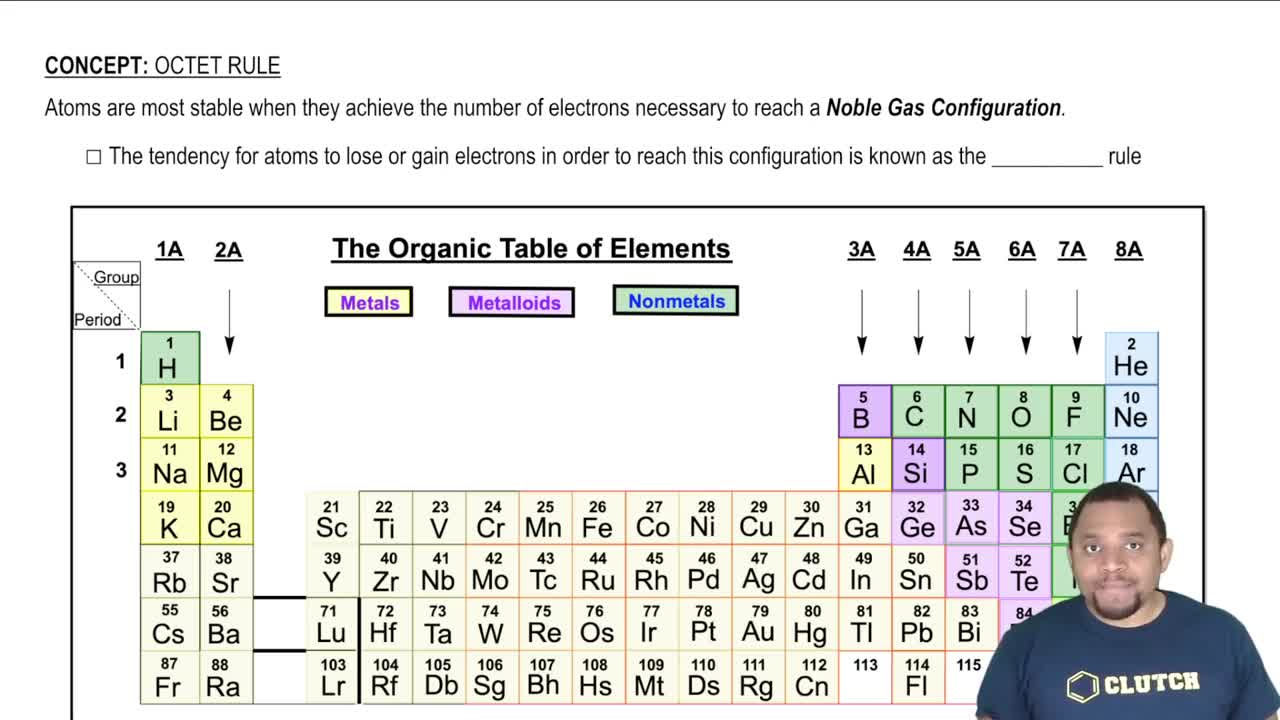
    Guideline stating atoms seek a stable configuration by having eight electrons in their outermost shell, similar to noble gases.
  • Noble Gas Configuration

    Highly stable electron arrangement where the outer shell is completely filled, making atoms unreactive.
  • Electron Shell

    Energy level around an atom's nucleus where electrons are likely to be found, with stability achieved when full.
  • Molecular Orbital Theory

    Model explaining atomic stability and bonding by combining atomic orbitals to form molecular orbitals.
  • Bonding Orbital

    Molecular orbital formed by constructive interference, lowering energy and increasing stability when filled.
  • Antibonding Orbital

    Molecular orbital formed by destructive interference, raising energy and reducing stability when occupied.
  • Duet Rule

    Special case for small atoms like hydrogen and helium, which achieve stability with only two electrons in their outer shell.
  • Expanded Octet

    Situation where atoms, typically in the third period, accommodate more than eight electrons due to available d orbitals.
  • Lone Pair

    Pair of valence electrons not involved in bonding, contributing to an atom's stability and electron count.
  • Group

    Vertical column in the periodic table, also called a family, sharing similar chemical properties.
  • Period

    Horizontal row in the periodic table, indicating elements with the same number of electron shells.
  • Transition Metal

    Element found in the central block of the periodic table, often with variable electron configurations and less relevance in organic chemistry.
  • Valence Electron

    Electron located in the outermost shell, crucial for chemical bonding and determining reactivity.
  • Nonmetal

    Element typically found on the right side of the periodic table, often gaining electrons to achieve a stable configuration.
  • Chemical Bond

    Attractive force holding atoms together, allowing them to share or transfer electrons to achieve stability.