Back

Pyruvate Oxidation (Simplified) definitions

Control buttons has been changed to "navigation" mode.
1/15
  • Pyruvate

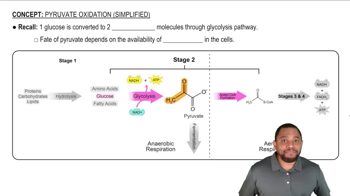
    A three-carbon molecule produced from glucose during glycolysis, serving as a key metabolic intermediate.
  • Glycolysis

    A metabolic pathway that breaks down glucose into two molecules of a three-carbon compound, yielding energy.
  • Acetyl CoA

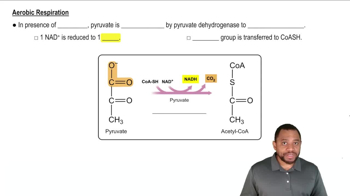
    A two-carbon molecule formed from pyruvate, entering the Citric Acid Cycle for further energy extraction.
  • Pyruvate Dehydrogenase

    A multi-enzyme complex that catalyzes the conversion of pyruvate to Acetyl CoA in the presence of oxygen.
  • NAD+

    An electron carrier molecule reduced to NADH during pyruvate oxidation, crucial for cellular energy transfer.
  • NADH

    A high-energy electron carrier produced during pyruvate oxidation, feeding electrons into the Electron Transport Chain.
  • Citric Acid Cycle

    A series of enzyme-driven reactions that further oxidize Acetyl CoA, generating electron carriers for ATP production.
  • Electron Transport Chain

    A sequence of protein complexes that use electrons from NADH and FADH2 to generate a proton gradient for ATP synthesis.
  • Oxidative Phosphorylation

    A process coupling electron transport to ATP synthesis, powered by the proton gradient across the mitochondrial membrane.
  • Fermentation

    An anaerobic pathway where pyruvate is converted to other products, allowing glycolysis to continue without oxygen.
  • Aerobic Respiration

    A metabolic process using oxygen to fully oxidize substrates, maximizing ATP yield from glucose.
  • Anaerobic Respiration

    A metabolic pathway that generates energy from glucose without oxygen, often resulting in fermentation.
  • Carbohydrates

    Macromolecules hydrolyzed to glucose, serving as the primary fuel for glycolysis and subsequent energy pathways.
  • Acetyl Group

    A two-carbon fragment transferred to CoA during pyruvate oxidation, forming Acetyl CoA.
  • FADH2

    An electron carrier generated in the Citric Acid Cycle, contributing electrons to the Electron Transport Chain.